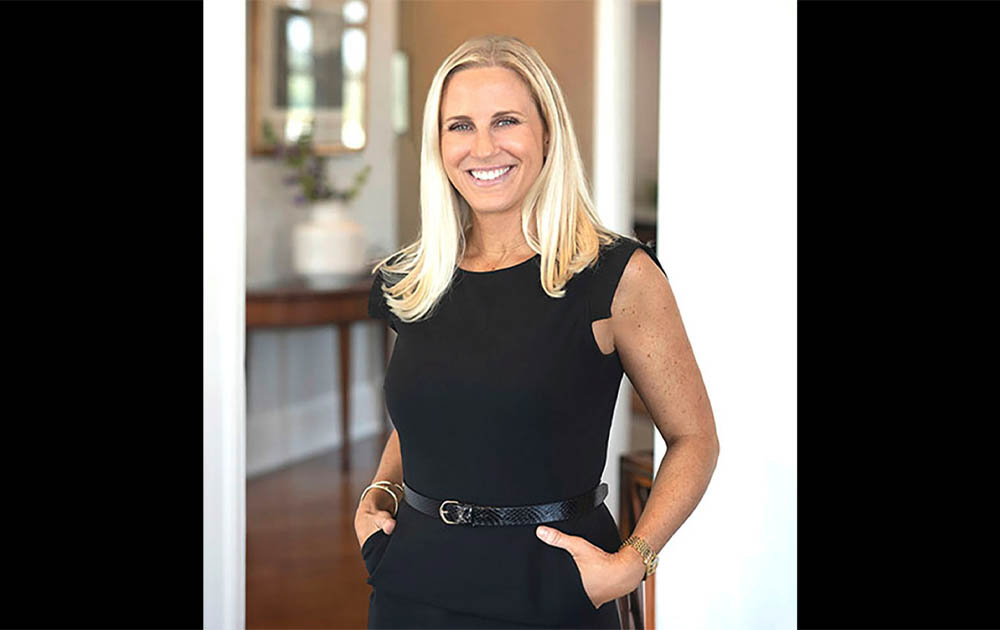
By Michelle D. Bennett, AIF®, CFP®, Executive Vice President, Newport Capital Group
Portfolio risk is often discussed in terms of age. But the amount of risk that makes sense often depends more on goals, time horizon and cash needs than a number on the calendar.
A better starting point is determining what the portfolio is meant to accomplish and when it needs to deliver. A pool of capital designed to fund near-term spending needs should be positioned differently than assets intended for long-term growth, legacy planning or charitable giving. Liquidity outside the portfolio, reliable cash flow and the timing of expected withdrawals all influence how much risk is appropriate and where that risk should be taken.
From a planning standpoint, the “right” level of risk depends on the portfolio’s role. Risk can show up as volatility and potential loss, but also as the possibility of missing long-term objectives when the portfolio’s positioning does not match its purpose.
A global survey conducted by Natixis found that when individuals were asked to define “investment risk,” most focused on short-term market concerns. 26% defined risk primarily as volatility, while 23% viewed it as the potential for loss of capital. Only 11% defined risk as failing to reach long-term goals, and just 6% saw holding too much cash as a risk at all. From a planning standpoint, however, these less intuitive risks – missing objectives or losing purchasing power over time – can be far more consequential, especially for long-term portfolios tied to retirement, philanthropy or legacy planning.
Importantly, how investors define risk in theory often shifts once real-world uncertainty enters the picture. According to F&G’s 2024 Risk Tolerance Tracker, nearly three-quarters of U.S. investors said developments over the prior year made them less willing to take financial risk. Inflation, recession concerns and political uncertainty ranked among the top factors shaping how people think about their financial futures.
Reframing Risk Around Goals
and Time Horizon
A fundamental misunderstanding of risk can lead to portfolios being misaligned with long-term goals. It’s one reason many investors become more conservative than necessary, even when their time horizon and long-term goals still require growth.
From a planning perspective, risk should be evaluated in context. Time horizon, cash-flow needs and the purpose of each pool of capital matter far more than age alone. A portfolio designed to fund near-term living expenses should look very different from one intended to grow for future generations or support long-term charitable giving. When those distinctions aren’t clearly defined, investors may reduce exposure to growth assets prematurely, increasing the risk of falling short later in life.
Diversification plays an important role in managing this balance. Research has consistently shown that diversified portfolios have historically experienced smaller drawdowns and more stable long-term returns than concentrated allocations. While diversification does not eliminate risk, it helps ensure that a portfolio is not overly dependent on any single market outcome.
Another often-overlooked risk is emotional decision-making during periods of market stress. There is plenty of research out there showing that staying invested through market cycles has historically led to better outcomes than attempting to time exits and re-entries. Even missing a relatively small number of strong market days can materially reduce long-term returns.
All of this underscores why risk should be revisited regularly, not in reaction to headlines, but in light of evolving goals. Life events, changes in spending needs, philanthropic priorities and estate planning considerations all influence how much risk is appropriate and where that risk should be taken. Many investors treat risk assessment as a one-time decision rather than an ongoing process, but the result is often portfolios that are either more aggressive or more conservative than intended – simply because no one is regularly pressure-testing assumptions.
At its core, managing investment risk is not about eliminating uncertainty. It is about understanding which risks matter most, and which ones can quietly undermine long-term success if left unaddressed. Playing it safe can feel reassuring, but excessive caution – including holding more cash than long-term goals require – can be just as risky when it leads to missed opportunities, eroded purchasing power or unmet goals.
The right level of risk is rarely obvious by looking at a portfolio alone. It emerges from clarity around objectives, time horizon and priorities, and from revisiting those factors as life evolves. With thoughtful planning and periodic review, investors can ensure their portfolios aren’t simply reacting to markets. Their portfolios are aligned with what they’re truly trying to achieve.
Michelle Bennett, CFP ®, serves as the executive vice president of Newport Capital Group. The opinions in this column are not to be used as financial or planning advice. For additional important disclosures, please visit newportcapitalgroup.com/disclosures.
This presentation includes forward-looking statements. Actual events may differ materially from those reflected in the forward-looking statements. Always consult an attorney or tax professional regarding your specific legal or tax situation.
The information provided here is for general informational purposes only and should not be considered an individualized recommendation or personalized investment advice. In addition, information presented in this presentation is believed to be factual and up to date, but Newport Capital Group, LLC does not guarantee its accuracy and it should not be regarded as a complete analysis of the subjects discussed.
This presentation includes forward-looking statements and opinions, including descriptions of anticipated market changes and expectations of future activity. Forward-looking statements and opinions are inherently uncertain, and actual events or results may differ materially from those reflected in the forward-looking statements. In addition, all expressions of opinion are subject to change without notice in reaction to shifting market conditions. Therefore, undue reliance should not be placed on such forward-looking statements and opinions.
The article originally appeared in the February 19 – 25, 2026 print edition of The Two River Times.