By Gloria Stravelli
A team of intrepid birdwatchers spent a cold and rainy 24 hours earlier this month trekking through marsh and field to compete in the 2021 World Series of Birding.
The goal for the local team, the MCPS Mud Bats, in addition to sighting and recording as many of the bird species migrating along the Atlantic Flyway as possible during a 24-hour period May 8, was to raise funds for a nesting box to be installed at one of the parks in the Monmouth County Park System.
With the support of the Friends of the Monmouth County Parks, the Mud Bats raised $1,800 in pledges for their project and compiled a list of 142 bird species sighted during the count, including their elusive namesake, the mud bat, aka the American woodcock.
Birding throughout county parks included Huber Woods, the Manasquan Reservoir, Freneau Woods and Shark River Park, among others, with the Mud Bats placing second in the Local Geographic Area category of the New Jersey Audubon-sponsored competition which is organized to coincide with the annual northward migration of thousands of birds along the Atlantic Flyway.
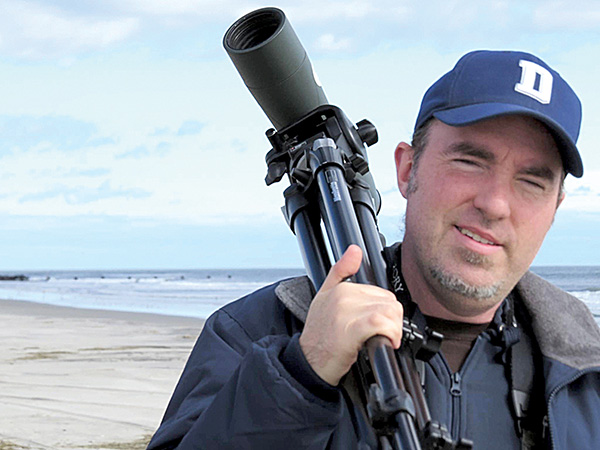
The Mud Bats team – comprised of park naturalists Paul Mandala and Rob Fanning, retired park naturalist Sam Skinner and Lisa Fanning – strategized in order to sight the maximum number of species.
“We split up the county into quadrants. Rob and Lisa Fanning did the northwestern parks, Sam did northeastern parks and I took the southern parks,” said Mandala. “We put a team together, a strategy, based on who is knowledgeable about what species.
“A lot of species overlap so we were texting throughout the day; when we saw some of our target species we checked it off. Around 2 to 3 p.m. is when the hard birding starts and you look at your list and say, ‘What didn’t I get? Where do I think I can go right now to see it before dark?’
“You’re trying to see as wide a variety of birds as you possibly can, so you will be in a wide variety of habitat. I started at Fisherman’s Cove, a good park for any of the shorebird species and there was a common eider hanging around. At Shark River Park at midnight I saw a yellow-crowned heron.
“I brought a flashlight with me and it was low tide so I checked out the mud flats. Night heron were hunting for fiddler crabs in the mud.”
An email recap from the team described some of the high points of the 24-hour, midnight-to-midnight competition, which included an occasional speedy dash to other locations where unusual species had been sighted.
“From our first bird – a yellow-crowned night heron found by Paul – to our last, an American woodcock (or appropriately, mud bat) seen displaying by Rob at Freneau Woods and all the other amazing birds in between, including a great horned owl found by Sam and a tricky female rose-breasted grosbeak spotted by Lisa that took a few tries to find, the day was full of surprises.
“Our efforts were focused mainly on Monmouth County parks, but had a few detours along the way. A very lost western bird called a golden-crowned sparrow was found at Sandy Hook and some of us went to see it,” he said. By midday, he said, the weather brought some surprises, including a hailstorm in parts of the county, and pouring rain, but luckily the storm was short-lived.
According to Rob Fanning, who has taken part in the count for some 20 years, it helps to know what birds are likely to be onsite.
“I am out every day in local parks so I know what birds are out in different parks,” he said. “But lots of it is unexpected because the migrants are passing through and birds are leaving, birds are coming. It’s always a surprise on the actual day as to what we’ll actually get.”
And, of course, restrictions due to the pandemic changed how the team deployed, Lisa Fanning explained.
“The fact that our team was split up is different than how the World Series usually is. Normally, you would be in the same car with your teammates for 24 hours. But these are COVID rules and for the last two years they’ve had a special category where
if you’re socially distancing you can split the team up,” she said.
“The event is timed with the northbound migration here in New Jersey. Birds are flying long distances and looking to fuel up on their journeys. They will typically stop in Cape May or Sandy Hook, where there’s land after a big distance of water… Mostly they are birds that don’t breed here, but they’re just stopping over and fueling up on their way north.”
Maria Wojciechowski, executive director of the Monmouth County Friends of the Parks, said the park naturalists reached out to the Friends, which is the fundraising arm of the park system.
“The naturalists contacted me and said the couple of weeks in May is huge for bird migration and the New Jersey Audubon Society has a bird count, so over Mother’s Day weekend they have teams counting how many birds are spotted in a 24-hour period. They were very enthusiastic and really excited about doing it,” she said. According to Wojciechowski, they needed a nonprofit to collect money and will purchase building supplies to make the bird nesting boxes. “The naturalists asked if we would do it and I said yes. So that was exciting and they came in second place! They raised about $1,800 and they will be building the nesting box and placing it.”
Mandala, who is in charge of nesting boxes around the parks, explained that the boxes replace lost habitat. “All of these different species nest in cavities like holes in trees, but people actually remove that habitat,” he said. “So we make boxes so the hole is the right size for a bird to fit in and out of. Volunteers monitor these boxes and we’ll use the funds to make more boxes.”
According to a compilation by Fanning, species sighted by the MCPS Mud Bats include:
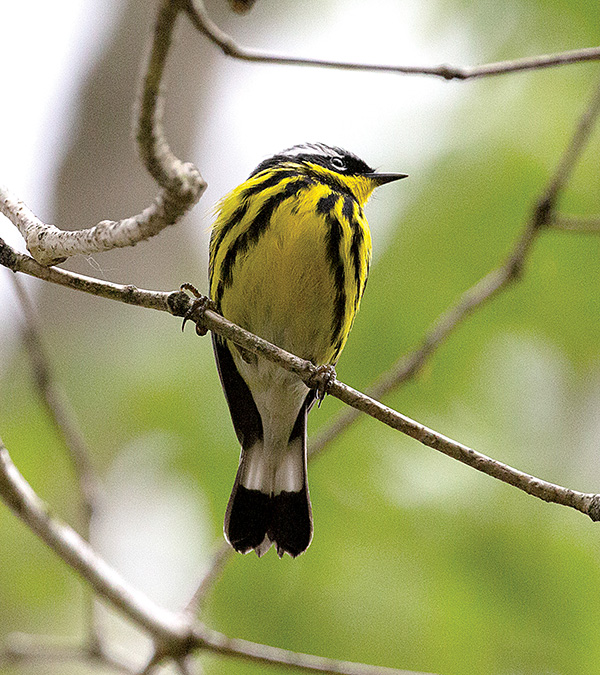
21 species of warblers
12 species of shorebirds
10 species of ducks
9 species of sparrows including golden-crowned (plus Old World house sparrow)
7 species of gulls and terns
6 species of herons
5 species of woodpeckers
5 species of swallow
5 species of thrush
3 species of wrens
1 mud bat (American woodcock) displaying at dusk
The rarest bird spotted, according to Mandala, was the golden-crowned sparrow seen at Sandy Hook.
“That is a bird that has probably been spotted in New Jersey only a handful of times,” he said.
“It was my first-ever World Series of Birding and I wanted to put my all into it. As soon as midnight rolled around I drove over to Shark River Park and started birding.”
This article originally appeared in the May 20 – 16, 2021, print edition of The Two River Times.