By Stephen Appezzato
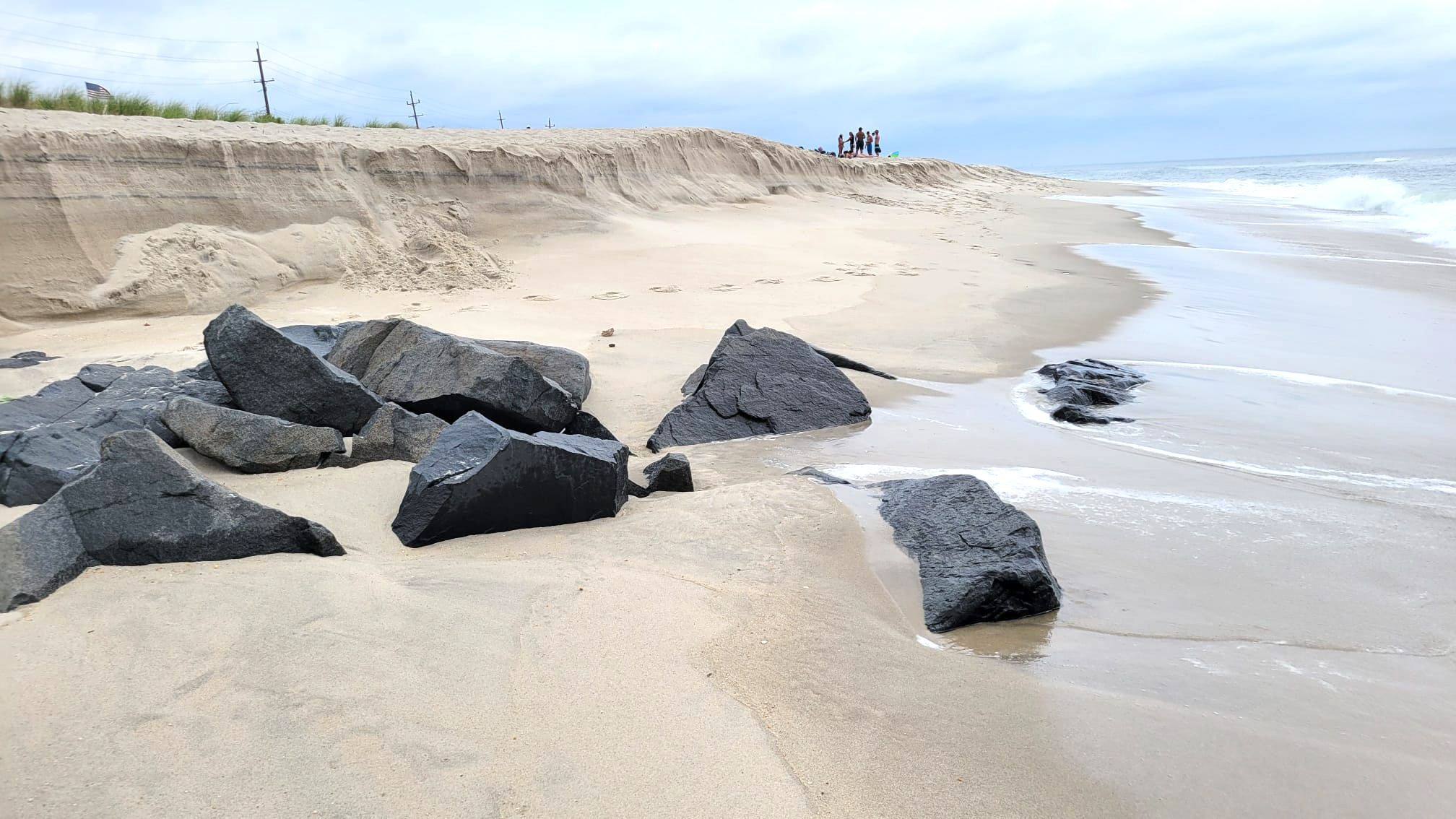
SEA BRIGHT – Victor Macaluso was walking along Sea Bright’s northern beaches when he noticed a jetty formation poking through the sand. He hadn’t seen the boulders since about 2014.
While beach erosion is not a new occurrence for the town, “It changes every year,” Macaluso said.
“About three years ago, we had a lot of erosion in front of a little bit south of this,” the borough resident recalled, but he also noticed heavy erosion areas were gradually moving north.
Set on a barrier peninsula, Sea Bright is particularly susceptible to beach erosion. Over the years, the borough received sand replenishment through the U.S. Army Corps of Engineers Coastal Storm Risk Management and Erosion Control Project. The federally backed project was initially completed in 2001 and has been used to periodically replenish the Jersey Shore as needed. However, Sea Bright has not received sand fill since 2020 and is not yet scheduled for more aid.
“We have no funding, and there is none planned and we’re in dire need,” said council member Samuel Catalano, who chairs the borough’s beach committee.
“We’ve contacted the DEP (New Jersey Department of Environmental Protection), Army Corps, we’ve had them come out and take looks and then inspections and measuring tests, and they’re fully aware,” he said. “It’s absolutely a concern.”
Visitors to the popular beach town this summer would be hard-pressed to miss the erosion. In some areas, there is a stark dropoff by the sea wall dunes – a clear sign of erosion.
According to the U.S. government’s climate resiliency tool kit, coastal erosion is responsible for roughly $500 million yearly in coastal property loss around the country, including structure damage and loss of land and 80,000 acres of lost wetlands annually. Each year the federal government spends an average of $150 million on beach nourishment and erosion control measures.
“We talk about it every meeting. We get updated by the public works and the beach department members who go out and inspect to make sure it’s safe for residents,” said Catalano, who added that the DEP and other parties who have inspected the shoreline have said it’s safe.
However, the council is concerned erosion could encroach on the sea wall. “That’s what we don’t want to see,” Catalano added.
Jason Shea, who manages the Army Corps of Engineers project, explained that towns along the Jersey Shore are authorized for routine renourishment after Congress appropriates more funding for the effort. At that time, the entire 21-mile scope of the project is surveyed to determine which areas are most in need. In March, Monmouth Beach, Sea Girt and some of Long Branch beaches were replenished.
Catalano said the borough council is constantly exploring options for sand retention, including repairing dune fencing and planting beach grass, which stabilizes dunes, while it awaits replenishment funding.
“We’re doing everything we can to retain sand,” he said. But, “Sea Bright is not getting its fair share” of federal funding, he added.
In the meantime, while borough officials await aid, Shea said sand from Monmouth Beach is expected to naturally drift north into Sea Bright.
“The currents run south to north,” said Macaluso, an avid boater, who suspects recurring windy days have added to increased erosion this summer. “It fills back in if we get southeast wind,” he noted.
“Jetties hold the sand locally; anything down current doesn’t get sand,” Macaluso, a Long Island native, said, citing Long Beach, New York, as an example.
“If you look at the Sea Bright beach clubs, where there’s jetties, the beaches are huge because the jetties hold the sand.”
While the Army Corps project is authorized for periodic renourishment of Jersey Shore beaches until 2047, it is unknown when Sea Bright will receive its next fill.
The article originally appeared in the July 4 – July 10, 2024 print edition of The Two River Times.