By Melissa Ziobro
The 2024 Summer Olympics in Paris provide a perfect opportunity to reflect on the record-breaking career of swimming legend Gertrude “Trudy” Ederle.
One hundred years ago, Ederle won a gold and two bronze medals at the 1924 Summer Olympics, which also took place in Paris.
In 1926, she became the first woman to swim across the English Channel.
A native of New York City, Ederle summered in Highlands, honing her swimming skills in the Shrewsbury River. A new Disney movie, “Young Woman and the Sea,” celebrates her life and legacy.
Born Oct. 23, 1905, Ederle was the daughter of German immigrants. Her father ran a butcher shop in Manhattan.
She began swimming competitively and breaking records while still in her teens, becoming something of a media darling and inspiring some in the press to call her “the wonder mermaid.”
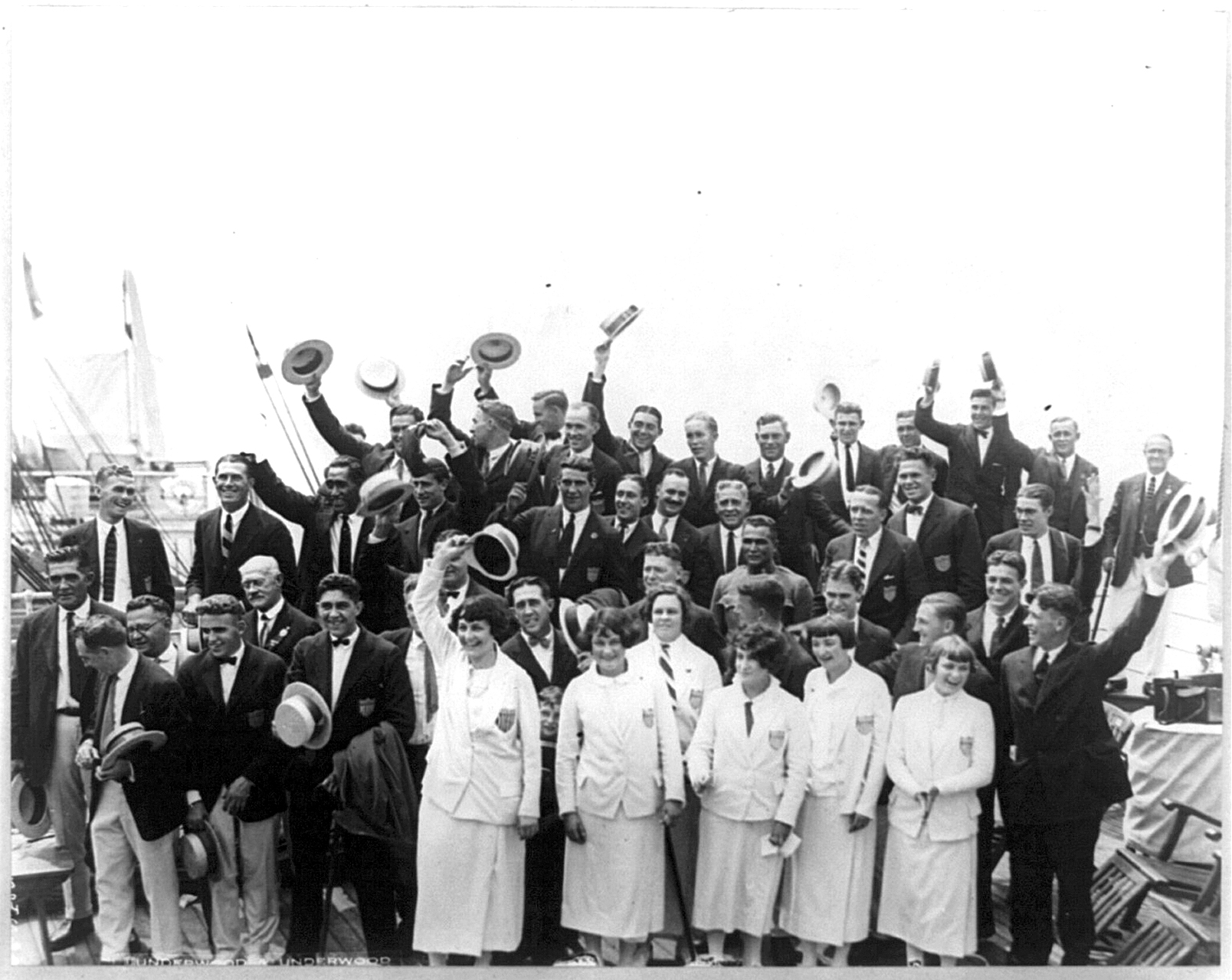
Earning a place on the U.S. Olympic swimming team in 1924, Ederle and her teammates won a gold medal in the 4×100-meter freestyle relay in Paris.
Together with her American relay teammates Euphrasia Donnelly, Ethel Lackie and Mariechen Wehselau, she set a new world record of 4:58.8. Individually, Ederle also received bronze medals for finishing third in the women’s 100-meter freestyle and women’s 400-meter freestyle races.
One local paper noted that “Gertrude Ederle, who is so consistently good at any distance… stands as the most powerful point gainer on the team.” The Olympians came home to a ticker-tape parade.
Not content with Olympic gold, in June 1925 Ederle swam from Battery Park to Sandy Hook in 7 hours and 11 minutes, shattering the record set by George Meehan of Boston in 1914.
“Endurance and speed stand out in the feat which is the greatest accomplished by a girl swimmer,” one press report noted, adding “Before undertaking her long swim yesterday, Miss Ederle had a light breakfast of cereal, cantaloupe, toast and coffee. Throughout the swim, she did not touch food or drink. Upon completing the distance, she showed no sign of weariness and ate heartily.”
A nephew of Ederle’s later described his aunt’s swim as a “midnight frolic” and a “warm-up” for her later swim across the English Channel. Ederle’s record time in the 35-mile New York to Sandy Hook swim stood for 81 years, until it was broken by Australian swimmer, Tammy van Wisse in 2006.
Ederle made her first attempt at swimming across the English Channel in August of 1925. She trained with Jabez Wolffe, a male swimmer who himself had unsuccessfully attempted to swim the English Channel more than 20 times. On Aug. 18, 1925, after several delays due to unsafe conditions, Ederle set out. The press reported that she “sat down to a breakfast of well-done apple fritters and weak tea, and as she arose from the table she said: ‘I’m all ready for it. Bring on your old channel.’”
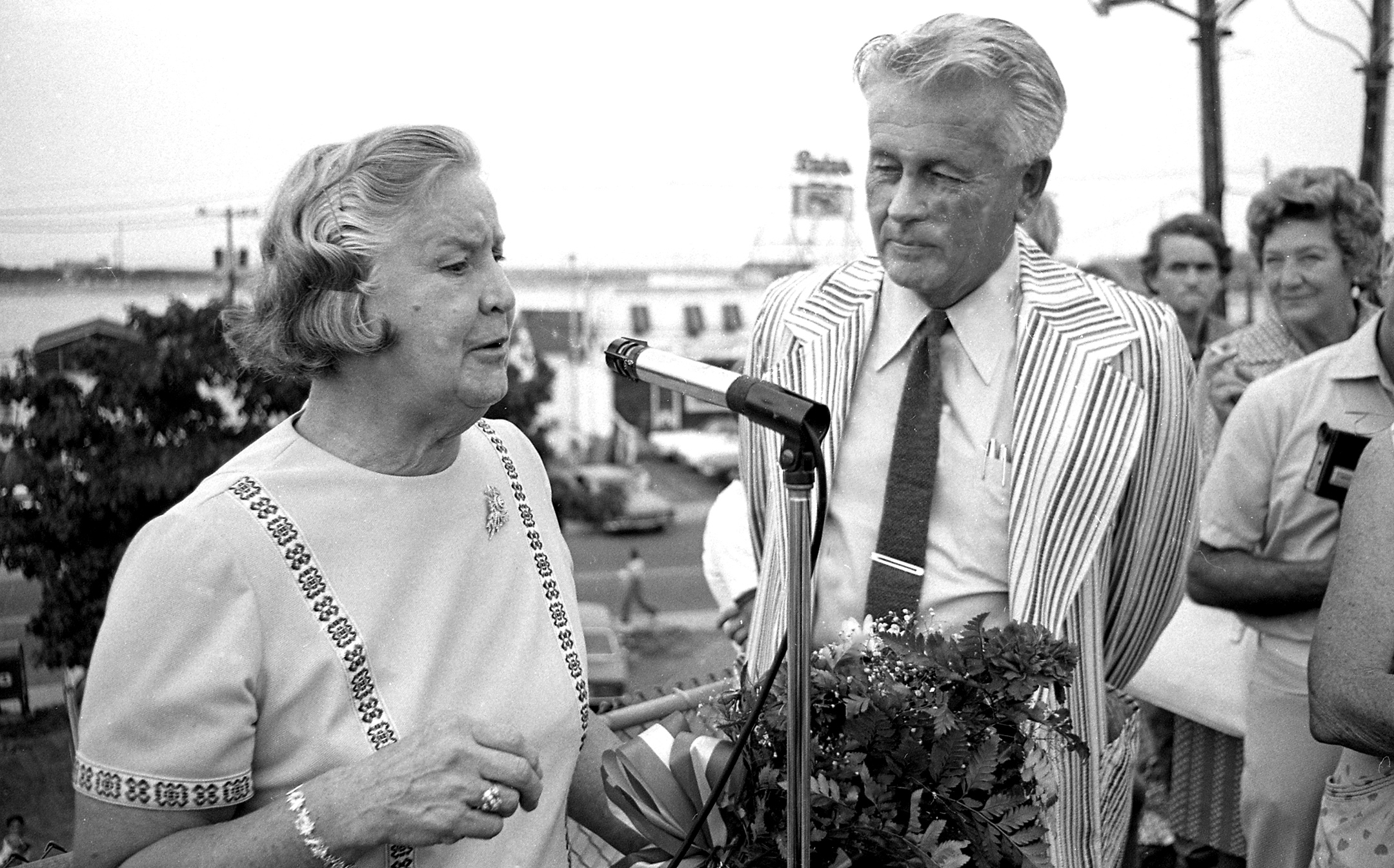
Ederle reportedly put her skirt on inside out that morning, but, when it was pointed out to her, didn’t want to change it, thinking it might bring her good luck. When it came time to enter the water, she was first coated in a grease mixture to try to help protect her skin from the elements. The press reported that she “entered the water…jumping in like a schoolgirl on a holiday swim. The American flag was hauled up the mast of the [accompanying] tug and Miss Ederle set out, amid great cheering…”
Alas, the inside out skirt did not bring Ederle good luck. She was forced to abandon her effort after her trainer claimed she was exhausted and in peril; Ederle later refuted that claim. Despite her unsuccessful attempt, veteran channel swimmer Bill Burgess, who was following her progress from an accompanying tug, told the Associated Press, “She is the most marvelous swimmer I ever saw.”
Ederle considered another attempt that summer, but ultimately returned to America and began training with Burgess (who successfully swam the channel in 1911).
Almost exactly a year after her first attempt, she tried again. Wearing a highly irregular (for the time) twopiece swimsuit and coated in layers of lanoline and grease, the 20-year-old started her second English Channel swim at Cape Gris-Nez in France on Aug. 6, 1926. The press observed, “It was a grim and determined swimmer that entered the water this morning, in sharp contrast to last year, when she dove off as if on a holiday.”
She came ashore at Dover, Kent, England, some 14 and a half hours later. The distance from point A to point B was some 21 miles in a straight line, though Ederle swam closer to 35 miles when calculating the current.
Only five male swimmers had successfully crossed the channel before her, and she bested their time by some two hours. Her record stood until 1950, when Florence Chadwick swam the channel in in 13 hours and 23 minutes.
Ederle told reporters, “All I can say is that, when I started off, I was determined to stay until I had planted my feet on the English shore, and I am glad to say I did. I feel proud, indeed, and so would you if you were receiving all these letters, telegrams, and cables of congratulations…The great point in my swimming at all was to show that a girl could do it, that an American girl could do it, and that I was the American girl.”
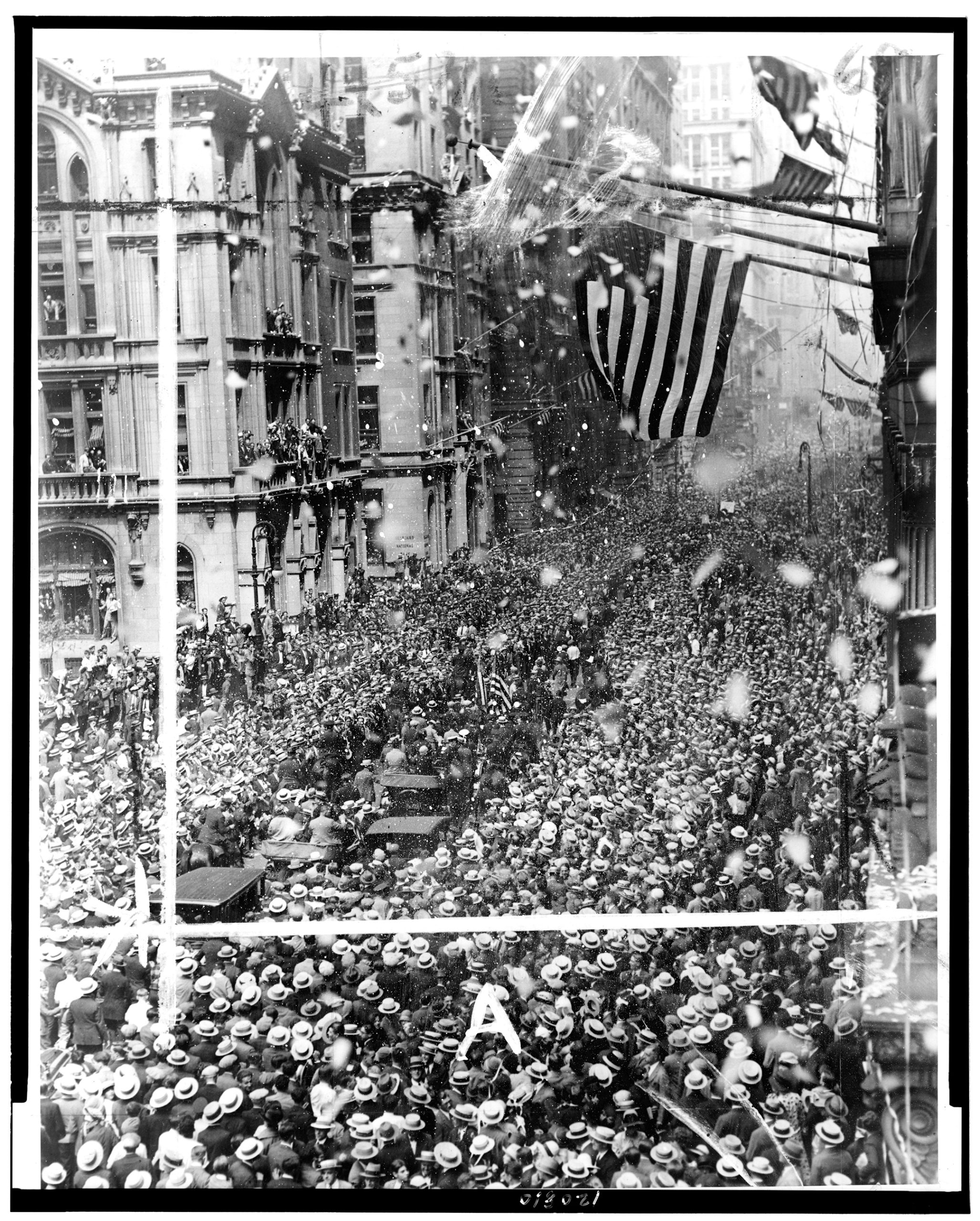
When Ederle returned home to Manhattan, she was greeted with her own ticker-tape parade. More than 2 million people were said to have lined the parade route. But New Jersey wanted to claim her as well. As the Matawan Journal mused at the time:
“New York, with its routine modesty, grabs at all the glory of being Gertrude Ederle’s hometown….But how about Highlands? New Yorkers dismiss that picturesque waterside port as the ‘summer home’ of the Ederles. But did Gertrude learn to swim on Amsterdam Avenue [in Manhattan]? Did she acquire her marvelous staying power by breathing the motor exhausts on the streets of the upper West Side? New Jersey, known as ‘Joisey’ in proletarian circles across the Hudson, rises to a question of personal privilege. Let New York throw ticker tape all over Gertrude if it so wishes. Let Mayor Walker greet her on the steps of the City Hall. But what did she do after the Empire City had exhausted its frenzies? She looked forward to ‘Joisey,’ that’s what she did; to Highlands, where she grew up from a little girl to be the mightiest woman in all of sport.”
Another local paper put it more succinctly: “Highlands feels that a Highlands girl, and not a New York girl, has accomplished the channel swim.” Locals planned a celebration the likes of which “has not been accorded any dignitary since its men returned from the fighting fields of France” following World War I.
In the coming years, Ederle would play herself in the 1927 movie “Swim, Girl, Swim,” and make several widely publicized personal appearances. Still, it’s said the success never went to her head. As one paper reported, “One of the most pleasing features of Miss Ederle’s remarkable success is that it has left her modest to a degree, totally unspoiled. She is a generous winner, a good loser, and these traits, added to high spirits, a cheerful disposition and friendly manner, have made her a universal favorite.”
The Great Depression curtailed Ederle’s ability to profit from her celebrity, however, and a fall down some stairs in 1933 left her with lifelong health issues. By the 1940s, she was almost completely deaf (having had limited hearing since a bout with measles as a child). She began teaching swimming to deaf children and settled into a relatively quiet life.
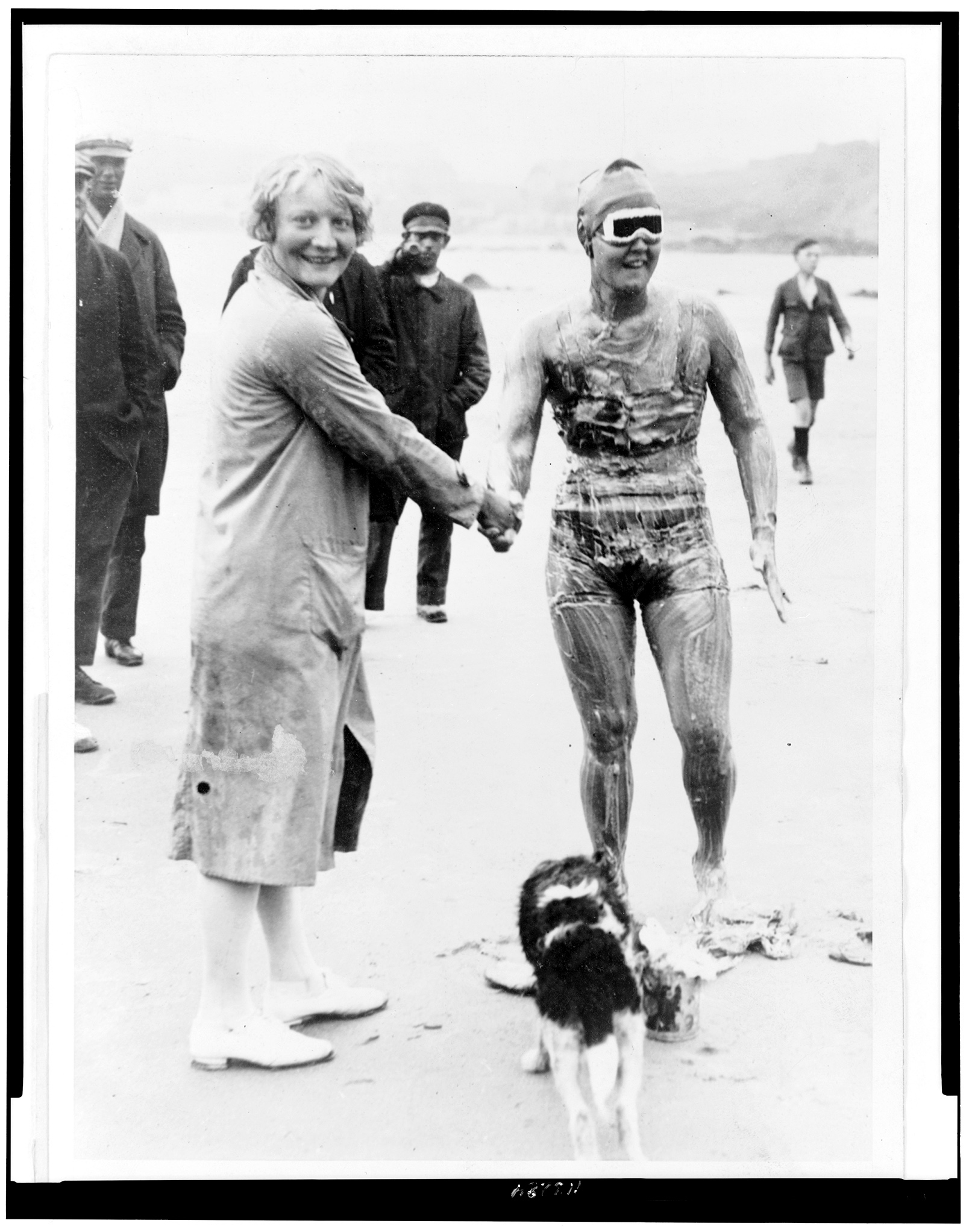
In 1975, Ederle was the guest of honor as the Borough of Highlands dedicated a park in her name.
She maintained her ties to New Jersey, dying Nov. 30, 2003, in Wyckoff at the age of 98.
To learn more about Gertrude Ederle’s inspiring life, read “America’s Girl: The Incredible Story of How Swimmer Gertrude Ederle Changed the Nation” (2009); “Young Woman and the Sea: How Trudy Ederle Conquered the English Channel and Inspired the World” (2009); or watch “Young Woman and the Sea,” starring Daisy Ridley (2024). To browse the outcomes of Olympic games going back to 1896, visit www.olympics.com.
Melissa Ziobro is the curator of the Bruce Springsteen Archives & Center for American Music, and director of Public History, at Monmouth University.
The article originally appeared in the August 8 – 14, 2024 print edition of The Two River Times.