By Jody Sackett
Imagine you could have a farmer’s market and family wellness spa right in your own backyard. You can – if you have a vegetable garden.
Whether you have a large yard or just a few patio pots, growing your own vegetables is an easy and economical way to eat healthier and reduce stress by getting back to nature. Developing sustainable self-sufficiency is a therapeutic accomplishment, and with new cultivating techniques, it’s so easy even your kids can do it.
Victory gardens were ubiquitous during World War II because it was a simple and cost-effective way for folks to feed fresh, healthy food to their families. The same is true today. Modern no-dig gardening methods require fewer tools and result in faster, better yields. Involving the whole family in choosing which favorite veggies to plant is fun, and children not only love growing their own plants but are more inclined to eat what they grow.
Working in the earth to nurture the garden is a natural way to alleviate anxiety while effortlessly absorbing Vitamin D from sunshine. It delightfully puts life in perspective every day.
A Family Affair
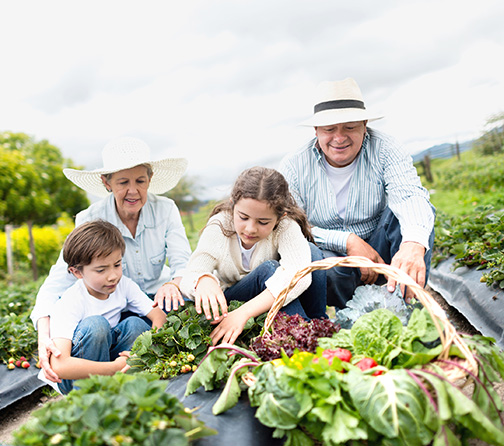
Gardening is the ideal family activity because it’s mighty convenient and has benefits like hands-on science lessons. Children are excited to see the dry seed they stuck in the dirt miraculously burst forth as a beautiful living plant, and it becomes their own “baby.” They learn how water and sunshine make their seed grow. They can see how butterflies pollinate the garden to create new life. They discover how the garden feeds not only themselves but other wild creatures.
Connecting with nature is not only educational but also reduces children’s stress and promotes calm and it develops other skills, too. Having a garden requires care and patience, encourages curiosity and teaches sustainable responsibility. A family garden enhances bonding and enables everyone to share the successes, failures and tasty results.
For competitive types, children can enter the produce they grow in the Monmouth County Fair and strive for a blue ribbon.
Sirena Smith, Girl Experience Manager with Girl Scouts of the Jersey Shore, agrees gardening is important for children. She teaches the popular science-based gardening badges for Girl Scouts in kindergarten through 12th grade. “Through Girl Scout programming, I have the opportunity to inspire young minds by providing hands-on experience that connects STEM to the natural world, empowering girls to explore and discover their passions.”
Getting Started
First, decide what kind of garden you want: a backyard in-ground garden or patio pots. If your space, time and experience are limited, container gardening is best. Herbs and many vegetables grow well in pots. It’s a flexible format, so you can change garden size by simply adding or removing containers. In-ground backyard gardens initially are more work to prepare, but they can provide better drainage and drought protection, with more space for planting bigger and more varied crops. If your gardening commitment is wavering, perhaps start by participating in your town’s community garden with a knowledgeable friend. But get started soon, because eastern Monmouth County is USDA Hardiness Zone 7b, which means crops can be planted after about April 15 or the last frost.
How to Plant Container Gardens
All vegetable gardens need at least six hours of daily direct sunshine, so put your pots in a sunny place. Containers should be big enough for your intended mature crops and have drainage holes. You can add a few inches of stones or sweetgum tree prickly balls for drainage in the base of the container, too. Rutgers University recommends using lightweight synthetic seed-starting “soil” mixes with vermiculite, peat moss and limestone, which you can find at garden centers. Remember, better soil means better results. Plant seeds according to packet directions.
Seedlings purchased from a garden center should be carefully removed from their starter pots, keeping root balls intact, and placed gently into pre-dug holes the length of the roots.
Initially, pots need to be watered every day so plants can grow strong and withstand drought; occasional fertilizing also helps.
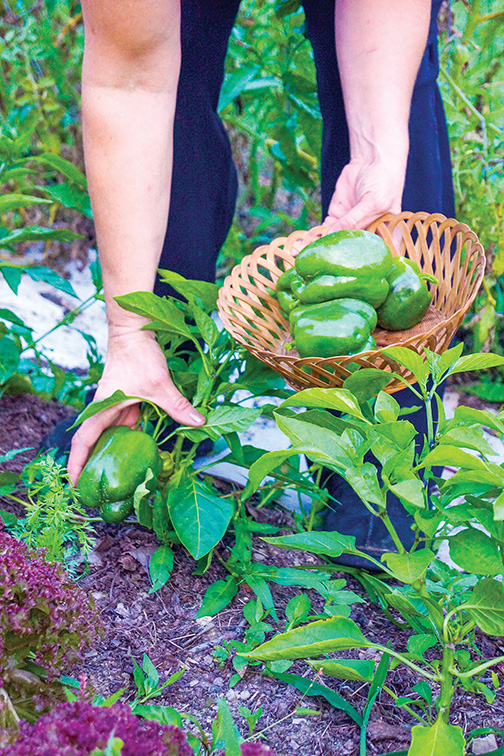
Good vegetable crops for containers are leafy greens like lettuce, kale, spinach and swiss chard; snow peas or bush beans; cherry tomatoes, hot peppers and radishes. Grow basil, parsley, cilantro and chives from seed, and buy seedlings for sage, oregano, rosemary, thyme and mint.
How to Plant a No-Dig In-Ground Garden
No-dig methods protect the soil structure and are easier to get started. Choose an accessible, protected spot with direct sunlight and well-drained soil. Mark your garden perimeter with string (novices, start small – you’re not feeding an army). Stack an inch of overlapping newspaper or cardboard on top of the ground to block off sunlight so weeds won’t grow through, and water it well. Put 2 inches of root mulch down next, then layer 6 inches of compost on top of the mulch and rake it out lightly. Bagged mulch and compost are available at local garden centers.
Plant your seeds at the depth and spacing listed on the packet. For seedlings, create small holes in the compost for planting. Water the garden well each day. In addition to container crops, try planting green onions, beets or carrots, cucumbers, peppers, big tomatoes and lavender.
Micro Gardens
Still too much work? Try starting very small by growing edible microgreens in a jar on your kitchen counter. All it requires is a 16-oz mason jar with cheesecloth netting stretched over the opening and screwed down with the rim band. Use microgreen seeds like mung beans, broccoli, radish and alfalfa (found online or in health food stores). Soak a tablespoon of seeds in a jarful of water for six hours, then drain so seeds stick to the inside of the jar. Store the jar angled downward in a bowl on your countertop, out of sunlight. Rinse and drain seeds twice a day for three to four days, making sure seeds stick to the jar’s sides. When tiny leaves appear, move the jar into the light. Let the kids help, and you’ll all soon be happily munching on sprouts.
Help Abounds
Gardening communities embrace newcomers, and there are plenty of helpful resources online or from local sources like town garden club members. Rutgers Monmouth County Master Gardeners provide an excellent source of free advice, too, either via their website at monmouth.njaes.rutgers.edu/master-gardeners or in person. “The Rutgers Master Gardener Helpline in Monmouth County is open for calls (732-303-7614), walk-ins and emails Monday through Friday from 9 a.m. – 4 p.m.,” explained Diane Larson, home horticulturist and Rutgers Master Gardener coordinator. She recommends “emailing photos, if possible, along with your question to mgarden@co.monmouth.nj.us so we can best help you, or bring in samples to our office at 4000 Kozloski Road, Freehold.” Happy gardening!
The article originally appeared in the March 13 – 19, 2025 print edition of The Two River Times.