By Sunayana Prabhu
RED BANK – The borough council took two actions at the latest meeting to advance affordable housing plans: Officials endorsed a state-mandated fair share housing plan required of all municipalities and introduced an ordinance to adopt the train station redevelopment plan recommended by the planning board.
According to the Housing Element and Fair Share Plan adopted by the planning board June 25 and endorsed by the borough council the following day, Red Bank is poised to satisfy its housing obligation of 154 new affordable units and the rehabilitation of 54 existing units – essentially bringing them up to code – in order to fulfil the state’s decade-long fair share housing mandate to ensure housing opportunities for all.
All municipalities were required to adopt a housing element and fair share plan by the state’s June 30 deadline. The plan serves as a blueprint for affordable housing development over the next 10 years and requires municipalities to create zoning opportunities to meet their housing obligations. It is part of the state’s fourth round of affordable housing mandates, which unfolds through 2035.
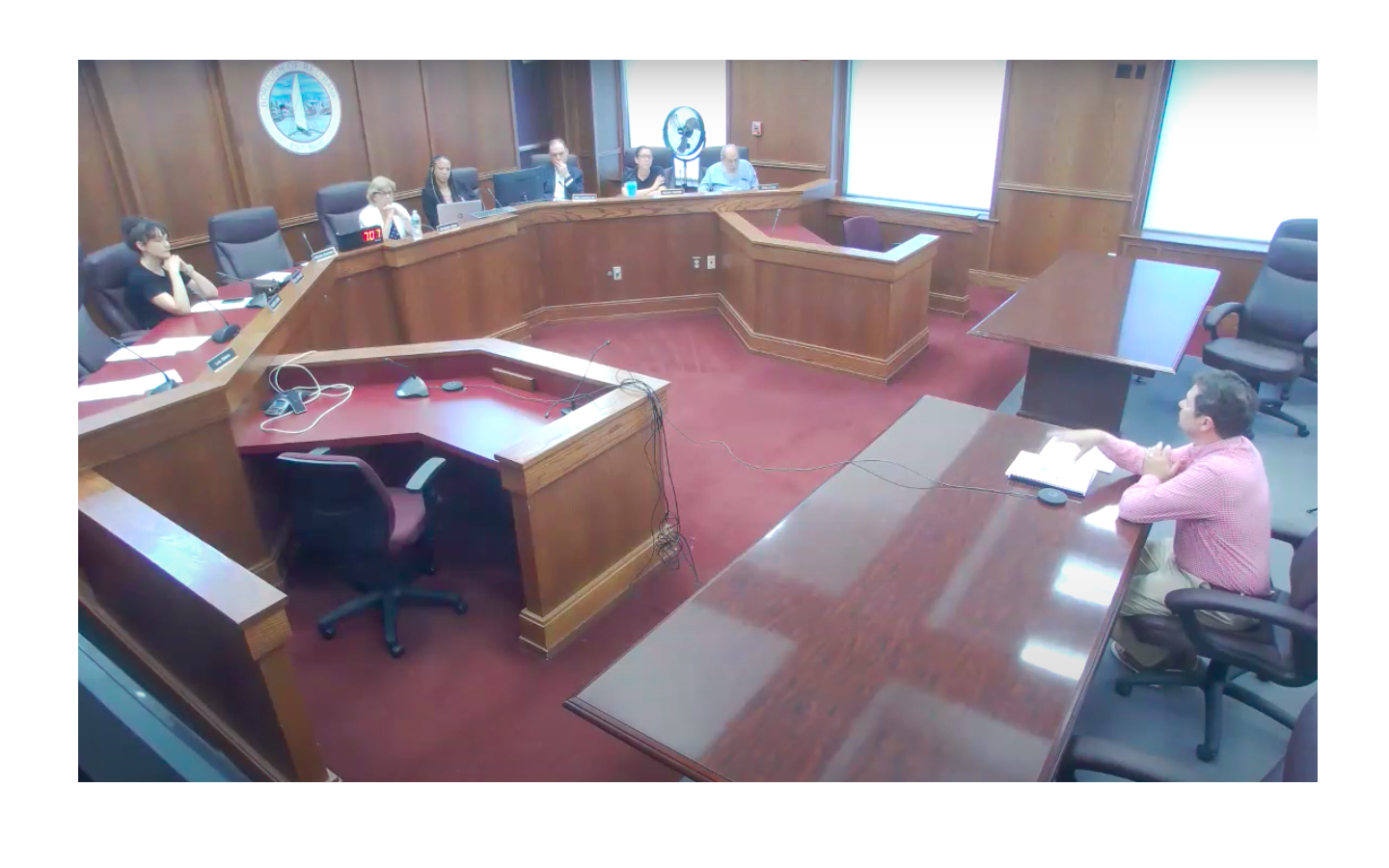
At the Thursday meeting the governing body introduced a resolution endorsing the borough’s fair share housing plan. Chris Dochney, a professional planner from CME Associates contracted by the borough, created the housing plan and provided a brief presentation during the planning board meeting with an overview of the borough’s affordable housing obligation.
Dochney presented a housing strategy that he said satisfies the borough’s new and rehabilitated fourth-round affordable housing obligations. He also explained that the mandates stem from a series of Supreme Court decisions called the Mount Laurel doctrine, which requires municipalities to provide housing opportunities for low- and moderate-income residents to maintain housing equity for all in 10-year cycles called rounds.
For the fourth round starting this year, Dochney prepared a fair share housing plan that leverages several existing and approved projects to satisfy 143 of the prospective or new units to be built. “Through projects that have already been approved or already in the pipeline, we would essentially fully satisfy that 154-unit obligation,” he said, a number calculated by the state. He also noted that there is an opportunity to potentially claim 38 bonus credits to fulfill the requirements. Those credits, he explained, are calculated based on the availability of developable land in the borough and can be adjusted for a realistic development potential (RDP) to be determined by the state.
The Locust Landing Avenue project on the West Side of the borough is an existing affordable housing development initially funded by Middletown Township, which received nearly all the fair share housing credits for it in a prior round. Locust Landing management has now approached the borough for assistance with upgrades. If the borough contributes financially to those upgrades, it can claim housing credits.
The Globe Court project will include six affordable units. The Vistas at Red Bank, located at 120 Monmouth St., will provide five affordable units. The 20-21 Monmouth St. project will provide seven credits. The planned Thrive Red Bank special needs housing project on Shrewsbury Avenue includes five affordable units.
The train station redevelopment plan, which covers New Jersey Transit’s north and south parcels adjoining the station, originally called for 400 units integrated with nearly 80 affordable units. That number has now been revised to 350 units. As a result, Dochney said the number of affordable units “might go down from 80 to 70, but that’s still enough credits to satisfy the obligation.”
The second component of the obligation is the rehabilitation of 54 units that “are currently code deficient in some manner, meaning that they might need a new roof, they might need (a) new HVAC system,” Dochney explained.
The borough-operated rehabilitation program has upgraded about 10 to 15 homes in the past five years. Through this program, funded by the Affordable Housing Trust Fund and Monmouth County’s rehabilitation program, which borough residents are eligible for, “we will satisfy the rehabilitation obligation,” Dochney said. He added that “the level of scrutiny” for hitting exact targets for rehabilitation units “is a bit less” than for the targets for new units. Dochney clarified that if the borough is unable to rehabilitate all 54 units, it is “not necessarily in jeopardy of losing any immunity to builders’ remedy lawsuits there, but we do have to have a plan in place to make sure we’re addressing that.”
Dochney’s plan was found to be consistent with the goals and objectives of the borough’s current Master Plan and was adopted by the planning board at its meeting. The borough council endorsed it the following day.
The plan will now be submitted to the New Jersey Department of Community Affairs, which oversees the state’s affordable housing program. There is a two-month window for potential legal challenges.
“I think Red Bank is on very good footing with this plan,” Dochney said.
“Everything in here is a project that (is) already constructed or already approved or in the pipeline.”
In addition to endorsing the fair share housing plan, the borough council introduced an ordinance to adopt the train station redevelopment plan, which had been approved and recommended by the planning board at its previous meeting. A final vote on the plan is expected at the borough council’s July 10 meeting.
“We’re just at a redevelopment plan stage. This just sets the parameters of what can be built,” borough attorney Greg Cannon explained during the council’s meeting. He added that a designated redeveloper must submit detailed plans for review by the borough engineer and attorney before any construction can proceed. The redevelopment agreement will clearly state the developer’s responsibilities, including infrastructure improvements and affordable housing contributions. Cannon said this interim stage sets the framework for future development but does not finalize specific construction details.
The article originally appeared in the July 3 – July 9, 2025 print edition of The Two River Times.