By Laura D.C. Kolnoski
OCEANPORT – If Oceanport approves a 30-year payment in lieu of taxes (PILOT) agreement with Netflix Dec. 4, it’s likely the entertainment giant will close on the property for Netflix Studios Fort Monmouth the following day.
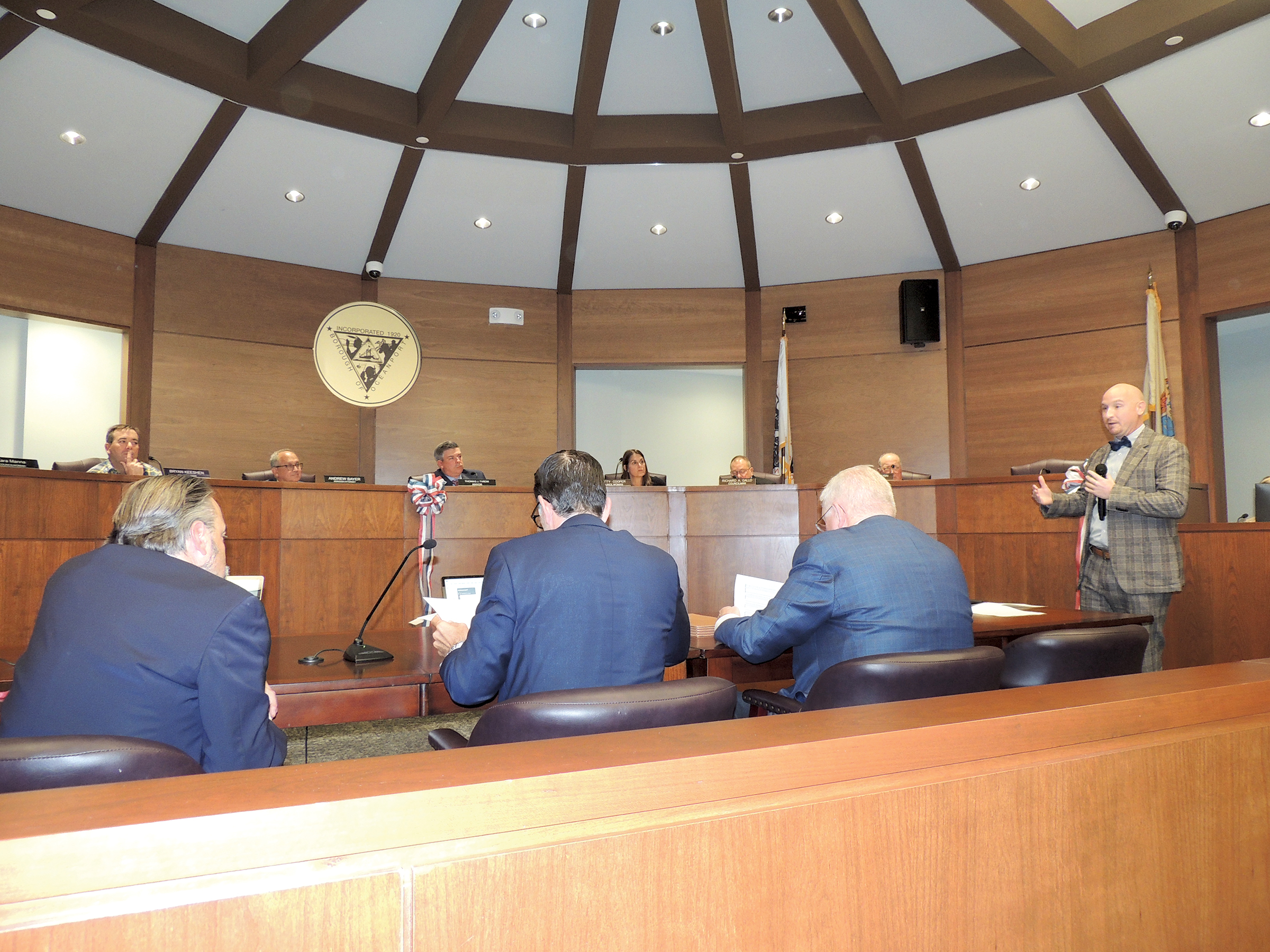
Last Thursday, the borough council voted unanimously to move the PILOT to a public hearing and final vote at its next meeting, Thursday, Dec. 4. Eatontown, whose land will also be part of the complex, approved its PILOT agreement with Netflix Oct. 22.
Officials at the Fort Monmouth Economic Revitalization Authority (FMERA), the agency overseeing the fort’s redevelopment, confirmed the closing date with Netflix as Dec. 5.
Through a PILOT, the developer makes negotiated annual payments to the municipality rather than paying standard property taxes. Municipalities can decide how the money is distributed.
“Under the PILOT, Oceanport will receive $66 million, including administrative fees, over 30 years, in which the municipality will cover a majority of the debt service payment from the board of education capital improvement bond,” said Mayor Tom Tvrdik. “The county will receive 5% as required by statute. The benefits will be felt throughout this community and the surrounding communities. The thought process is stability and setting up the future over 30 years.”
Oceanport will also receive a $3 million “Community Benefit” payment separate from the PILOT to address specific needs. A committee will be formed to determine the best use of those funds, Tvrdik said. The agreements follow lengthy mandated approval processes with FMERA, the municipalities, Monmouth County and the state, overseen by the state Attorney General’s Office.
Borough attorney Andrew Bayer said while the county will receive less tax revenue under the PILOT than it would have through standard taxation, “It’s about the tax revenue that will be generated.” Details will be available on the township website, oceanportboro.com, prior to Dec. 4, he added.
Oceanport’s 29.4-acre McAfee parcel, the centerpiece of Phase 1, was assessed at $132 million. The former 1997 electronics research and development building will be repurposed by Netflix for offices and production-related uses.
“This assessment is only for the McAfee parcel and its improvements,” Tvrdik explained. Other borough properties that will be part of Netflix’s purchase include Greely Field (20.9 acres) and Cowan Park (5.3 acres), both of which are in the historic district and cannot be built upon, and the waterfront “400 area,” 79.3 acres across Oceanport Way also known as the Gooseneck neighborhood. Tvrdik said the 400 Area is not included in the PILOT agreement approved Nov. 6. Potentially 50 buildable acres there could be turned into backlots while the remaining acreage remains open space.
Netflix was scheduled to make a presentation detailing plans for the site to the borough planning board last night.
“If and when Netflix decides to develop the 400 area, Oceanport will receive additional tax revenue under a PILOT or regular taxation,” Tvrdik said. “The net impact of the growth of Oceanport’s commercial tax including Netflix, the fort’s RiverWalk Center and Commissary redevelopments, and Monmouth Park Racetrack, in addition to other projects – is that the tax burden on Oceanport residents is lessened. (These) developments will provide a commercial tax base like Oceanport has never seen.”
Tvrdik noted that during the almost 100 years Fort Monmouth was under U.S. Army jurisdiction, “Oceanport received zero tax dollars from the property. The benchmark of a fiscally healthy community is when both commercial and residential tax bases are thriving and contributing to the fiscal stability of the borough. Other than Monmouth Park, the borough has never had a significant commercial tax base. Now, it does.”
Stability and minimizing risk were cited by officials in both Eatontown and Oceanport as the rationale for approving PILOT agreements. Risk was also a concern for the few residents who spoke during Thursday’s meeting, questioning what would happen if Netflix were to leave.
“No one knows what will happen, that’s exactly the point,” said Oceanport Special Redevelopment Counsel Matthew Jessup. “Any future landowner must pay this exact amount. A PILOT is treated exactly like a tax dollar.” Michael Hanley, financial advisor to both municipalities, added, “This is a steady stream of tax relief. It’s a unique circumstance that eliminates risk.”
“I know people might be conflicted, concerned or confused about the PILOT, but it is essentially a math equation that the governing body has to solve,” said former Mayor Jay Coffey, who was mayor during most of the fort’s 12-year-long redevelopment. “I believe we have the right people on the council to determine if the PILOT favors the municipality, mitigates the risk associated with tax appeals, and provides long-term, guaranteed revenue. Based upon the facts and figures presented by the borough’s special legal counsel, financial advisor and tax assessor, I believe the council has done a fantastic financial analysis and they should vote in favor of granting the PILOT.”
Netflix will pay $55 million for 292-plus acres with plans to invest at least $900 million in the project, which will be built in two phases. Four soundstages, a mill, a backlot and support structures will be built on the McAfee parcel first, followed by eight soundstages and similar buildings in Eatontown. The 1,126-acre fort, which also includes part of Tinton Falls, closed in 2011.
Demolition of obsolete fort buildings, which began last summer, is expected to be completed next spring. Following completion of renovations and new construction, Netflix hopes to open the first phase in 2027, with Phase 2 coming online in 2028.
The article originally appeared in the November 13 – 19, 2025 print edition of The Two River Times.