By Emily Schopfer
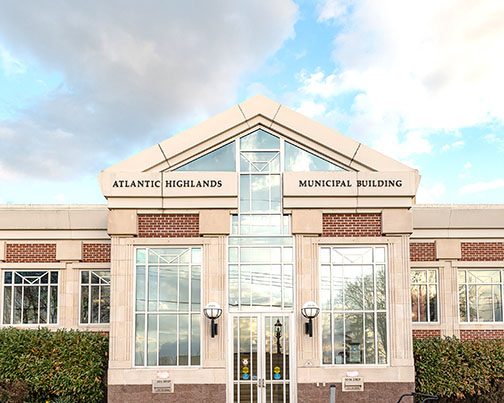
ATLANTIC HIGHLANDS – For the first time in likely a decade, water rates will increase for Atlantic Highlands residents after the council voted unanimously to adopt an ordinance granting the increase during its April 6 meeting.
While borough administrator Caleb Stratton couldn’t confirm the last time rates increased, he said it has been a considerable amount of time and 10 years was probably accurate.
“This is a health and safety matter, and it’s the most important thing that we’re doing in Atlantic Highlands,” Mayor Lori Hohenleitner said during the ordinance reading.
According to the ordinance, both Stratton and Certified Financial Officer Rick Llanos recommended an immediate 5.6% increase.
On average, for Atlantic Highlands residents using up to 3,740 gallons of water quarterly, the rate per quarter per unit will increase from $60.50 to $63.89. For residents using 3,741 to 7,481 gallons, the increase will be from $77.55 to $81.89.
This increase will allow the borough water department to remain a self-liquidating public utility, a municipal service such as water or sewer that covers its operating costs, maintenance and debt through user fees rather than tax revenue.
In turn, this allows any debt obligations to be excluded from the municipality’s net debt calculation.
In Atlantic Highlands, both harbor and utility services are operated as self-liquidating public utilities, according to the borough’s 2025 Annual Debt Statement, and confirmed by Stratton. “We intend to maintain all utilities as part of the municipality,” Stratton said.
BENEFITS OF MUNICIPAL OWNERSHIP
Even with this 5.6% rate increase, Atlantic Highlands residents may still pay less than they would if the borough moved to a private water supply. Charlie Kratovil, central Jersey organizer for Food & Water Watch, said private ownership is the single biggest factor associated with higher water bills for consumers, due to the “inevitable” profit margins that come with private ownership. “They have a plan to make back every dollar they spend on the purchase, and then some,” Kratovil said.
The primary water provider for the borough is the municipally owned Atlantic Highlands Water Department; New Jersey American Water (NJAW) does not serve any residents in the borough, Stratton said. NJAW, the private, investor-owned subsidiary of American Water, currently supplies water to over 30 Monmouth County municipalities, including the neighboring towns of Middletown and Highlands.
Red Bank also has municipality-owned water and is primarily served by the Red Bank Water Department. “Municipal ownership of our water system is both beneficial and empowering for our community,” said borough manager James Gant. “It allows the borough to maintain direct control over operations, capital planning, maintenance priorities, and long-term infrastructure investment in a way that reflects the needs of our residents and businesses.”
While Red Bank does supplement its supply at times with purchased water from New Jersey American Water to meet seasonal demand, Red Bank Water Department is the primary provider year-round, and there are no plans to transition to a private water company, Gant said.
“Once you give up control (to a private company), you’re unlikely to get it back,” Kratovil said.
He has seen long-term leases for privatization, but he has not seen any township fully – or successfully – remunicipalized after being acquired by a private company.
NJAW has acquired several public utility companies in recent years, including Shrewsbury Township’s Alfred Vail Mutual Association Water System in 2024 and the Hopewell Borough Water System in 2025.
NJAW has not approached Atlantic Highlands about acquiring its water or other utilities during his time with the borough, Stratton said.
NJAW also raised its rates this year, announcing in January that increases of an average of $10 per month will support over “$1.4 billion in ongoing water and waste-water service system investments through December 2026,” according to a Jan. 16 news release.
While privatization of water and other utilities in municipalities has often resulted in higher rates for customers, privatization does appear to offer some benefits.
Aging infrastructure is one of the key challenges that municipalities face, and the high cost of water infrastructure could push local governments toward privatization, according to a 2022 World Water Council study. Kratovil agreed, adding that increasing regulatory requirements, although vital and well-intended for environmental and health reasons, often require sizable investments and firm deadlines that many public utilities may not be able to handle.
LOCAL CONTROL
However, in addition to lower costs, Kratovil feels that municipality-owned utilities provide another important benefit: accountability. “If you’re unhappy, you can change those leaders,” Kratovil said, something that cannot be done with private companies.
“Importantly, the decisions affecting our water infrastructure are made by local officials – both elected and professionally appointed – who are directly accountable to the constituents they serve. That level of local oversight and responsiveness is powerful and worth noting,” Gant said.
“Correlation does exist between ease of privatization and cost for water. This is a cost issue, affordability issue, and also an issue of local control,” Kratovil said. But it is hard for him to envision a private company putting the needs of town residents, especially in a small town like Atlantic Highlands, over shareholders’ interests.
In his six years with Food & Water Watch, Kratovil said he has yet to see a town that needed to privatize. There is “always a way to invest in your system,” he said, and encourages towns to apply for grants, if possible, to keep their utilities municipality-owned.
The article originally appeared in the April 16 – 22, 2026 print edition of The Two River Times.