By Emily Schopfer
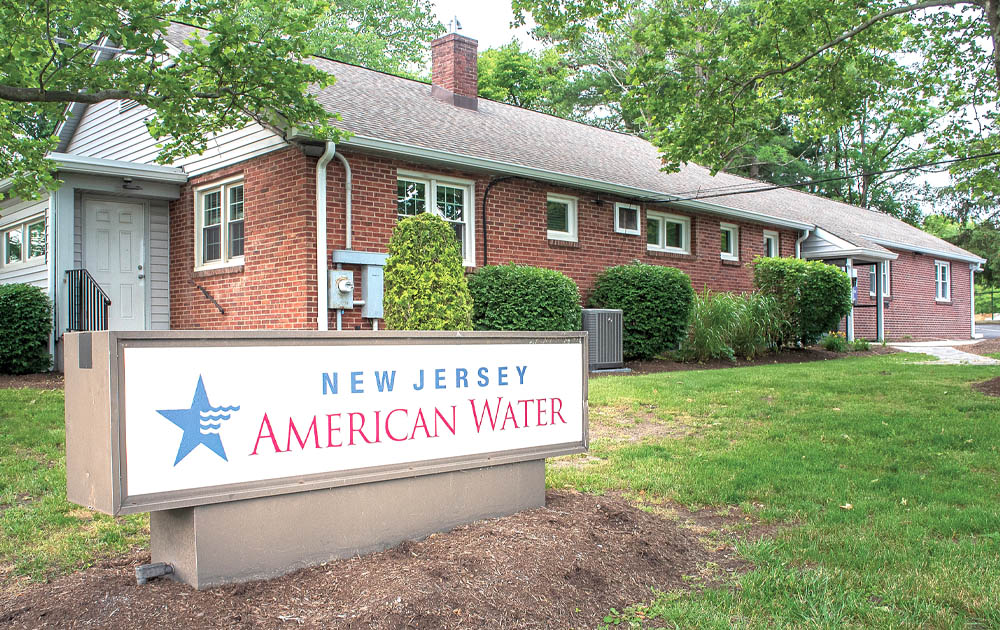
NEW JERSEY – New Jersey American Water (NJAW) presented its proposed rate increase of 11.95% in a virtual hearing May 27 before the New Jersey Board of Public Utilities, New Jersey Division of Rate Counsel, and members of the public. The proposed increase would raise bills $10.02 for water and $8.20 for applicable wastewater services for over 2.9 million statewide customers, the company says. Currently, NJAW is the primary water supplier of 13 Two River-area municipalities.
If approved, the rate increase will likely appear on bills in the second half of the year. NJAW’s proposal was introduced Jan. 16 to the New Jersey Board of Public Utilities (BPU), the final authority on the increase.
NJAW said in a Jan. 16 news release that the rate increases would “support over $1.4 billion in ongoing water and wastewater service system investments through December 2026.”
“New Jersey American Water has provided high quality, reliable water and wastewater services to its customers for over 130 years. Last year, in 2025, the company was rated the highest in customer satisfaction of all investor-owned large water utilities in the northeast United States. In order to continue to provide this high level of service to its customers, however, the company must continue to make ongoing significant capital investments as well as incur substantial operations and maintenance expenses,” Christine Soares, a New Jersey American Water representative, said at the hearing.
Soares added that “many of these improvement projects are necessary to comply with environmental or water quality regulations to address aging facilities and to increase system resiliency and reliability,” referring to the $1.4 billion in system investment the proposed rate increase would support.
The two May 27 public hearing sessions, presided over by Administrative Law Judge Jacob S. Gertsman, allowed members of the public to express concerns about the proposal. Those present were unanimously in opposition of the rate increase with a majority noting the ongoing affordability crisis and rising cost of living plaguing many Americans and New Jerseyans.
Affordability Crisis
“I’m sure you’re all aware of the affordability crisis in New Jersey across the board,” said Colin Hickey, committee member for Bedminster Township. “This rate increase will disproportionately affect low-income or affordable housing residents.”
Collingswood resident Kevin Barfield noted that while the hearing did give members of the public an opportunity to voice their concerns, it was not accessible and available to many due to being held during or right after work hours, at 4:30 p.m. and 5:30 p.m. According to Barfield, NJAW is bringing in $214 million in annual revenue, while “taxpayers scrape money together to pay their bills.”
“I worry that people will have to cut spending on groceries, medicine, or gas to pay a water bill,” said Rachel Davis, public policy and justice organizer for the Rumson-based nonprofit Waterspirit.
Davis also echoed Barfield points on accessibility, adding that the meetings were held at a time when many working members of the public are still at work, commuting, or picking up their children from school.
Equal Increase, Unequal Impact
NJAW currently supplies Rumson, Eatontown, Fair Haven, Highlands, Little Silver, Monmouth Beach, Middletown, Oceanport, Sea Bright, Shrewsbury, Tinton Falls, and parts of Colts Neck and Holmdel in the Two River area, in addition to most other municipalities in Monmouth County. While the rate increase will be supported equally statewide, it will likely not have an equal impact across every borough, township, or customer as income levels can vary drastically from town to town, some opponents said.
Rumson Borough is concerned of the impacts that rising utility costs can have on both Rumson residents and families, but also recognizes “the importance of maintaining safe, reliable, and high-quality utility service, including the ongoing infrastructure improvements necessary to support said services,” according to a June 1 statement provided by Deputy Municipal Clerk Eric Paone-Hurd.
Atlantic Highlands Borough is one of the only two municipalities alongside Red Bank in this area that operates a public, municipality-owned utility department. While the borough’s Business Administrator Caleb Stratton said that neither he nor the borough could speak on NJAW’s rates or utility structure, he did say that “There are many different costs associated with maintaining any water system and yes, to some degree price increases must reflect the cost of compliance with NJDEP regulations, costs of labor, costs of materials, emergency response costs and administrative expenses associated with providing a core public service.”
However, “the difference between Atlantic Highlands water system and NJAW is that our utility does not profit from the services it provides to residents,” Stratton said.
Stratton also said that the rate increase might cause affected municipalities to “do their due diligence. Water quality, customer service, water pressure, system investments, emergency response, and cost are all relevant factors – cost only being one of those dimensions.”
Regarding the affordability concerns brought up by residents at the May 27 hearing, Stratton said, “Affordability is an appropriate topic” to bring before the BPU. He also said affordability is a relevant factor in Atlantic Highlands Borough’s decision to keep public utilities.
“You know, executives and workers are not understanding how tough it is in America… to ask for an increase right now is somewhat inhumane,” said Bernard Glee, an Irvington resident who said he has witnessed and experienced layoffs first-hand within his community.
“I see that your CEO is making millions of dollars and you’re applying for a rate increase,” said Glee, who stressed that cutting operational costs within the company should be the first step, and the funds should come from company profits, not customers’ bills.
“You know we need our water. It’s a necessity, but don’t make us pay for anything that is a benefit to the CEOs and to the executives of the company,” said Glee, who also mentioned concerns that NJAW seems to have a two-year pattern of rate increases.
Past Increases
Since 2020, the BPU has approved rate increases every two years on average for NJAW. Most recently in September 2024, a rate increase brought “the average bill for most water customers with a 5/8-inch meter using 5,642 gallons per month will increase approximately $5.33 per month. The bill for an average wastewater customer will increase approximately $5.68 per month,” according to a Sep. 4, 2024, news release from NJAW.
The September 2024 approved rates brought the company an annualized revenue increase of approximately $79.5 million, and like the proposed 2026 increases, “was primarily driven by more than $1.3 billion in infrastructure investment in treatment system and distribution upgrades since its last rate filing.”
In September 2022, the BPU approved an increase that brought the company’s annualized revenue increase to approximately $45.5 million, and was also justified by “infrastructure investment,” and showed increases of $2.93 to $3.74 per month.
In October 2020, the BPU also approved both a rate increase ($2.52 to $2.56/month) as well as a pass-back credit, according to an Oct. 28, 2020, NJAW news release. This rate was also driven by “more than $1 billion in infrastructure investment in treatment systems and distribution upgrades since the last rate case,” according to the Oct. 28 release.
The most recent Jan. 16, 2026, increase request coincides with eight consecutive months of below-average rainfall and state-wide drought warnings.
“Water is a human right,” said Davis of Waterspirit. “No resident should have to experience a water shut off, especially during droughts.”
Potential Impacts
The state has been in a drought warning since December of 2025, and the New Jersey Department of Environmental Protection (NJDEP) reports that “Despite the wet weather over Memorial Day weekend, broader water supply indicators remain significantly below norms. With dry weather anticipated through the start of June, conserving water, particularly for outdoor water use, is an achievable but essential tool to ensuring a consistent water supply through the rest of the summer.”
If the increase is approved, it would impact customers more if implemented before the fall, as water usage greatly increases in the summer months – although there is no specific date for the increase to take effect as yet. “The average American uses 100 gallons of water per day,” according to the NJDEP. “In the summer, outdoor water use can more than double.”
Future Vote
Bethany Rocque-Romaine, an attorney with the New Jersey Division of Rate Counsel, stated in the May 27 hearing that originally NJAW proposed that this increase be implemented on or after Feb. 16, 2026.” Rocque-Romaine emphasized that although the final decision on the rate increase falls to the BPU, “We at the Division of Rate Counsel are conducting a comprehensive examination of American Water’s proposals to verify the reasons for the increase in charges, and to determine whether the company’s calculations are accurate,” she said.
Dair Urban, representative from the BPU, said May 27 that while “We are carefully reviewing and analyzing the company’s filings,” but “until the board makes a decision on this matter, staff is precluded from commenting on the merits of the case.”
As of June 1, application review and public hearings are still underway. No date has been set for a final vote on the rate increase.
The article originally appeared in the June 4 – 10, 2026 print edition of The Two River Times.