By Emily Schopfer
WEST LONG BRANCH – The Bruce Springsteen Center for American Music (BSCAM) will open to the public Saturday, June 13, and the center’s leadership team and resident experts offered a first look at the exhibit and performance spaces.
“The interpretive experience begins the moment people step foot out of their car, whether they realize it or not,” said Melissa Kozlowski, director of Curatorial Affairs, “because every element of the grounds was thoughtfully planned and executed.”
The exterior of the building at Monmouth University itself is wrapped in weathered steel, “meant to evoke the feel of industrial New Jersey.” As you approach the entryway, visitors will walk atop an iconic herringbone wooden boardwalk in homage to Asbury Park and Springsteen’s musical roots. The natural wood throughout the
interior space is a reflection of Springsteen’s guitar, Kozlowski said.
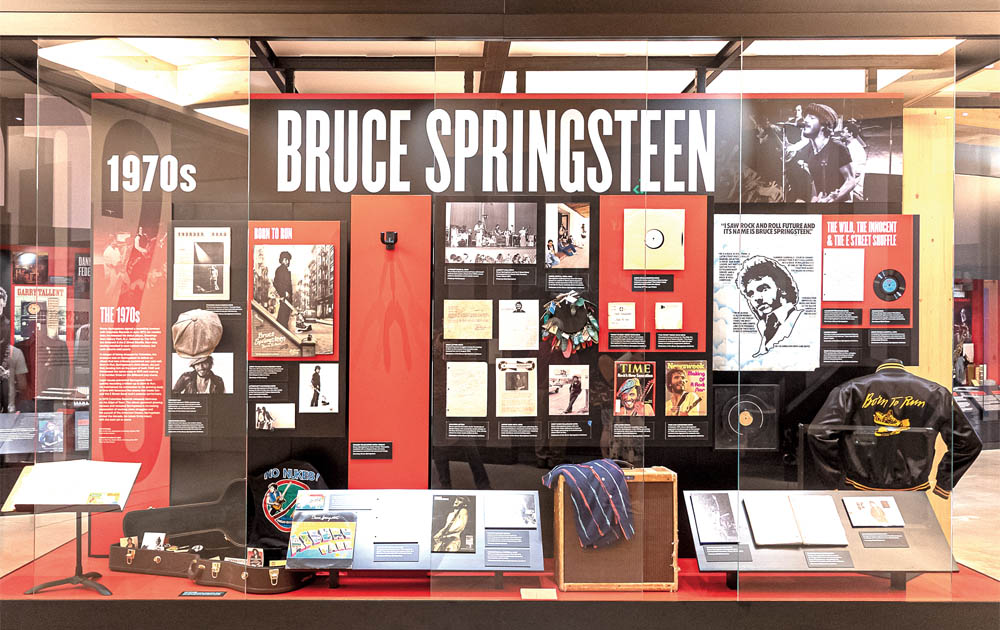
Once inside, there are three places for visitors to go: The two-floor performance space/soundstage, the first-floor gallery dedicated to American music, or the second floor with exhibits focused on Springsteen and the E Street Band.
While the building and its many exhibits can be explored however visitors choose, the team designed the center to begin with a short film to provide the background and vision behind the center. The roughly 25-minute film, Thom Zimny’s “The Ties That Bind: Bruce Springsteen’s American Music Journey,” will screen at film festivals but will otherwise be exclusive to the center, playing twice an hour in the performance space.
The audience is invited on a drive through New Jersey with Springsteen as he speaks about how different musical eras, genres and artists not only impacted him, but also one another. In the film, Springsteen refers to himself as a “link in a chain,” and every genre of music as a car on the same train of American music.
Bob Santelli, BSCAM’s executive director, introduced the film and set the stage for a center unlike other music museums across America. New Jersey is a “microcosm of America,” Santelli said, and as a result of the state’s diversity in both landscapes and people, it is the perfect place to house this center and Springsteen was the perfect catalyst as the “poster boy for American music.”
Santelli said that when he first approached Springsteen with this idea, the musician did not want the center to be about him. He wanted it to be about all American music, everything from the hymns of enslaved people to rock ‘n’ roll, from Motown to country, from early folk songs to today’s pop stars.
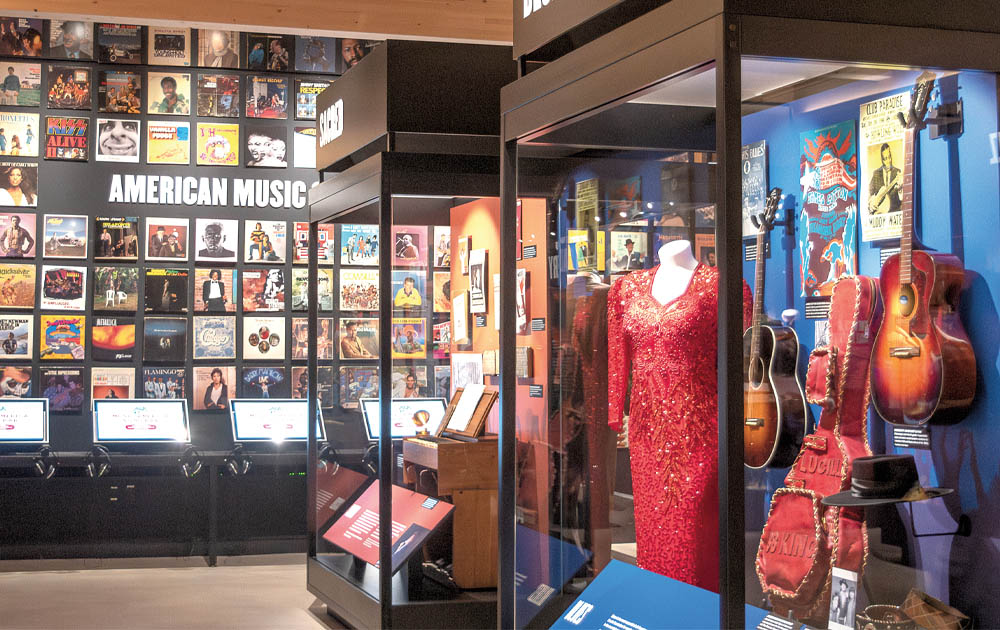
Outside the film viewing and soundstage, the 30,000-square-foot center houses 10,000 square feet of artifacts and exhibits, according to Kozlowski. On the ground floor, visitors can view American music, exploring exhibits centered around music as a whole: its genres, its history, and the artists who create it.
Visitors who attend on or around June 13 will also be able to see the inaugural American Music Honors exhibit and the temporary exhibit gallery “Chimes of Freedom: Protest, Patriotism, and the Power of Song.”
On the first floor’s Jon Landau American Music Gallery, guests can view musical artifacts categorized by gender, race, genre and more. Housed in this space are pieces from the most influential careers of some of music’s most iconic figures, ranging from Elvis Presley and Janis Joplin to Chappell Roan and Lady Gaga.
Many of the artifacts on display came from “Friends of the Bruce Springsteen Special Collection,” but some were unique enough to be donated by Springsteen’s mother, who kept a scrapbook of her son’s work and donated it to the center.
These artifacts, formerly dubbed The Bruce Springsteen Archives, were previously held at the Asbury Park Public Library and have been a part of Monmouth University since 2011. They include “nearly 48,000 items from 47 countries, ranging from articles and oral histories to concert memorabilia and promotional materials,” according to the university’s website.
These 48,000 items are on display on the second floor of the center. As soon as guests climb the stairs, they are met with a wall of band posters dating back to Springsteen’s very first high school band, The Castiles, formed in Freehold. With The Castiles and as a solo artist, Springsteen performed several times at the former coffee house Off Broad Street in Red Bank. Visitors to this section can also immerse themselves in both simulated in-studio songwriting and live concert experiences as they walk through Springsteen’s artistic process.
The decision to place the center next to Monmouth University, on campus property, was multifaceted. Firstly, Springsteen is not a Monmouth University alumnus, but Springsteen and center creators did want the center to be rooted in education, rather than be a tourist attraction, Kozlowski said. Thus, the decision was made to place the center on or near a college campus. Monmouth University is located in West Long Branch, near where Springsteen wrote his breakout 1974 song “Born to Run” in a small rental cottage on West End Court in Long Branch, less than a mile from the center.
The center aims to shed light on Springsteen’s and the E Street Band’s creative process and musical influences, but more broadly will try to expand the public’s idea of what American music is: It’s protest music, it’s music influenced by the British Invasion, it’s music created by those from all walks of life, regardless of race, age, class or gender.
The center and its exhibits will push visitors to ask themselves what defines music as “American.”
The article originally appeared in the June 11 – 17, 2026 print edition of The Two River Times.