By Jake Rallo
Tomato season is the epitome of New Jersey. We’re the Garden State for a reason. Jersey tomatoes are harvested from early July through October, with peak season arriving in August. Grocery stores swap out their signs and stack their shelves with ripe Jersey tomatoes, restaurants feature them on menus, and home gardeners pull them fresh off the vine each morning.
For me, there’s nothing like a Jersey tomato. At its simplest: sliced into wedges, tossed with good Italian olive oil, a bit of salt and pepper. If I could, I’d work Jersey tomatoes into every meal. They’re everywhere come summer, but we rarely stop to think about where they come from, or who’s growing them.
Samaha’s Farm, in Aberdeen, began in 1963 with the story of a young boy named John, who at age 12 read an ad stating, “Farm hand: $1 per hour.” John soaked up every bit of knowledge he could, eventually opening his first small farm stand (or rather, wagon) in ’63 to earn enough money to attend Paterson College for music. Despite graduating with a music degree, John’s passion for farming never subsided. He pursued both music and farming, and in 1969 opened a permanent farm stand in Aberdeen that still stands today.
Today, the farm is run by John’s daughter, Nora, and her husband, Marcus. Marcus joined the operation as an apprentice under John’s guidance, learning everything he could. While still running his own landscaping business, he worked long hours at the farm, eventually leaving landscaping behind to become a full-time farmer.
Tomatoes may be the headliner, but they’re far from the only thing growing at Samaha’s. Jersey corn, peppers, eggplants, squash, zucchini, sunflowers, pumpkins, and more are all on the roster. But for the sake of Jersey star power, I chose to focus on tomatoes.
There’s a lot more than you’d think that goes into the perfect tomato that lands on your counter. Farming is a full-year affair. Between prepping the land for crops, growing seeds in the greenhouse, and maintaining farm equipment, the team at Samaha’s is always working to bring you the perfect tomato.
Marcus says that tomato season starts at the end of July and runs until the first frost. That said, a few farms further south are already selling early-season Jerseys. For Samaha’s, that means starting next week, farming kicks into high gear. With heirloom, cherry, San Marzano, plum and beefsteak varieties, the team has a lot more on their plate once tomato season starts.
Marcus is on the farm at 5 a.m. when corn hits the wagon. From there, they harvest squash, sunflowers, and zucchini. A short lunch break, and then it’s time for the tomato plots until sunset. All the while, the team is also processing, packaging, and delivering vegetables.
Are Jersey Tomatoes
Really That Much Better?
Short answer: yes.
“The soil quality in New Jersey is second to none, and it makes a big difference to the flavor of the tomato,” Marcus told us.
But it’s not just what’s in the ground. Whenever you hear the phrase “Jersey tomatoes,” you’re likely buying vine-ripened tomatoes. As the name suggests, the tomatoes remain on the vine until optimal ripeness, rather than being picked early.
“It’s ripening on the vine, getting all that flavor, staying on the plant until the last possible minute. We pick it when it’s ready to be enjoyed. That’s a big difference,” Marcus added.
This might mean more work for the farmers, but it also means more flavor in your mouth. Commercially grown tomatoes, by comparison, are picked while still green and ripened with chemicals to achieve that stereotypically red look. They may be easier to grow and last longer on the shelves, but they have little to no flavor compared to a Jersey.
Interested in trying a Samaha tomato? While many local restaurants serve tomatoes from Samaha’s Farm, it may not always be advertised on the menu. Luckily for you, Samaha’s sells to ShopRite, Wegmans and Delicious Orchards. If you want the true experience, visit their farm stand in Aberdeen at 704 Lloyd Road, open 9 a.m. to 6 p.m. every day from late May to Halloween, or in Morganville at 338 Route 79, open 10 a.m. to 6 p.m. during the months of July and August.
And Samaha’s isn’t going anywhere anytime soon. Marcus and Nora have three younger children who are all involved in the farm, and hopefully, one of them will take over the family business someday, just as Nora did before them.
Not Just for the Plate:
A Tomato Cocktail Worth Trying
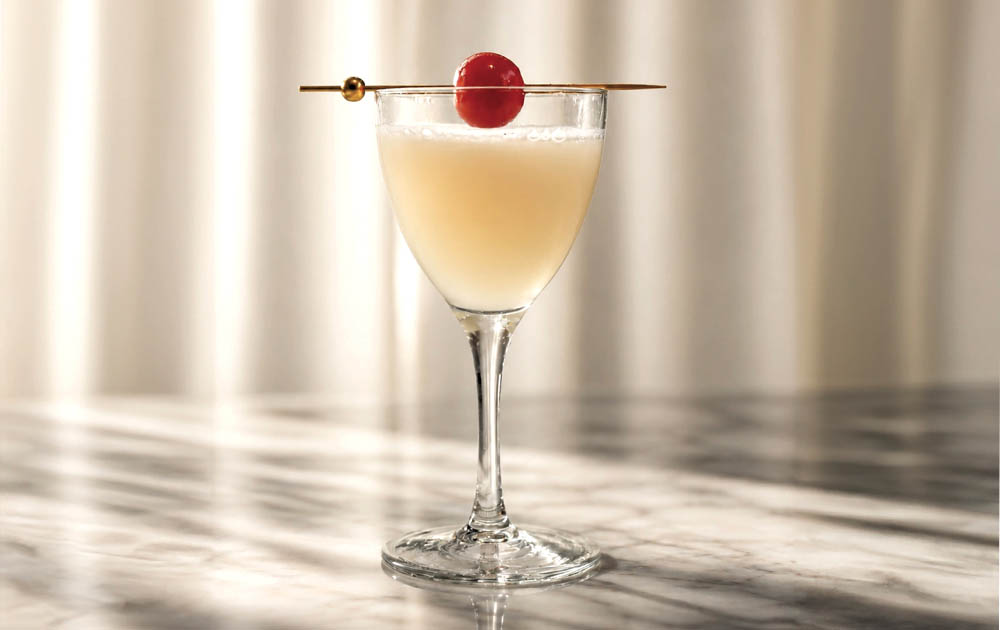
Sliced, sauced or grilled, that’s the usual Jersey tomato lineup. But one of my favorite (and not-so-common) ways to use tomatoes is as an ingredient in craft cocktails. The Garden State is my take on a tomato water martini, leveraging the savory-sweet “water” found in tomatoes. This cocktail may seem intimidating, but trust me, it’s worth the effort.
Garden State
1½ ounces vodka
1 ounce tomato water (recipe below)
¼ ounce tomato brine from pickled tomatoes (recipe below)
Shake ingredients vigorously and strain into a frozen martini glass. Garnish with a pickled cherry tomato.
Tomato Water
2 quarts Jersey cherry tomatoes
½ ounce fresh basil leaves
½ ounce fresh parsley leaves
1 teaspoon kosher salt
Chop tomatoes in half, toss with salt, and let sit for 15 minutes.
Pulse tomatoes, herbs, and salt in a food processor or blender. Pour over cheesecloth and let strain overnight in the fridge.
Can be refrigerated for three to four days.
Tomato Brine
2 quarts Jersey cherry tomatoes
Large handful basil leaves
1 tablespoon black peppercorns
1 tablespoon coriander seeds
2 cups white vinegar
1 cup water
1 cup sugar
1½ teaspoons kosher salt
Layer the tomatoes and basil leaves in a glass canning jar.
Toast the black peppercorns and coriander seeds in a pan briefly, until you can just start to smell them. Add the vinegar, water, sugar and salt to the pan. Stir over heat until the sugar and salt are dissolved and the mixture is hot, but not boiling. (If the liquid is too hot, the tomatoes will pop and not retain their shape.)
Pour the brine into the jar, cover and refrigerate for two days before use.
The article originally appeared in the July 23 – 29, 2026 print edition of The Two River Times.