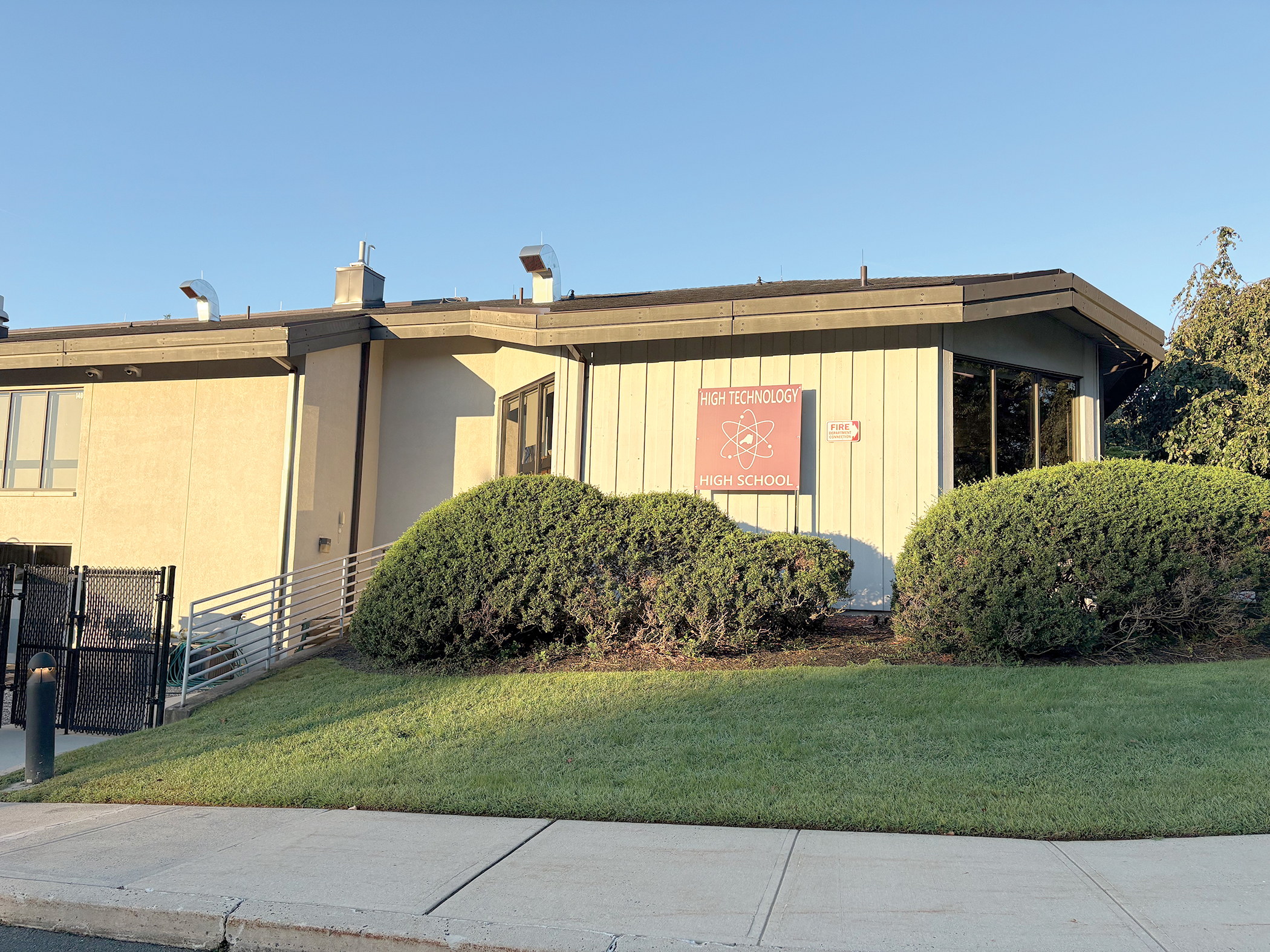
High Technology High School, part of the Monmouth County Vocational School District, is on Brookdale Community College’s campus in Lincroft. The school was named the best STEM high school in the nation by U.S. News & World Report. HENRY GRIFFITH
LINCROFT – High Technology High School (HTHS), part of the Monmouth County Vocational School District, was named the No. 1 STEM school in the nation in the 2026-2027 Best High Schools rankings by U.S. News & World Report.
In addition to earning the top STEM ranking, HTHS was ranked the No. 1 high school in New Jersey for the third year in a row and 28th nationally.
“These achievements, along with the outstanding rankings earned by several other MCVSD schools, continue to make all of Monmouth County proud,” said Monmouth County Commissioner Director Thomas Arnone, adding that the ranking “speaks volumes about the dedication of its students and educators.”
Three other MCVSD schools were recognized among the top high schools in New Jersey and the nation. Biotechnology High School was ranked No. 4 in New Jersey and No. 72 nationally; the Marine Academy of Science and Technology was ranked No. 11 in New Jersey and No. 156 nationally; and the Academy of Allied Health and Science was ranked No. 19 in New Jersey and No. 348 nationally.
“The MCVSD prepares students for success in an evolving workforce and for lifelong learning through specialized academics and career and technical education programs,” said commissioner deputy director Dominick “Nick” DiRocco, liaison to the MCVSD. “These exceptional schools provide students with incredible opportunities while maintaining a strong commitment to academic excellence. Having our MCVSD schools rank so highly in New Jersey and in the United States is a remarkable accomplishment and a testament to the students, educators, administrators and families who make these schools so successful.”
The U.S. News & World Report Best High Schools rankings evaluate nearly 27,000 public high schools nationwide for college readiness, state assessment proficiency and performance, college curriculum breadth, underserved student performance and graduation rates.
This article originally appeared in the September 10-16, 2026 print edition of The Two River Times.