By Stephen Appezzato
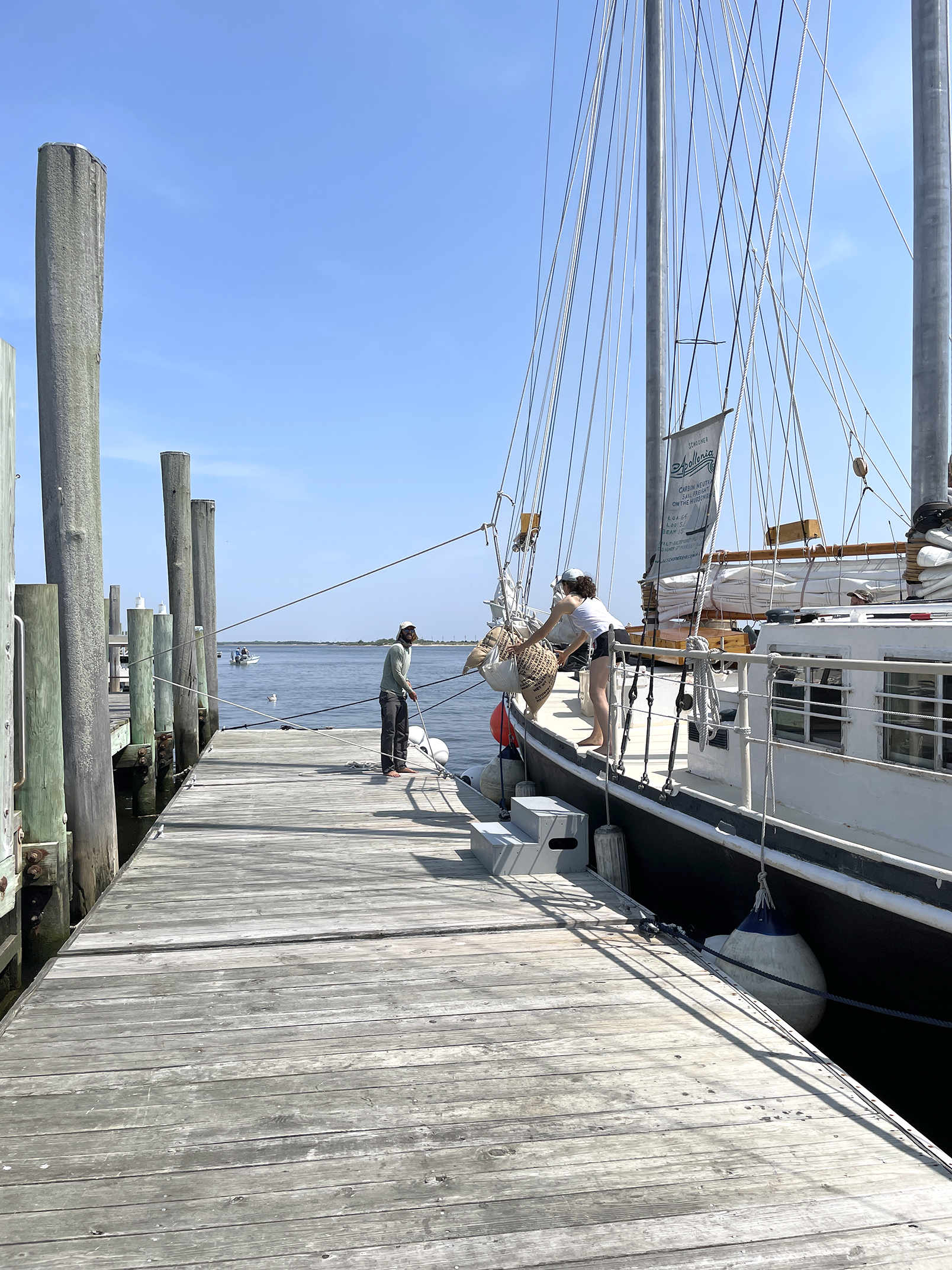
NAVESINK RIVER – For the first time in generations, cargo has once again traveled by boat up the Navesink River. On June 12, a small solar-powered vessel quietly glided from the Molly Pitcher Inn to Bahrs Landing, met the sail-powered Schooner Apollonia, and returned upriver with a box of maple syrup, wind-shipped from upstate New York, destined for Delicious Orchards.
“As far as I know, this little box of maple syrup that went to Delicious Orchards is probably the first cargo that’s gone up the river in probably 100 years,” said Rik van Hemmen of the Navesink Maritime Heritage Association, who captained the solar boat.
“The river is free. You don’t have to pave it or anything. It’s there and the wind is free,” van Hemmen observed.
The delivery is one step in a broader effort to draw attention to sustainable marine cargo transportation. The Schooner Apollonia, which brought the syrup down from upstate New York, is at the heart of this initiative – a growing sail freight movement based along the Hudson that’s reviving traditional trade routes using wind and used vegetable oil instead of traditional fossil fuels.
The Apollonia Project was started by its captain, Sam Merrett. Since 2020, the boat has transported more than 200,000 pounds of cargo by wind, tide and current, according to the group’s website.
“He (Merrett) said he thought it’d be interesting to carry cargo by sail up and down the Hudson, and he got this boat. He got it all set up and inspected and then he started carrying cargo,” van Hemmen said.
“And that has been gradually expanding,” he added.
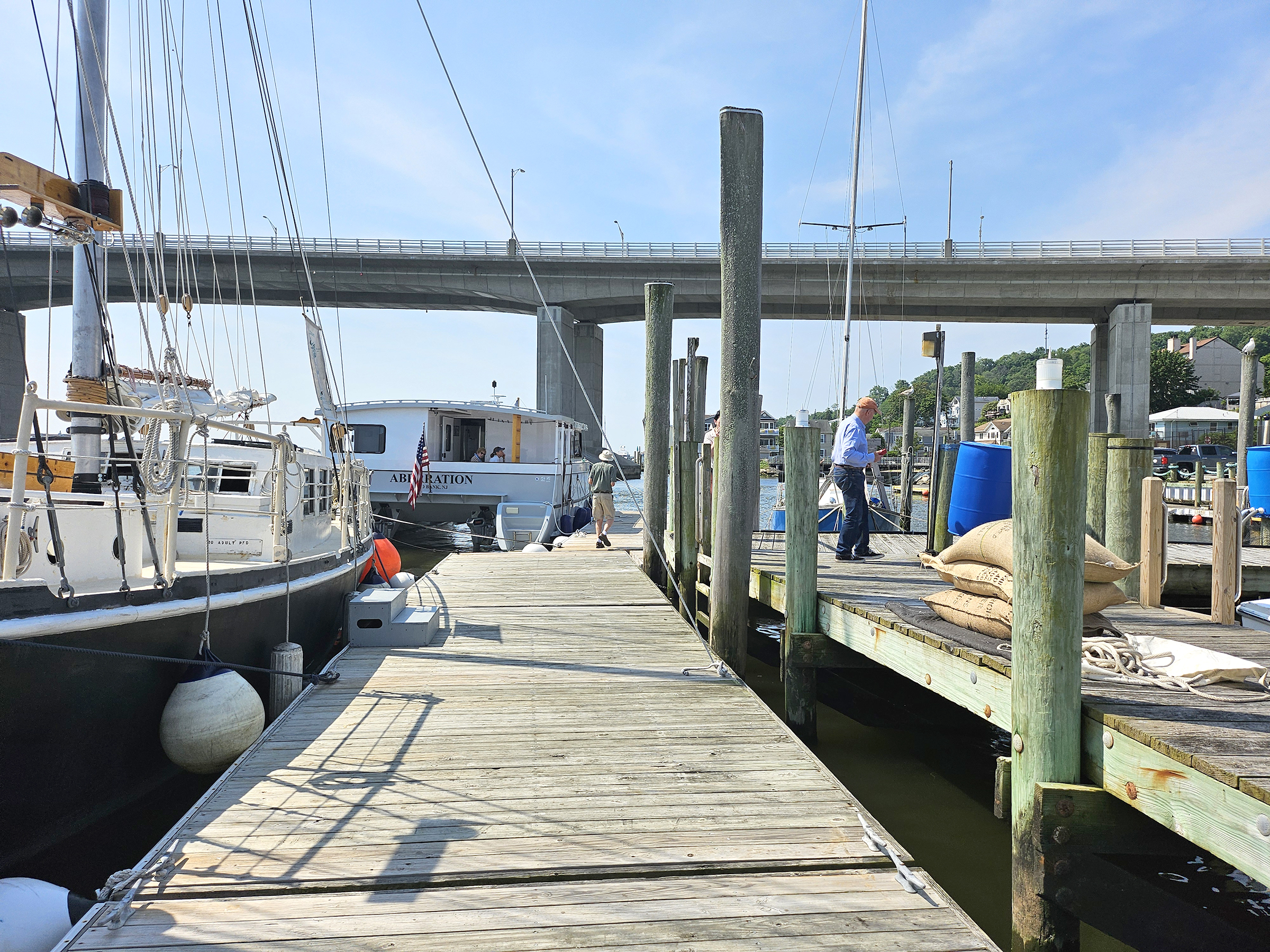
The Apollonia made its first stop at Bahrs Landing last year. Its return this month brought “boat boxes” – goods shipped sustainably on the Apollonia, for sale, as well as other products. While goods were offloaded from the Apollonia, raw coffee beans from a warehouse in Carteret were loaded onto it, destined for Germantown, New York, for roasting.
Built with a steel hull and a traditional gaff-rig sail plan, the Apollonia was designed by J. Murray Watts and built in Baltimore in 1946. The schooner is capable of carrying up to 20,000 pounds of cargo. According to the project’s website, the boat’s variety of sails allows flexibility for different conditions encountered along rivers.
French Chocolate, Bronx Fish
In addition to products sourced along the Hudson, the Apollonia also carries international cargo that arrives by sail from across the Atlantic. One example is chocolate from the French company Grain de Sail.
Grain De Sail is part of the sustainable shipping movement, sailing chocolate and coffee ingredients from Central America to France, where it produces its products, and then sailing goods across the Atlantic for sale in New York.
“They drop the chocolate off in Brooklyn and then the Apollonia sells that chocolate on their trips up and down the (Hudson) river,” said van Hemmen.
“That’s sort of what it’s about, basically showing people it (shipping) can be done differently,” he said.
Efforts to revive waterborne cargo are also surfacing in New York City.
“The New York City Economic Development Corporation is working hard at putting in small marine terminals all around the New York Harbor, so it will be easier to distribute cargo by water through the five boroughs,” van Hemmen said.
One of the most ambitious projects is underway at Hunts Point in the Bronx.
“Hunts Point is the largest produce and fish distribution center in the world,” van Hemmen said.
“They happen to be on the water, but they don’t do any water transportation, and so the city of New York is just now developing a marine terminal there so they can do more distribution by water.”
Carbon-Conscious Future
The Apollonia’s visit to Highlands and van Hemmen’s solar cargo journey strike a nostalgic chord in Monmouth County, where waterborne trade was once a defining feature.
“Originally, Monmouth County was the produce and oyster supplier to New York City,” van Hemmen said. “There was a very vibrant maritime trade between the Shrewsbury River and the Raritan Bay shore to New York City; it was a big deal.” A century ago, shippers along the Navesink and Shrewsbury rivers sailed low-draft schooners called Shrewsbury Packets, capable of navigating the shallow local waterways.
“They were special, basically optimized for our trade to get them up and down the rivers, which are very shallow waters,” and carried enough cargo to make it worthwhile to sail to New York City, van Hemmen said.
Packets marketed local maritime trade until the prominence of steamboats, which could transport more cargo. In the 1920s, trade along the Navesink and Shrewsbury rivers ceased as businesses transitioned to relying on railroads and trucks, according to van Hemmen.
Today, the Apollonia and solar-powered vessels like van Hemmen’s represent not a return to the past, but a reimagining of maritime logistics for a carbon-conscious future. The hope is to inspire a cultural shift, one load of syrup or sack of coffee at a time.
“None of us believe that just sailboats can fix all our trucking problems, but by drawing attention to alternatives, we like to think we can shift perceptions,” van Hemmen said.
The article originally appeared in the June 19 – 25, 2025 print edition of The Two River Times.