By Mary Ann Bourbeau
HIGHLANDS – As a professor of history and anthropology at Monmouth University, Richard Veit, Ph.D., was always interested in Twin Lights, the two lighthouses situated on a hill in Highlands overlooking Sandy Hook Bay. The original structure was built in 1828; it was torn down and rebuilt just a short time later in 1862 during the Civil War. But why?
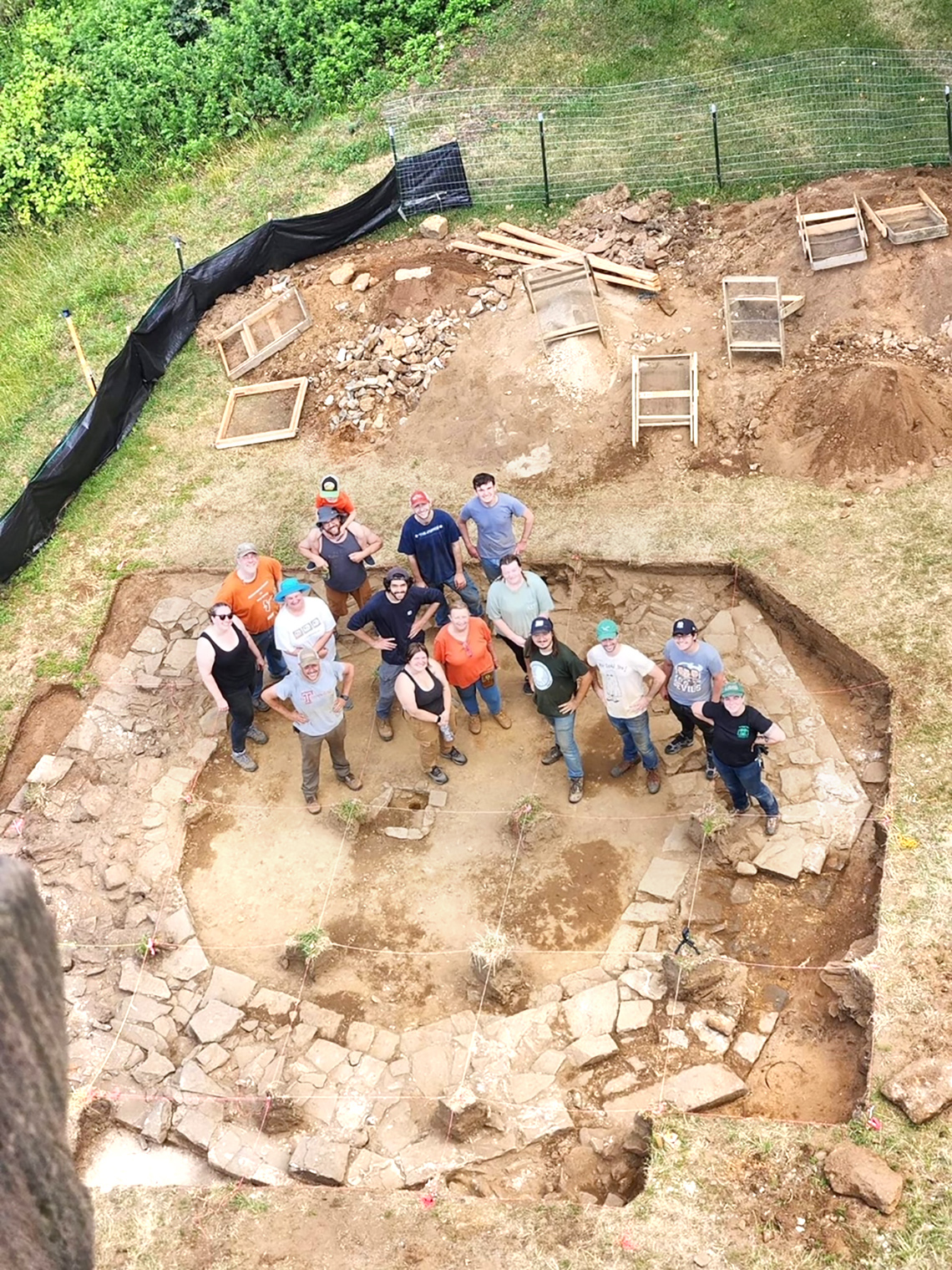
Last summer, Veit and his colleagues did some exploring, hoping to learn why the original lighthouse was replaced after such a relatively short time. They dug at the site every weekend from May to July and found the footprint and foundation of the original southern lighthouse. Veit will discuss the findings of the archaeological investigation from 7 to 8 p.m. Monday, Sept. 9 at the Monmouth County Library’s Eastern Branch in Shrewsbury.
“We found what we were looking for,” said Veit, who also serves as provost and senior vice president for academic affairs at Monmouth University. “We found a lost lighthouse. We uncovered a whole massive, octagonal stone foun- dation that would have supported a tower that looks a lot like the Sandy Hook Lighthouse.”
Their findings included ceramic pieces, broken glass bottles and other items that can tell them about the lives of the lighthouse keepers and visitors to the site.
“We also found some fun items, touristy things that people lost over the last 150 years while visiting, such as a pin from an 1800s fraternal order and a smoker’s pipe.”
Their most exciting discovery? A Native American projectile point.
“It’s like an arrowhead for a spear,” said Veit. “It dates back a few thousand years. It was a really nice, surprising find. We always knew the Lenape were present in New Jersey but now we know they were right on top of the Navesink.”
The group of about 20 included Adam Heinrich, Ph.D., from Monmouth University, Matthew Kalos, Ph.D., from Brookdale Community College and students from both institutions. They worked with Nicholas Wood, resource interpretive specialist at Twin Lights Historic Site, and together unearthed the answer to their main question – why was the lighthouse rebuilt such a short time after its original construction?
“The construction was a little sloppier than we would have expected,” said Veit. “That’s probably why they had to replace it. Some areas had perfect stonework; others looked like they rushed and hoped no one would notice, and I guess no one did.”
Veit will present the findings in an illustrated PowerPoint presentation.
“I think it will be fun,” he said. “People will get to experience the dig one step removed.”
Veit has authored eight books, including “Digging New Jersey’s Past: Historical Archaeology in the Garden State,” which contains a chapter about Twin Lights. His interest in the subject began at a very young age.
“My parents took me to visit a lot of historic sites and museums,” he said. “I found it fascinating. I love New Jersey history and I love a mystery. I’m very lucky I’ve been able to have a wonderful career in archaeology.”
Veit, who specializes in historical archaeology of the Middle Atlantic region from the late 17th to 19th centuries, is looking forward to sharing the group’s findings with the public. “These explorations help us understand the history of this beloved New Jersey historical site,” he said. “It also tells us that people enjoyed tourism at places other than the Jersey Shore at least 150 years ago.”
To guarantee seating, register for this program by calling 732-683-8980 or emailing mcl@monmouthcountylib.org.
The article originally appeared in the September 5 – September 11, 2024 print edition of The Two River Times.