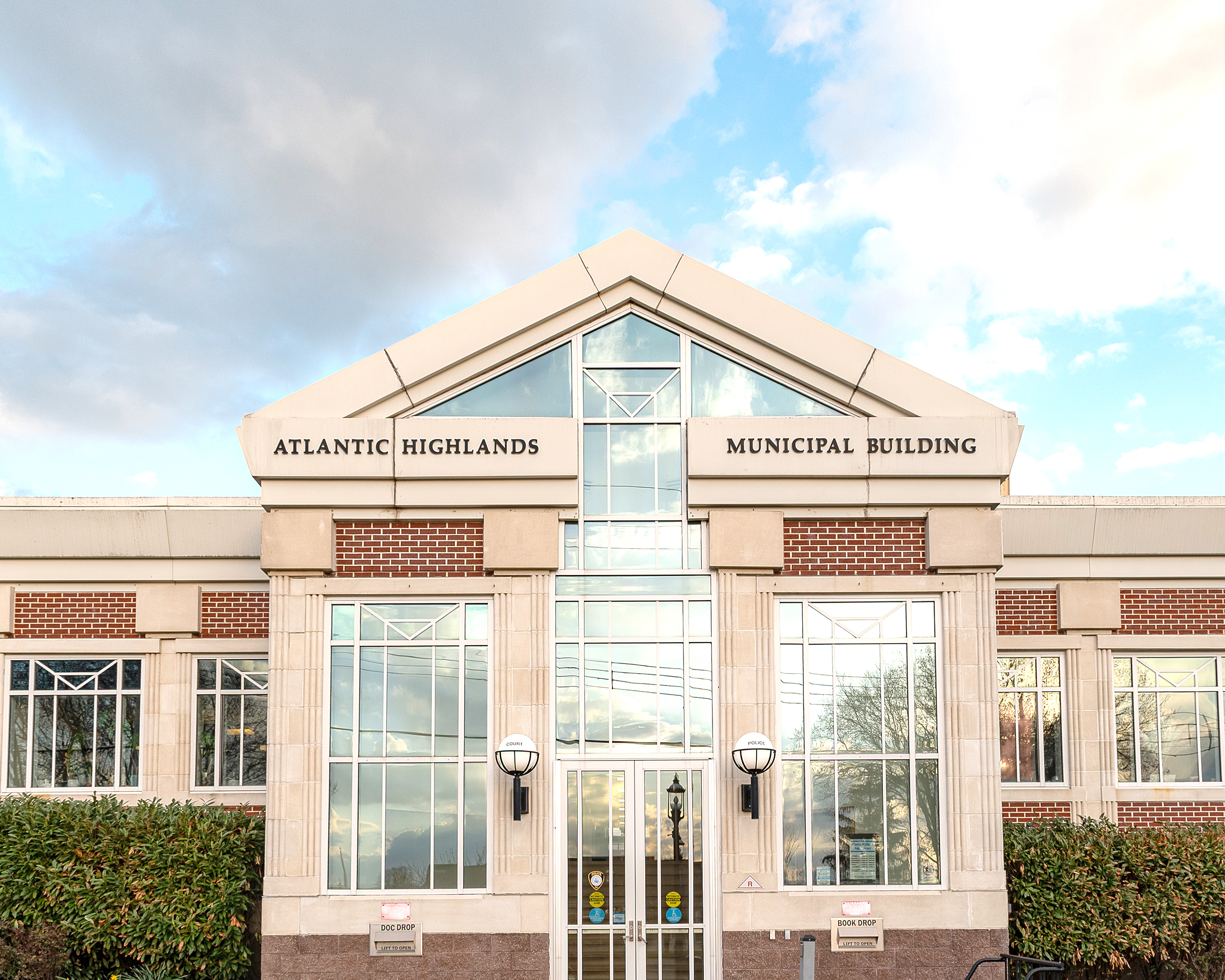
On Aug. 17, Atlantic Highlands became the first Two River-area municipality to issue a proclamation of the First Responders and Veterans Lung Cancer Screening Access Act. The borough is second in the county after Asbury Park, which passed a resolution in support of the legislation in July. FILE PHOTO
By Emily Schopfer
ATLANTIC HIGHLANDS – Atlantic Highlands is the first Two River-area town to officially support the First Responders and Veterans Lung Cancer Screening Access Act. Council member Jose Pujols read a proclamation at the Aug. 17 council meeting demonstrating the borough’s support for the bill. The borough is the second municipality in the county to express its support for this bill, after Asbury Park.
The bill is the brainchild of students of the Bridgewater-Raritan High School’s chapter of the American Lung Cancer Screening Initiative (ALCSI). The students worked with their area legislators to bring the bill to Trenton.
The proposed First Responders and Veterans Lung Cancer Screening Access Act was introduced in the New Jersey Senate March 23 and the Assembly May 11. The bill would launch coordinated education campaigns for fire departments, police departments and veteran organizations, while also establishing “referral pathways linking first responders and veterans to existing screening services,” according to the bill’s language.
“Lung cancer remains the leading cause of cancer-related death within New Jersey, exceeding mortality from breast, colorectal, and prostate cancers combined,” Pujols said, and “screening has been demonstrated to reduce lung cancer mortality in high-risk populations by approximately 20%.”
Occupational risks are prevalent when it comes to lung cancer. The American Lung Association states that “respiratory diseases are a significant health concern for firefighters and emergency responders who face increased exposure to gases, chemicals and smoke in the line of duty.” According to the bill, firefighters have a 9% higher risk of a cancer diagnosis and a 14% higher mortality rate; police officers face a 23% increase in respiratory system cancer mortality and veterans are 25% more likely to develop lung cancer than the general population. “Occupational cancer is now the leading cause of death for firefighters and EMS personnel,” according to the legislation.
The borough advocates “for policies that protect the health and safety of first responders and veterans who live in and serve the community,” Pujols said. Through the proclamation, the borough expressed “strong support for the First Responders and Veterans Lung Cancer Screening Access Act,” and urged its “swift passage by the New Jersey legislators.”
STUDENT PROJECT
While the proclamation carries no legal authority, it formally and officially highlights this community concern. Pujols also commended the minds behind the act, a group of students from Bridgewater-Raritan High School.
The bill was authored by Sri-Krishna Dowlapalli, a senior at the school and president of the school’s chapter of the American Lung Cancer Screening Initiative (ALCSI). Dowlapalli initiated the bill as a policy brief in February and, before long, was working with state Sen. Douglas J. Steinhardt (R-23) and state Sen. Andrew Zwicker (D-16) to turn the brief into formal bill language, he said.
When asked where the bill’s inspiration came from, Dowlapalli replied candidly. He said he was watching too much of the TV show “Suits,” and thought passing a law would look good on college applications. But when he started his research, he ended up finding something that “genuinely bothered” him, he said. He started by looking at veterans, reading through accounts of combat medics who served in Iraq and Afghanistan, and who “came home with respiratory issues and cancers that weren’t being connected to their service.”
It was then that Dowlapalli began to see the correlations between veterans and firefighters.
“My first draft of the bill focused only on firefighters and veterans,” Dowlapalli said, “But as I continued researching, I kept thinking about 9/11. Firefighters weren’t the only ones who ran toward danger that day, as police officers, EMTs, and other first responders were right there with them. Many of them have since been diagnosed with 9/11-related cancers. That realization was the motivation to expand the bill to include police officers and EMTs as well.”
Dowlapalli and his ALCSI team of Avneet Singh, chapter vice president; Aaron Persky, legislative director; and communications director Kush Dave contacted Mayor Lori Hohenleitner and Council President Brian Dougherty July 16. Hohenleitner expressed “strong interest” and said “the borough would be happy to participate,” Dowlapalli said.
Atlantic Highlands was a desired partner for the ALCSI team because the borough “has already shown that it is willing to take an active role in protecting community health and the local environment,” Dave said. “For example, in 2025 the borough adopted Resolution 098-2025 opposing offshore oil and gas drilling, which clearly shows a willingness to address health and environmental risks proactively. That makes Atlantic Highlands a natural partner for ALC-SI’s efforts to bring greater attention to lung cancer prevention and early detection both in Atlantic Highlands, but also the surrounding Monmouth County region,” Dave said.
“We also provided educational materials and hope to expand the partnership by connecting with the borough’s police and fire departments,” Singh said.
25 YEARS LATER
The timing of this is significant, Dowlaphalli said, as the region approaches the 25th anniversary of 9/11. “Nearly 50,000 first responders and survivors have been diagnosed with 9/11-linked cancers, a 143% increase in just five years. More than 4,149 of those diagnosed are FDNY firefighters and EMS personnel. The toxic dust at Ground Zero has been killing first responders for a quarter-century,” he noted.
He said the group is also focused on what he called an “ugly fight” in New York City – a controversy in which some 9/11 families petitioned to bar New York’s first Muslim mayor, Zohran Mamdani, from participating in the annual Ground Zero ceremony. (Mamdani has stated he will attend.)
“The legacy of 9/11 isn’t a mayor but it’s the 50,000 cancer diagnoses. It’s the first responders who are still dying from the toxic dus they breathed 25 years ago. And it’s the veterans who served and came home with lung cancer they didn’t know they could screen for. This bill is about honoring that legacy by actually doing something to protect the people who ran toward danger when everyone else ran away. That’s what remembrance should look like,” Dowlapalli said.
The legislation is now before the Senate Health, Human Services and Senior Citizens Committee and the Assembly Health Committee.
In the meantime, Dowlapalli said he and his team are focused on gathering community support and would be “honored” to partner with more Monmouth County municipalities; they even plan to approach the Monmouth County Board of County Commissioners. “We see the county’s strong first responder and veteran communities as a natural fit for our educational materials campaign,” he said.
Singh said the team also would like to partner with schools and nonprofits. “Schools are an import- ant part of our long-term education strategy. We would like to work with high schools, colleges, and universities to develop age-appropriate educational programs about lung cancer risk factors, prevention, screening, and the health risks faced by first responders and veterans,” he said. Additionally, he said working with nonprofits can utilize the already established relation- ships and “reach people we might not otherwise reach.”
his article originally appeared in the June September 10-16, 2026 print edition of The Two River Times.