By Emily Schopfer
FAIR HAVEN – The Fair Haven Fields Natural Area Advisory Committee presented its plans for 2026 to the borough council last month, reaffirming the long-standing concern about deer overpopulation. The borough is currently exploring options to deal with the problem.
“The current path we are on leads to the destruction of the Natural Area, and the root cause is deer overpopulation,” according to the committee’s 2025 Annual Report.
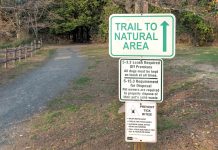
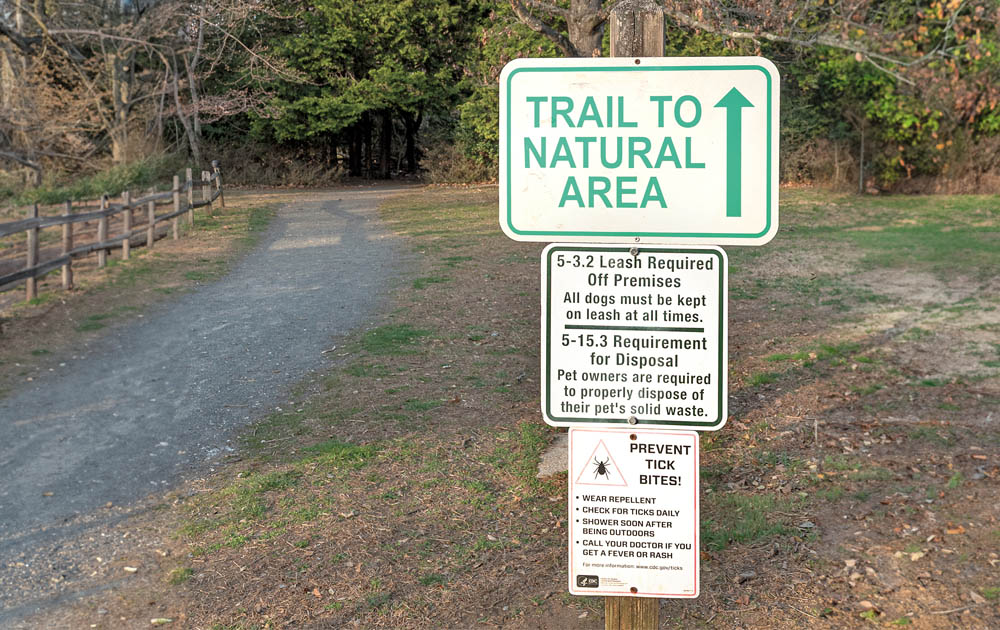
The Natural Area in Fair Haven is a 40-acre portion of the 77-acre nursery tract known as Fair Haven Fields, which the borough acquired in 1975.
“(The Natural Area) is under stress right now; the primary cause of that stress (is) the deer,” said David Bordelon, the advisory committee’s vice chair. The deer are eating most of the underlying vegetation layer, and the over-browsing by too many deer is preventing the forest from regenerating, Bordelon said.
“We’re really wondering, how long can the forest last with that level of depredation?” he said.
“Deer are pretty much everywhere in New Jersey. At first glance, their abundance might seem harmless, even welcome. But their numbers are fueling a complex and urgent ecological crisis that threatens our native forests and wildlife, as well as public health and safety,” said Alison Mitchell, executive director of the New Jersey Conservation Foundation (NJCF), in a September 2025 report. The report, “New Jersey’s deer dilemma,” noted that in many parts of the state, deer populations are more than 10 times above sustainable levels, and this has been a problem for close to 50 years.
While Fair Haven hasn’t been battling deer overpopulation for 50 years, the issue isn’t new either. The advisory committee has been addressing the deer problem since 2022. In 2024, “biologists from the state Department of Environmental Protection Division of Fish and Wildlife (NJDEP) presented the borough council with multiple methods to keep the town’s deer population in check, ranging from sterilization to catch-and-relocate to what they recommend most – lethal management,” according to a May 24, 2024, Two River Times article. Lethal management refers to controlled deer hunts.
Borough administrator Christopher York said during the March 23 meeting that he followed up with the NJDEP on the plans for controlled hunting, but that nothing came of it.
“NJDEP Fish and Wildlife staff have met with officials from Fair Haven and conducted site visits in the borough. Deer management options have been provided,” said Vincent Grassi, press officer for the NJDEP. “In addition, for the past two years, NJDEP had funding opportunities through a grant program to conduct deer population surveys and forest health surveys. Fair Haven applied for a grant in 2024 and was awarded $15,000 to hire a contractor to complete a forest health survey,” Grassi said.
Mayor Josh Halpern said neighboring boroughs of Rumson and Little Silver do not want to join Fair Haven in any plans for controlled hunting.
“The borough has been reviewing our commissioned forestry management report, approved by the New Jersey Department of Environmental Protection, regarding the deer population in Fair Haven. At this time, we are still exploring potential solutions with our Department of Public Works and municipal professionals to safely address the issue in our municipality,” York said in a statement March 30.
Such potential solutions could include enclosing the natural area with 8-foot fencing with gates, but the advisory committee has concerns about the cost and maintenance of such an undertaking.
Planting deer-resistant plants, such as those with strong aromas or prickly leaves, is another option. The downside is, without animals to help keep them in check, these plants often become invasive and overtake native plant populations, altering natural ecosystems.
This is exactly what happened to Fair Haven Fields last year. According to the advisory committee’s 2025 report, “Monmouth County Parks told us that Moraller’s Meadow (approximately two acres of meadows) has been destroyed by deer-resistant invasives. The meadows must be rebuilt from scratch, which will require a multi-year project, careful planning, and funding.”
The NJDEP Fish & Wildlife Bureau of Wildlife Management refers to white-tailed deer as “a keystone species – a species with a disproportionate impact on its environment.” White-tailed deer are considered the primary overpopulated deer species in the state. On average, deer eat about 7% of their body weight in a day; about 10 pounds of forage per day for a large deer. These heavy eating habits dramatically affect biodiversity and regeneration of local flora.
“Deer management is important to prevent deer-vehicle collisions, protect the public from tick and insect-borne diseases, reduce damage to agricultural crops, ornamental plantings, and gardens, and restore balance in the natural forest ecosystem,” Grassi said. “However, it is not the goal of deer management to completely remove all deer from any area, as deer play a vital role in the ecosystem.”
Grassi could not speak on any correlation between deer overpopulation and any potential increase in Lyme disease cases in the state.
“New Jersey is considered a high-incidence state for Lyme disease,” according to the New Jersey Department of Health (NJDH). Lyme disease cases in New Jersey have been on the rise since 2022, according to NJDH reports. In 2022, reported cases exceeded 60 per 100,000 and have not fallen below that number. Before 2022, the highest record was 57.3 reports per 100,000 residents in 2017.
Tick-borne illnesses such as Lyme are a concern Halpern recognized during the meeting: “It’s a big problem beyond just the Natural Area. I’m worried about human life,” he said. Halpern recalled having deer in his backyard the night before and then finding a tick in his home. He also said the borough is appreciative of all the advisory committee does and that situations like the deer need to be addressed.
It was clear at the meeting that neither the committee nor the borough council wants to see Fair Haven Fields suffer. “It’s the crown jewel for sure of Fair Haven,” Halpern said, “and it’s obvious to me from sitting in this seat for a lot of years, that the magic doesn’t just happen. It’s based on people rolling up their sleeves and getting to work.”
For those looking to get involved, the Natural Area Advisory Committee is hosting its spring volunteer weekend April 18 and 19. More information is available on the borough website at fairhavennj.org.
The article originally appeared in the April 9 – 15, 2026 print edition of The Two River Times.