By Philip Sean Curran
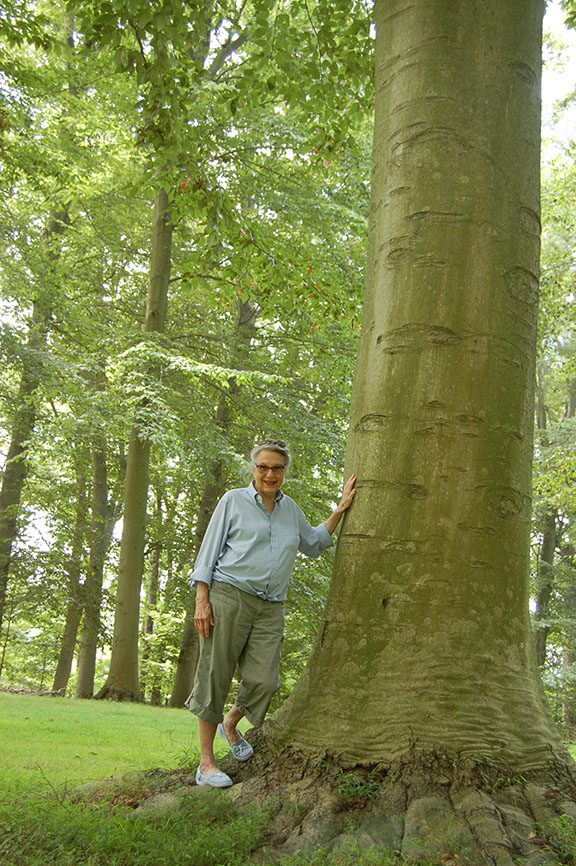
Courtesy Jena Cosimo/ Monmouth Conservation Foundation
COLTS NECK – About 41 acres of farmland along Route 34 in Colts Neck have been preserved in a $1.6 million deal led by the nonprofit Monmouth Conservation Foundation (MCF).
The foundation, the state, the county and Colts Neck Township pooled their money to buy the development rights to land owned by the de Groot family. The MCF and the township each contributed $204,750, the county supplied $409,500 and the state gave $819,000. The foundation said it would hold the easement, which is like a deed that describes what can or cannot be done with the property.
With this deal, finalized Sept. 25, Monmouth County’s total preserved farmland is now more than 15,400 acres.
“They had always talked about preserving it at some point in the future and they decided that now was the right time,” Jena M. Cosimo, director of acquisitions at the MCF, said of the owners. “We’ve been working on this one for, I’d say, about three years.”
The land is owned by the four children of Claire de Groot, a former Colts Neck resident now living in Virginia. It is located on Route 34, near the border of Colts Neck, Marlboro and Holmdel. It is mostly open farmland, with pumpkins growing in one part and other fields lying fallow. A stream that runs through it leads to the Swimming River Reservoir. De Groot moved to the property, then a rural community, as a 6-year-old in 1936. In a phone conversation she fondly recalled exploring the natural landscape many years ago.
“So I just grew up traipsing through the woods and the fields and checking the brooks and the ponds and whatnot. It was everything to me,” she said.
New Jersey has been preserving farms like the de Groot property around the state for decades. A report the state issued in February found 233,751 acres had been preserved for $1.7 billion.
“The de Groot property is a lovely piece,” Monmouth County Freeholder Lillian G. Burry, a former mayor of Colts Neck, said. “As far as Colts Neck is concerned, it’s really who we are. It’s an important feature of our culture, if you will, that these farms be preserved.”
The MCF said it sees itself in a race to save fertile land for future generations that otherwise could be developed. As part of its considerations, the nonprofit assesses the development potential of a farm that it is considering preserving.
“We want to preserve a farm that has development potential,” Cosimo said. “We’re always fighting against developers. And sometimes we can’t meet the financial needs that some of these families need and compete with the developers.”
“It’s a matter of getting the attention of the landowner before a prospective developer ties the knot with a deal,” said MCF executive director William D. Kastning. “So we’re keeping our ears to the ground constantly.”
Another consideration is contiguity to preserved farmland. In this case, in 2005 de Groot had already preserved 20 acres of land next door that she owned with her husband, also by selling the development rights. She had inherited it from her mother, part of the family’s original 103 acres.
Now 60 acres of their original family farm will be joined and protected from development.
“We like to preserve swaths of land,” Cosimo said. “We don’t like to just preserve farms or really any property that’s just kind of floating by itself.”
The local real estate market will drive the price it costs to pay to preserve the land. In this case, the deal comes out to around $40,000 per acre for “a valuable piece of property,” in Cosimo’s words.
“We don’t see numbers like this in all areas of the county,” she said. “We’ve seen up towards $60,000 (an acre). So it really depends on the area, the market and the real specifics of each property.”
With the land now preserved as farmland forever, the places a young Claire de Groot went exploring as a child can never be turned into a housing development. That is something she is happy about.
“It was just sort of my world,” she said of the land. “And I grew up loving it and wanted to keep it and I’m hoping that my children will be able to keep it, one way or another. But at least, I’m not going to see houses go up all over it.”