By Sofia Wiener
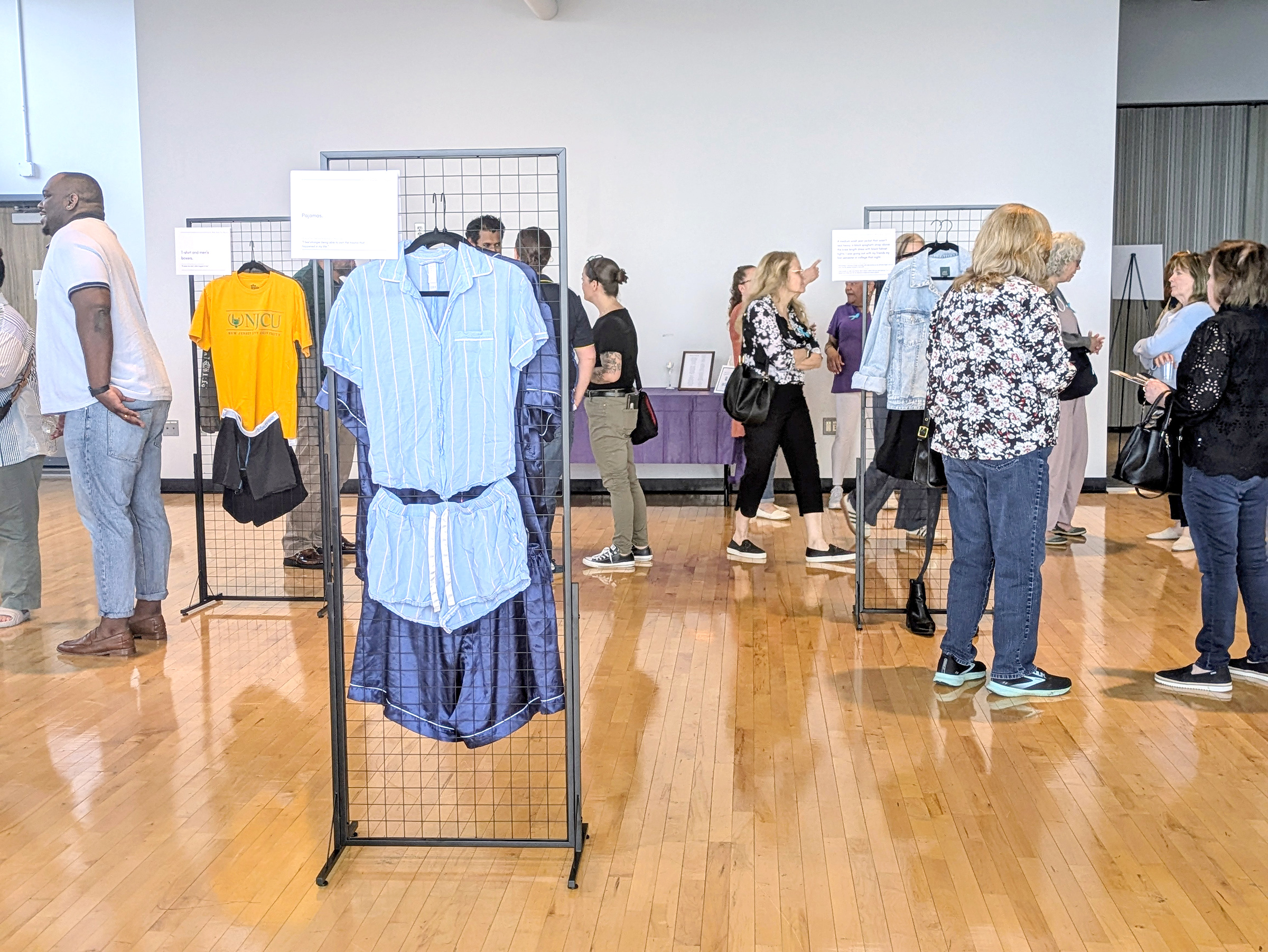
RED BANK – The bright, quiet room was lined with tall windows and filled with evenly spaced wire racks hung with a variety of outfits: Pajamas. A robe with “Bride” emblazoned on the back. Overalls. A slinky Halloween costume. Boxers and a T-shirt. A prom dress. Next to jeans and a sweat- shirt, a white placard read, “If this is helping someone to heal on this journey, it makes me happy to be able to participate.”
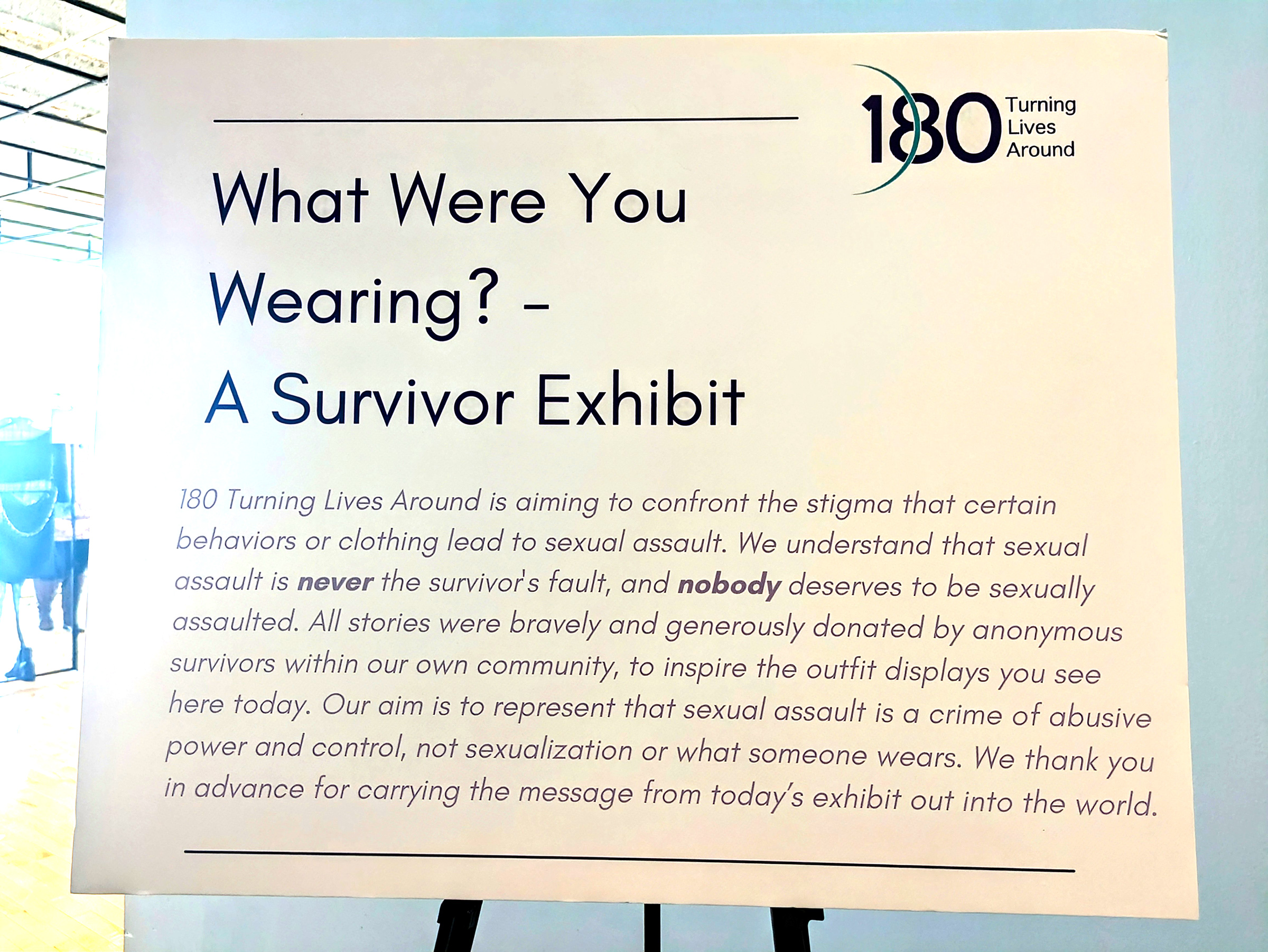
The “What Were You Wearing?” exhibit, presented last Thursday at the Two River Theater by the nonprofit 180 Turning Lives Around (180), challenged society’s tendency to question how victims of sexual assault could have prevented their attack by dressing differently. The first “What Were You Wearing?” exhibit was held in 2014 at the University of Arkansas. It was inspired by the poem “What I Was Wearing” by survivor Mary Simmerling. Many iterations have been presented across the country since then.
Samantha Smith, a sexual violence prevention and outreach coordinator for 180, participated in one such exhibit at college through a campus advocacy program, and was excited to bring the concept to Monmouth County.
Like its predecessors, 180’s version didn’t use survivors’ actual clothing, a practice that would be invasive and possibly traumatic. Instead, it struck a careful balance; survivors anonymously submitted as much or as little as they wanted to share with 180. Smith and co-director Jacquelyn God-bey, a confidential sexual violence advocate coordina- tor, then used that information to assemble the outfits and display them alongside placards with the survivors’ statements, letting them speak and be seen while allowing them the comfort of anonymity.
“I think survivors are really tired of the question of what they were wearing,” said Smith. “I think the range of outfits – such a physical, tangible representation – really makes you feel grounded in this message. It resonates with people because it’s something to look at, it’s something to reflect on, and for these to fill up the room really humanizes the conversation.”
But after so many years bringing awareness to the problem of sexual assault, are people still asking that question? “It does come up sometimes when people are questioned through Title IX at their colleges,” Godbey said. “It’s still talked about.” (Title IX is a federal civil rights law that was enacted as part of the Education Amendments of 1972; it prohibits sex-based discrimination in schools.)
“Two generations ago, we still asked that question, and those generations have kids.”
This wasn’t 180’s first version of “What Were You Wearing?” The organization held a more subdued version last year. But the positive feedback made one thing clear – 180 needed to do it again, but bigger. And it needed to advertise the event to the public.
180 more than doubled its collection of outfits, from 10 to 24. Attendance increased from about 30 to over 120.
Liz Graham, 180’s executive director, noted that, while the nonprofit is intended to help both domestic and sexual violence survivors, the community tends to be more aware of the domestic violence side of its work. Not only did the exhibit increase awareness of sexual violence in the community and awareness of 180 as a resource, but it also personified it, hopefully empowering survivors. “We’re supporting the people that check out your groceries. We’re supporting the people that are helping your kids right now at school,” Graham said.
The anonymity of the exhibit gave it an abstract power. The person who wore a bride’s dressing gown might have been 20 or 50. The one who wore boxers could have been a man or a woman. Others invoked empathy because they were so identifiable – the placard next to the prom dress said the survivor couldn’t “bear to look” at the beautiful, expensive dress her parents bought for her after the assault. “What should have been a joyful occasion has been overshadowed by feelings of hurt and loss tied to something that was meant to be a celebration. Initially, my mother was upset to find it lying on the floor, but once I was able to share my experience, the dress became a gateway to receiving the support I needed.”
The survivors’ thoughts were difficult to read but often enlightening and sometimes hopeful: “You never really know somebody,” said one.
“I feel good (participating in this exhibit) because it’s important to talk about. Helps to get over it.”
“He made me put on his clothes. Black and red boxers, blue sweatpants and purple sweater.”
“There is no way to protect yourself from that. Doesn’t matter what you’re wearing,” said someone who had worn “big bulky sweatpants, hoodie over a crop top.”
According to one survivor who was once a first-semester college student going out for the night with friends in a jean jacket, fishnet tights and a black spaghetti strap dress, “Participating in this project brings comradery with other survivors as we will never forget what we wore and, and the feelings attached to said outfit.”
Monmouth County Prosecutor Raymond Santiago was among the attendees at this year’s event. “I was here… last year, and I really found it very moving to see all the clothing types that are on exhibit, for a profound statement that what a woman wears should not be the question asked when they are sexually assaulted. It doesn’t matter what anyone wears. Predators are going to take advantage of people regardless. The excuse needs to be eliminated from the world’s vocabulary.”
As one survivor put it: “It doesn’t matter what you were wearing, if you were dressed up or down. No one deserves to experience sexual violence.”
The article originally appeared in the May 1 – 7, 2025 print edition of The Two River Times.