By Chris Rotolo
RUMSON – A life dedicated to documenting the developing Monmouth County community is now on permanent display in the heart of the borough.
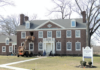
Opening in April – by appointment only – on the third floor of borough hall is the George Moss History Room, where Rumson’s Historic Preservation Commission will house the personal archive of the chamber’s namesake, a fourth-generation county resident who was born in 1923 and spent the better part of seven decades educating people about Monmouth County’s humble beginnings.
An author of more than 50 books and articles on various historical affairs in the area, and a contributing writer to publications like the Red Bank Register and the Asbury Park Press, Moss amassed a vast collection of monuments to the past, like flags, books from the 19th century, an accumulation of black-and-white photos and more than 5,000 glass picture negatives.
Upward of 60 authors, publishers, historical organizations and even branches of the United States government have requested the use of materials from Moss’ impressive archive, and now the content will be available to the public for the first time on the second Tuesday of each month.
“George spent many years taking photos to record the history of the local community,” said Historic Preservation Commission chair Charles F. Shay, who noted that Moss showed significant interest in the local coastal communities settled by the area’s first residents, the Lenape.
Shay said the historian was a diligent seeker of the truth, who favored accuracy over theories and folklore. One claim he was particularly passionate about was made by Claire Garland of the Sand Hill Indian Historical Society in a 2018 Two River Times profile.
Garland asserted that, at the conclusion of the last ice age (approximately 11,700 years ago), glaciers in the North Pole retained an abnormally large amount of sea water, leading to a tidal recession that exposed approximately 80 miles of the continental shelf. According to Garland, the Lenape followed the tides, constructing villages and homes on newly accessible lands.
Though few remains of these potential settlements have been discovered, a popular legend spread amongst Ocean Avenue towns speculates that extensive crops spanned the area east of where a rocky sea wall now separates residential developments from the Atlantic Ocean.
“He was frequently heard saying that the cornfields east of Ocean Avenue never existed,” Shay said. “He believed they were probably small family gardens containing corn and other vegetables.”
If anyone had the necessary means to substantiate local mythology, it was Moss, who over the years had his work recognized by the New Jersey Historical Commission, and was asked to serve on the boards of the Monmouth County Historical Association, the Oceanic Free Library, the Sandy Hook Peninsula Museum and the Twin Lights Historical Museum. Moss also co-founded and acted as a trustee of the Monmouth Museum, located on the Lincroft campus of Brookdale Community College.
Rumson mayor Joseph Hemphill praised Moss’ work, as well as the efforts of the borough’s historic preservation commission for organizing the historian’s collection of local history as a means to educate future generations.
“(The commission’s) efforts to bring this vision to life in George’s honor has been incredible to watch as a member of this community,” Hemphill said. “I know George would have been proud.”
Moss attended the University of North Carolina, Chapel Hill until 1942, when he enlisted in the United States Army and served in the Office of Strategic Services, an intelligence branch of the military.
Following his service in the armed forces, Moss returned home and took a job on the floor of the New York Stock Exchange, where he remained for 25 years. His volunteer service to the borough began in 1967 when he was appointed to the planning board. Nine years later Moss earned a seat on the governing body and was elected borough council president in 1990, a position he held for the next 14 years.
Appointments to view the George Moss History Room can be requested by calling the borough at 732-842-3300.
The article originally appeared in the March 31 – April 6, 2022 print edition of The Two River Times. This article was updated April 7, 2002.