By Stephen Appezzato
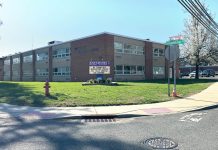
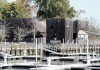
HIGHLANDS – The borough is in the initial stages of overhauling the J.T. White Clam Depuration Plant to establish an interactive maritime museum, honoring the community’s historic clamming industry. The overhaul will also provide operational enhancements.
At the borough’s recent council meeting Feb. 5, officials and residents weighed in on the project ahead of a proposal.
“To witness the process in an interactive clam depuration facility is amazing and we want to share it with everybody in the region,” Mayor Carolyn Broullon said. It would provide a space for the public to learn “what it is that the Baymen do here and why it’s so important to our community and our region for them to continue,” she said.
Ideas around enhancing the clam depuration plant have existed for years, but a recent $50,000 grant from the state Economic Development Authority (EDA) kicked the proposal into its initial planning stage. Now, the borough is considering how it can make the facility a destination for maritime education, provide a closer look into the Jersey Shore clamming industry, its history, the science around depuration and cultivate “a respect for the health and resiliency of the shellfish growing waters and our environment.”
Within the educational component, the borough council floated the idea of a viewing room – a glass wall offering a close-up view of the depuration process.
Borough officials also want to make plant enhancements, such as updating utilities, fixing cracks in the plant’s foundation and establishing permanent office spaces at the plant.
The James T. White Clam Depuration plant is owned by the borough and leased by the Baymen’s Protective Association, a collective of clammers. The facility opened in 1974 but closed in the mid-’80s after consumption safety standards changed. The plant remained closed until 1989 when James T. White, a school teacher, former mayor and clamdigger himself, won a $1.3 million grant from the Port Authority of New York and New Jersey to revitalize the local clamming industry.
Aside from providing a delicious meal, clams help purify local waterways by cleaning the water through filter feeding. Under New Jersey Depar tment of Environmental Protection (NJDEP) guidelines, the Sandy Hook Bay and Raritan bays are restricted waters for shellfish cultivation.
“Clams may be harvested for human consumption in special restricted waters under a special permits program,” Broullon explained. But, prior to sale and consumption, they must undergo a cleaning process called depuration.
“The reason for the purification needed is all those industries that are along the Raritan River, also along the Hudson,” explained council member Karen Chelak. While significantly improved over the past decades, the waters remain restricted.
“No one can just go onto one of our beaches and clam there and make themselves some linguini and white clam sauce,” Broullon said, as the clams could contain harmful bacteria.
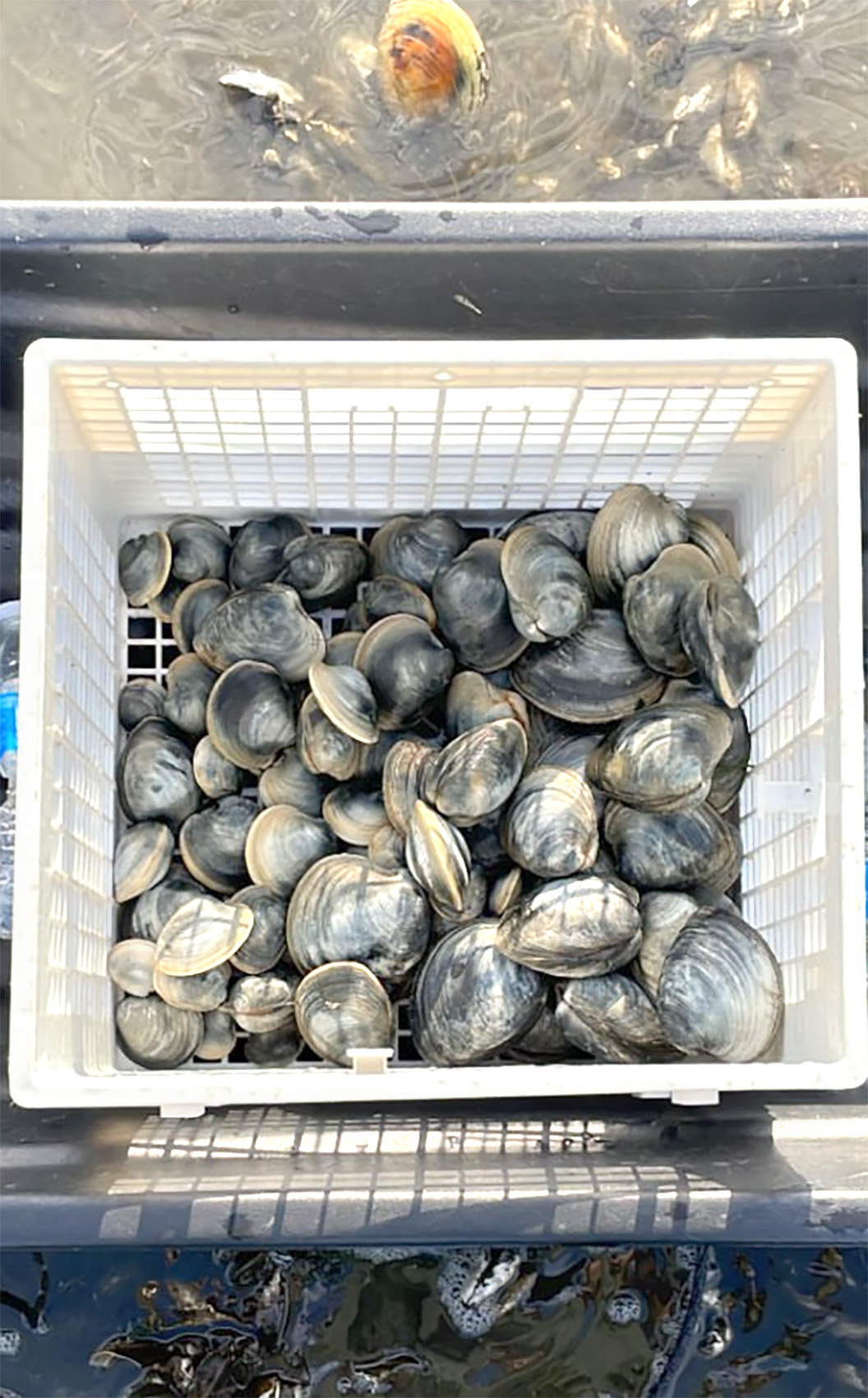
Depuration, the 48- to 72-hour purification process, changes this. During depuration, bivalves are hosed down, placed in holding tanks with high-quality water, UV treated in salt water and then placed back in holding tanks to purge bacteria. They are then cooled, tested and eventually sorted and packaged.
Today, Highlands’ clammers harvest around 100,000 clams a day. “It’s a 365 (day)-operation and they’re never closed,” Broullon noted.
Lusty Lobster, a local favorite seafood wholesaler and retailer, is one business that proudly sells littleneck and topneck clams sourced from Highlands.
“The clams we distribute to local restaurants and sell in our retail store aren’t just seafood – they’re a piece of Highlands’ heritage, harvested and processed right here in our waters,” a spokesperson shared in a statement. Aside from the freshness, “it’s about supporting local jobs, strengthening our community, and cutting down on unnecessary transportation impact. Plus, having a local supply is a game-changer when supply chains are interrupted,” the statement read in part.
Ahead of an April 18 deadline, the borough contracted planning firm Heyer, Gruel & Associates to generate conceptual designs, economic analysis and feasibility studies to submit a plan to the EDA, after which grants to implement the project will be sought.
“It’s a fabulous process and it’s got a lot of accountability,” one resident at the town meeting commented. “It’s New Jersey, it’s our heritage. We’ve got it right, and there’s a lot of good things to be said about it.”
The article originally appeared in the February 13 – 19, 2025 print edition of The Two River Times.