By Sunayana Prabhu
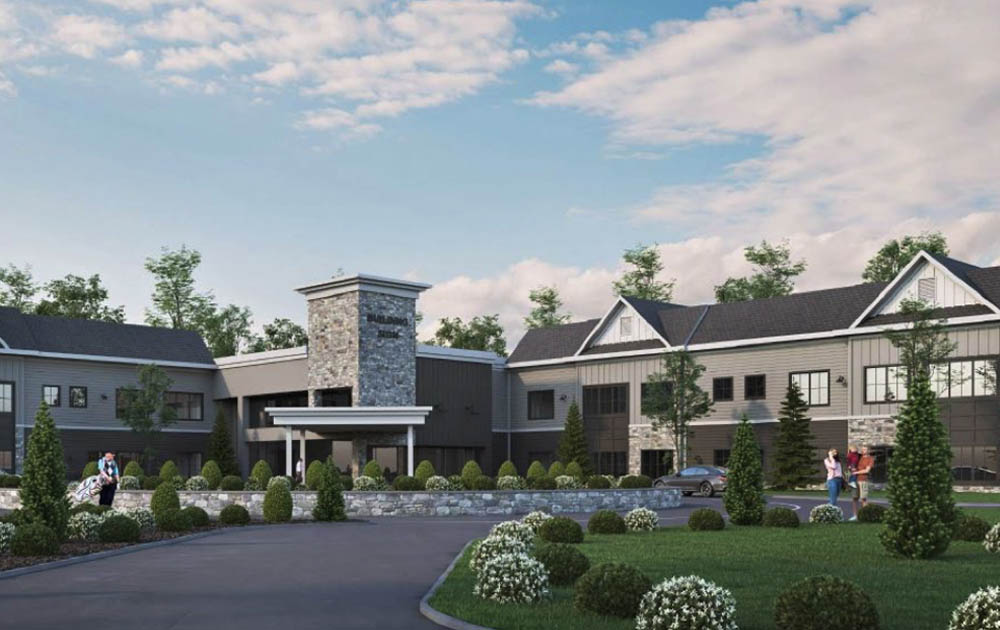
HOLMDEL – The township committee unanimously approved a Payment in Lieu of Taxes (PILOT) agreement for Urban Renewal LLC, advancing redevelopment of the former Vonage property into a 300-unit senior housing community called Azura at Holmdel.
The vote followed an ongoing public debate with residents about environmental impacts and the PILOT’s effect on school funding.
Under the agreement, the developer will make annual payments to the township instead of paying conventional property taxes. During a previous township committee meeting, tax assessor Erick Aguiar said once construction on the multiphase project is complete, the Azura PILOT will generate approximately $2.3 million in annual revenue; the township will keep nearly $2.1 million of that, after county payments and administrative fees. Over the 30-year term of the PILOT, the township would realize about $94 million, he said.
Under the current assessment, the Vonage property owner pays about $371,000 in taxes. If the site remains undeveloped, projected taxes would total about $14 million over the same 30-year period.
A PILOT is intended to encourage redevelopment of large or challenging sites by providing predictable payments, which are generally lower than traditional property taxes. Unlike conventional taxes, PILOT revenue largely goes to the municipality and bypasses the school district, which residents said is particularly troubling given recurring school budget deficits.
Aguiar explained that the tax exemption is necessary to make the estimated $195 million project financially feasible. He added that the municipality will require Urban Renewal LLC to provide around 42 affordable units to satisfy the state’s fair share housing mandate. Aguiar said these units are “effectively a loss” for the developer.
Additionally, he said the redeveloper will provide a 7,000-square-foot community center, five acres dedicated to the township, and various public recreational amenities. “All of this comes at a cost,” Aguiar said. “What PILOTs provide developers and lenders is certainty as to what the payments will be for over a long period of time, in this case, 30 years. And that’s why the PILOT is necessary in this case.”
The nearly 88-acre property was designated an area in need of redevelopment last year after studies and public hearings found the vacant 350,000-square-foot building was underused and met state criteria. The township committee later adopted a redevelopment plan for the site.
The Azura at Holmdel proposal includes 104 for-sale senior condominium units in the existing building; 65 for-sale senior cottages; a 90-unit assisted living, memory care and skilled nursing facility; a 40-unit senior rental apartment building, and associated infrastructure and public improvements.
Residents, concerned about the PILOT’s financial impact and the development’s environmental repercussions, continue to push back.
During the Dec. 22 township committee meeting, the last of 2025, planning board member Ron Emma, speaking as a resident, urged the governing body to wait until the planning board rules on the application, which is currently under review by the board. At the planning board’s last meeting Dec. 17, it carried the decision to the Jan. 13 meeting. “The optics just make it look like it’s preordained, that whatever the planning board decides, you guys are already going to approve it,” said Emma.
Environmental concerns have loomed largely over the redeveloper’s plan to grandfather in the 50-year-old wastewater system. The property abuts Willow Brook, a state-designated Category-1 stream that feeds into the Swimming River Reservoir. The reservoir supplies drinking water to more than 335,000 Monmouth County residents – 36 million gallons a day – through New Jersey American Water Company. Although the redeveloper has promised to bring the wastewater system into compliance with the state Department of Environmental Protection’s (DEP) standards, many fear that the process for discharging wastewater into a nearby lagoon is antiquated and could contaminate groundwater.
Others urged the township to use the PILOT as leverage for environmental safeguards. “If you are going to give the developer a PILOT, is it possible for you to negotiate… and use some leverage to get them to improve the wastewater treatment plant, which is the main concern?” asked resident Kelly Witkowski.
Township counsel Michael Collins said the facility is regulated by the state DEP. “From a regulatory standpoint, (the) township really doesn’t have jurisdiction over the continued operation of that plant. It’s a DEP-regulated package plant. The best the township really can do is ensure that it meets the DEP standard,” Collins said.
Several residents at the meeting questioned the need for a PILOT given Holmdel’s strong real estate market and asked whether such tax exemptions, intended to make challenging or speculative projects viable, were warranted.
“This isn’t Newark. It’s not Camden, Trenton, Patterson. It’s Holmdel. You don’t have to attract people to invest in this town,” longtime resident Peter Franco said, criticizing the tax break as unnecessary.
Some residents voiced concerns about the need for a sustained, stable revenue stream for schools. According to Aguiar, tax revenue generated in 2025 contributed $240,000 to school funding.
Resident Kin Gee warned the PILOT design would drain much-needed revenue from Holmdel’s school district budget. With a regular tax on the redeveloped property, the schools would receive “over $5 million” annually versus negligible amounts from the PILOT. Gee said without new revenue to close the school district’s deficit, which is now nearly $6 million according to township officials, the board of education may eventually be forced to seek voter approval for a school-tax increase to preserve programs and staffing, a prospect that has heightened scrutiny of the proposed Azura PILOT.
Another resident, whose name was not immediately available, argued that the committee benefits from the PILOT agreement by keeping taxes steady, which makes them look good to residents. “You don’t have to raise taxes, and it brings the school to you on bended knee,” he said. He said it leaves schools in the position of asking the township for help with visible projects – such as adding a police officer or installing stadium lights – while the underlying issues, like funding for teachers, go unaddressed.
He charged that the PILOT gives the township “access to a big, fat bag of money. It gives the developer a big, fat bag of money, and it impoverishes our schools. If you want to not make this look like it’s a scam, don’t do it on the Monday before Christmas, the last meeting of the township committee before a new representative is going to come on board who is opposed to this plan.” Incoming township committee member Greg Buontempo, elected in November 2025, will be sworn in during the reorganization meeting Jan. 5, 2026. Buontempo has voiced his opposition to the project.
Responding to the comments, committee member Rocco Impreveduto said the sitting governing body was the first to contribute PILOT and township revenue directly to the local schools. “There are millions that are being poured into the schools on the back of the Bell Works development and Mayor (Brian) Foster has committed more money from the Vonage project to the schools,” Impreveduto said, noting that earlier administrations did not provide such funding and the existing committee has supported the schools through operating grants, infrastructure projects, and annual contributions – even as PILOT revenues decline and the township faces its own budget challenges.
Impreveduto attributed the budget challenges to “structural inefficiencies” seen “all over the state.”
This year, the township committee helped the school close a deficit with a one-time $600,000 funding allocation. However, the budget gap is now “$6 million. How can we budget and assist in that without damaging anything else that we’re trying to do for the town?” Impreveduto said.
“We never asked the school to come, come on bended knee. We’ve done what we could, and we continue to do what we can to aid the schools,” he said.
“The reality is we are two separately elected governing bodies, and the schools are welcome to come to us and ask for money. When we need money, who do we ask? We don’t have anybody to turn to.”
At the end of the meeting, two committee members announced their exits: Kimberly LaMountain, whose term ended in 2025, was not re-elected; her spot will be filled by Buontempo. Former mayor and current committee member DJ Luccarelli announced his resignation. Luccarelli was elected to the township committee in 2020 and served as mayor in 2023, helming several successes for the township, notably the acquisition of the Holmdel Horn Antenna property, which will soon open as a public park. Luccarelli’s replacement had not been named as of press time.
The Azura project remains subject to planning board review and other state and county regulatory approvals.
The article originally appeared in the January 1 – 7, 2026 print edition of The Two River Times.