By Sunayana Prabhu
HOLMDEL – While the township recently lauded what it said is an investment of nearly $21 million to support the Holmdel School District, some residents and board of education members have questioned the math on that figure.
The school district has projected a nearly $5.5 million budget shortfall for school year 2026-27. A month ago, school officials were considering outsourcing custodial jobs as a cost‑cutting measure, a plan that was averted after successful negotiations with the Holmdel Township Education Association.
School district officials have presented several options to address the deficit, including eliminating courtesy and late busing, reducing approximately 26 staff positions, and implementing a tax increase ranging from nearly 4% to 7%. These options will be finalized in the coming weeks ahead of the public presentation of the budget March 25.
The township’s assertion that it secured millions for the schools in the face of a multimillion-dollar budget deficit has not landed well. At back-to-back township committee and BOE meetings held recently, officials sought to clarify how much the schools have actually received.
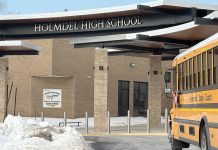
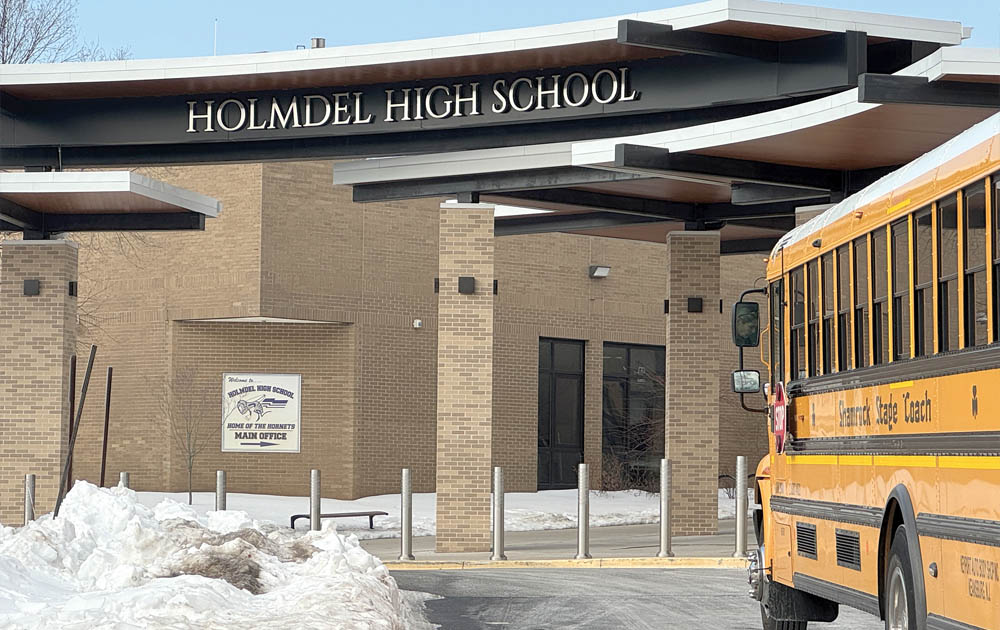
At the Feb. 26 township committee meeting, Mayor Rocco Impreveduto announced the new funding. That amount included $6.5 million for road improvements to Crawford Corner Road along Holmdel High School, $3.5 million of which comes from a state grant secured by the township.
The school district has also received about $8.5 million in property tax revenue over the past eight years from 40 single-family homes at Reserve at Holmdel within the Bell Works campus along Crawfords Corner Road and Roberts Road. Impreveduto noted that revenue would not exist without the Bell Works PILOT (Payment in Lieu of Taxes) agreement.
Another $6 million in PILOT revenue is projected over 30 years from the redevelopment of 23 Main St., known as Azura at Holmdel, the former Vonage property, which is being converted into a senior living community. The project is expected to generate about $200,000 annually for the school district once the township finalizes a PILOT-sharing agreement.
A PILOT is a negotiated amount paid by a redeveloper to a municipality instead of regular property taxes to make a project viable. The agreement typically lasts up to 30 years. As a rule, most of that money goes to the town.
An online petition, Save Holmdel Schools, is urging the township committee to share PILOT revenue with the school district. It notes that the “Holmdel Township Committee collects approximately $7.5 million annually from the Bell Works PILOT program. Under state law, the township retains 95% of PILOT payments, the county receives 5%, and the school district receives zero – even though 68% of property taxes normally support the school district.” Schools are generally restricted from raising their tax levy above the state-mandated 2% cap.
Besides PILOT revenues and infrastructure upgrades, Impreveduto said the township funds approximately $450,000 annually to cover the costs of the School Resource Officer (SRO) program; a one-time $600,000 shared‑services agreement was approved last year to help the district preserve courtesy busing; and about $180,000 was given toward athletic field lighting, multiple improvements to the Duncan Smith Theater and other facilities used by the schools.
Impreveduto said the committee has “taken our commitment to our schools very seriously,” even as the township operates on a roughly $32 million municipal budget compared to the school’s budget that is estimated to be over $70 million this year.
“There’s only so much we can do with a budget that’s a fraction of theirs,” he said.
Resident Jay Yannello said he appreciated the township’s commitment to schools, but the $21 million figure “pieces things together” through different time frames and categories in a way that he said feels misleading.
“We really appreciate the grant money. You guys worked hard,” Yannello said, referring to the Crawford Corner Road upgrades. “But it was a grant.”
Impreveduto said the project cost “about a million more” than anticipated.
In terms of the Azura PILOT, Impreveduto said the projected amount of about $200,000 for schools will escalate, adjusting for inflation, and grow over 30 years. He noted that the property had been steadily depreciating and that, without redevelopment, the schools’ existing tax flow from the site would likely have eroded.
Some of the board members at the Feb. 27 BOE meeting argued that the $21 million blends very different kinds of dollars – past tax receipts, one‑time grants, and projections decades into the future – in a way that obscures how little of it will actually close the district’s nearly $5 million deficit for 2026‑27. A budget presentation at the Jan. 21 BOE meeting put that gap in the context of the $70 million-plus school budget.
District Superintendent Scott Cascone offered a sober clarification after board member Joanne Lam asked whether the township’s projected $6 million from the Azura PILOT would help reduce cuts in the budget.
“The answer is ‘no,’ ” Cascone said, explaining that the Azura dollars essentially reflect about $200,000 a year over roughly 30 years once the project is fully built and occupied.
He also confirmed that there has been no definitive budget funding from the town for 2026‑27 beyond existing commitments to fund security officers.
Cascone said there is “no doubt” that the district will receive the $600,000 committed by the township last year to preserve courtesy busing, but he said, “to date, we have not received those funds.”
He reiterated broader state‑level funding issues, including reductions in state aid and rising costs for health benefits and special education, that no local agreement can fully fix.
However, ongoing talks with the township committee are “relatively productive,” Cascone said, and district leaders remain hopeful for additional help.
The article originally appeared in the March 12 – 18, 2026 print edition of The Two River Times.