By Sunayana Prabhu
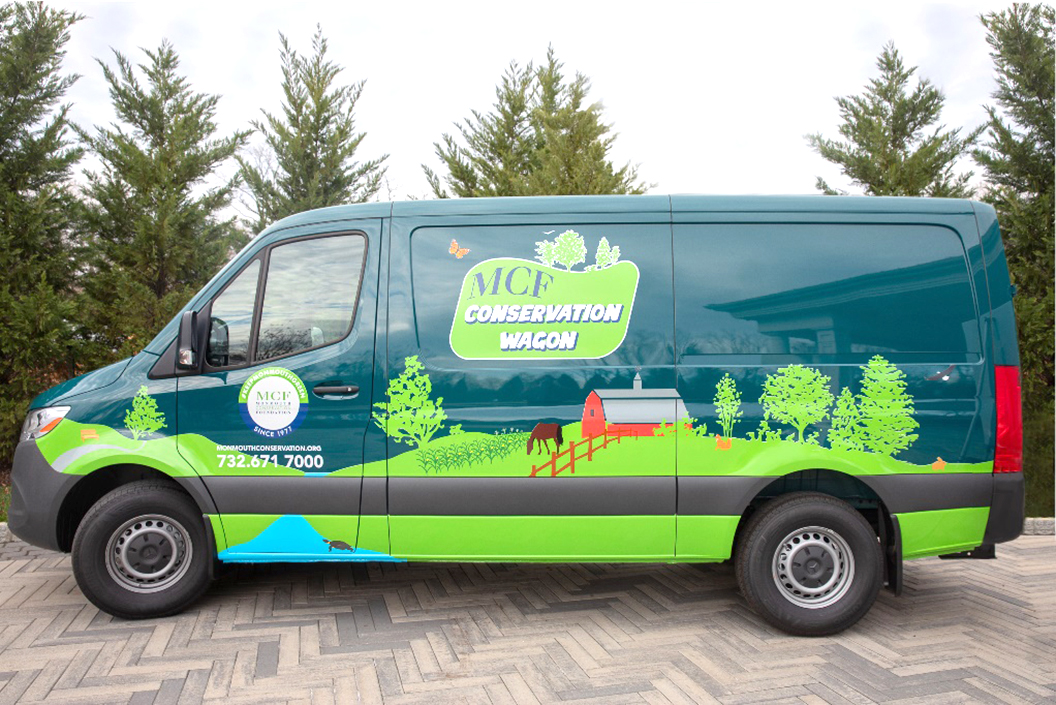
MONMOUTH COUNTY – This spring, the nonprofit Monmouth Conservation Foundation (MCF) is hitting the road with a new initiative to expand environmental education and promote climate action. The MCF “Conservation Wagon,” a sprinter van donated by Ray Catena Auto Group, will roll out in time for Earth Day, bringing hands-on, science-based programming directly to schools, parks and community events throughout Monmouth County.
The new mobile education unit is part of MCF’s ongoing efforts to make land conservation and climate action more accessible, especially to underserved communities. The Conservation Wagon will complement MCF’s Kids For Conservation program, which teaches children the importance of preserving natural spaces.
“We’re so grateful to Ray Catena Auto Group for this generous donation,” said William D. Kastning, MCF executive director. “MCF recognizes that many members of our community face barriers to accessing preserved lands, and this wagon allows us to take our mission on the road, ensuring more people can enjoy the many benefits of green space.”
The wagon will operate like a mobile classroom for the community. The curriculum, aligned with MCF’s land preservation mission, will include themes such as restoring biodiversity and ecosystem function, employing natural climate solutions and taking individual action to create climate resiliency.
“Unfortunately, what happens a lot of the time for a lot of people is they think, ‘Oh, I’m just one person in the house. It doesn’t matter if I recycle,’ ” said Doug Caum, MCF’s director of Educational Outreach, who is designing the curriculum. The conservation wagon will engage the public with fun and entertaining activities but also empower individual action with a focus on supporting local parks, planting native species and encouraging biodiversity in small yards and neighborhoods.
“My goal would be to have people feel a little bit more confident and competent about the things they can do in their own lives that could go towards climate change,” Caum said. “Things they can do within their means, within their own homes, to try and make a change in even a subtle, small way that can go a long way.”
The MCF Conservation Wagon will be free for qualifying schools, municipal parks and community events, with the goal of prioritizing underserved communities. The wagon will also be available for a fee for those who wish to book it for private events or field trips.
“We support organizations that focus on families and their well-being,” said Ray Catena of Ray Catena Auto Group. “This vehicle will support Monmouth Conservation Foundation’s environmental education initiative, which, in turn, benefits Monmouth County communities.”
In addition to school visits, MCF plans to partner with local colleges, including Monmouth University, to develop a framework for preK-12 lesson plans that emphasizes the importance of green spaces and climate resiliency. These educational materials will meet New Jersey state standards and be designed to encourage real-world, local action.
As part of the ongoing effort to expand its offerings, MCF plans to develop an intern and docent program, allowing local students and volunteers to serve as “Conservation Wagon ambassadors” at larger festivals and community gatherings. This initiative will also tap into the network of educators working on climate change education initiatives.
MCF is already exploring additional partnerships, including its recent collaboration with Monmouth University on the Expanding Access to Climate Change Education project. The grant, awarded in 2024 by the New Jersey Department of Education, will help deliver experiential learning opportunities to local educators.
The new Conservation Wagon is part of MCF’s long-term vision to enhance environmental education and public engagement in the county. Last April, the nonprofit took ownership of the 90-acre Scudder Preserve in Middletown, a natural site slated for restoration and expanded public access. According to the Jan. 13 press release from MCF, plans for the preserve include creating a “living laboratory” where the community can experience firsthand the benefits of land conservation and restoration efforts.
The article originally appeared in the January 16 – 22, 2025 print edition of The Two River Times.