By Elizabeth Wulfhorst
You’ll likely find the landscape of suburban neighborhoods changing this month – porches and yards once decorated with bright summer flowers will gradually begin sporting hay bales, corn stalks and a multitude of pumpkins as September sets its sights on autumn.
Whether you have an unassuming front door or a grand porch and entryway, there are plenty of ways to decorate for the season and tips that will make your design last until the weather turns frosty.
The first step in setting up your fall display is choosing a theme that fits your house and location. The Two River area offers plenty of inspiration, from sandy dunes to rolling horse farms.
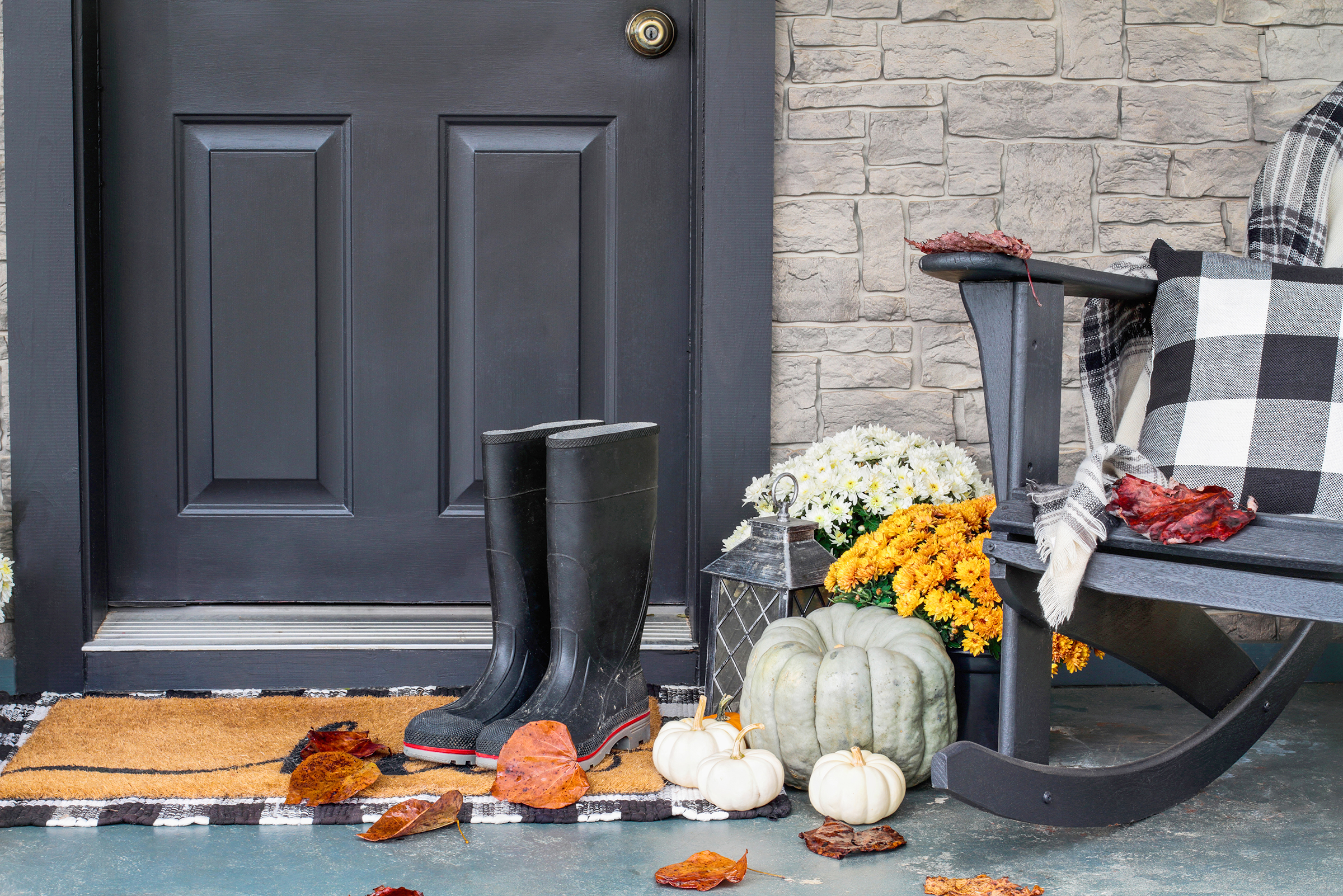
While big, round, orange pumpkins are the OG, the variety of shapes, sizes and colors available at local markets, farm stands and grocery stores today is mindboggling. Consider layering white and muted green pumpkins with a few standing lanterns and rope for a nautical-inspired fall design.
Adding hay bales and corn stalks to the assemblage can bring the farm to your front door. Hay bales are also a great way to add height to your display, getting the pumpkins off the ground. Attach cornstalks to porch posts with twine or colored ribbon.
And don’t forget the flowers: mums of all sizes and colors are readily available at garden centers; pick colors that complement your pumpkin display. Ornamental kale and cabbage (technically all kale) in pots can add deep purples and greens to the design.
“Ornamental cabbage and kale are the same species as edible cabbages, broccoli, and cauliflower (Brassica oleracea) but have much fancier and more colorful foliage than their cousins from the vegetable garden,” according to the University of Wisconsin-Madison’s Extension Horticulture Program.
Plants with “deeply-cut, curly, frilly or ruffled leaves are called ornamental kale, while the ones with broad, flat leaves often edged in a contrasting color are called ornamental cabbage.”
No matter what you call them, these plants will make a glorious addition to any outdoor décor.
While you are focusing on the porch, don’t forget the front door. A simple wreath of colorful autumn leaves and pinecones can make a statement when paired with a symmetrical arrangement of pumpkins and gourds on either side.
And if you have an outdoor living space that is used well into the fall, consider introducing pillows in fall colors for the furniture. Arrange pumpkins and gourds of varying sizes and textures around your outdoor seating area, too.
Now that you’ve chosen a theme and collected all your items, a few simple steps can mean the difference between a display that looks good for a week and one that looks great into November.
First, give all your pumpkins a thorough cleaning with soap and water and consider immersing them in a solution of one teaspoon of bleach per gallon of water. Leave them to soak for at least an hour and up to a day. “Bleach is an antifungal agent and an oxidizer, and will slow the natural decomposition process,” according to the Food52 website. Remember to wear gloves and complete this process outside, where the bleach won’t ruin any furnishings.
As an alternative to bleach, you can mix up a solution of peppermint castile soap and water in a spray bottle and spray the outside of your pumpkins. Allow it to dry naturally.
Once you’ve placed your display, you’ll probably have to contend with the bane of any gardener’s existence: overly friendly, hungry critters. To keep the deer, racoons and especially the squirrels from nibbling on your decorations, use a store-bought animal repellent available at garden or hardware stores, or try a homemade pepper spray: mix water with some cayenne pepper or hot sauce and add a drop of dish soap to help the solution spread and stick to the pumpkin’s surface. Spray the solution generously over the entire surface of the pumpkins, ensuring even coverage, and let it dry naturally. Capsaicin, the ingredient that makes hot peppers hot, is an irritant; make sure to wear gloves and spray with the wind so you don’t inhale the mist or get it in your eyes.
Finally, timing is everything. If your porch or entryway gets a lot of sun, you may want to consider waiting to decorate until the temperature turns consistently cooler and the rays aren’t quite so strong.
The article originally appeared in the September 11 – September 17, 2025 print edition of The Two River Times.