By Sunayana Prabhu
KEYPORT – After a nearly decade-long fight, environmental advocates are celebrating the end of what some dubbed a “zombie pipeline,” the proposed project to bring natural gas through New Jersey to customers in New York.
The Williams Companies, Inc. filed plans for its Northeast Supply Enhancement (NESE) project in 2016. The Oklahoma-based energy company sought to expand its footprint in the Northeast region. Even as Williams failed to secure necessary permits from New York and New Jersey, the company maintained federal approval for the project. But after nearly eight years of permit filings and extensions granted by the Federal Energy Regulatory Commission (FERC), Williams let a key NESE project certification expire May 3, terminating the project.
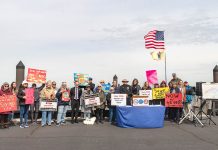
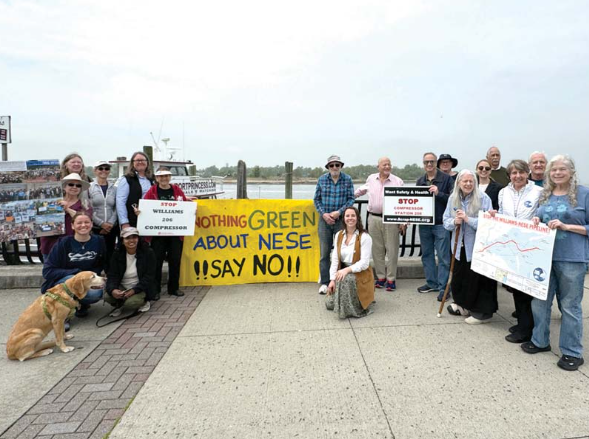
Residents and nonprofit groups, including the Sierra Club, Clean Ocean Action, NJ League of Conservation Voters, Waterspirit, Eastern Environmental Law Clinic, Central Jersey Environmental Defenders, Surfrider Foundation, and others gathered at the Keyport Waterfront Park May 6 to celebrate the win.
In a joint statement issued by Sierra Club, Clean Ocean Action, Waterspirit and NJ League of Conservation Voters, the groups thanked the community for their years of engagement.
According to the group, Williams Companies kept the pipeline project alive by requesting extensions from FERC every two years, promising they were work- ing to modify NESE to address concerns from the groups and both states.
“The project would have caused irreparable harm to our environment by increasing climate-changing greenhouse gas emissions, water pollution, and flooding, destroying critical wetlands and habitats, and cutting through sensitive Raritan Bay and New York Bay, disrupting the marine environment.”
Nonprofits across New York and New Jersey collaborated throughout the years to fight the project by aggressively intervening in the permit process. The groups collected signatures on petitions, set up community engagement and information events to build more awareness about the project’s impact, and reviewed and commented on documents at every opportunity to stop NESE. The groups even collectively produced a “stay-at-home” action toolkit to help residents and stakeholders remain engaged in the process during the pandemic.
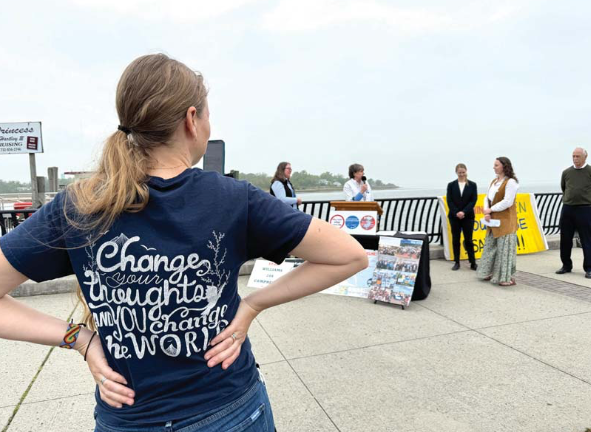
The Eastern Environmental Law Center (EELC) team “solicited an expert report that undercut the claims of market need for this project,” said Caitlin Morrison, a staff attorney for EELC, at the press conference.
The billion-dollar NESE pipeline project would have connected to pipelines from the Marcellus shale region in Pennsylvania through New Jersey. It included the construction of a new 32,000-horsepower gasfired compressor station in Franklin Township, across from several communities in South Brunswick, and a 23.4-mile offshore pipeline through the Raritan and Lower New York bays. Neither Gov. Phil Murphy nor the current or former governors of New York approved permits for the project.
Clean Ocean Action is credited with bringing together the Bayshore municipalities and key voices from Monmouth County, significantly contributing to a unified opposition to the project.
The challenges facing the environment are “endless,” said COA executive director Cindy Zipf. “We’ve fought offshore drilling that may be back. We fought Liquefied Natural Gas (LNG) facilities off our coast; they could be back until we get the laws in place to protect the ocean, which also will protect the land. We’ll keep fighting these battles until they become outlawed or we can find another way.”
Over the years, thousands of citizens and dozens of organizations and community groups participated in efforts to oppose NESE.
“When we push back against the climate crisis anywhere, we protect people everywhere. We are not just saying ‘Not in my backyard,’ we are saying, ‘Not here, not there, not anywhere, not ever,” said Blair Nelsen, executive director of Waterspirit, at the press conference.
Taylor McFarland, conservation program manager for the Sierra Club New Jersey chapter, urged the community to “always remain vigilant” because “fighting these projects is like playing Whac-a-Mole,” referring to a new Williams’ project already in the pipeline that the groups are actively opposing. “The laundry list of fossil fuel projects is long, but that’s OK because we already beat one project, and we already know how to beat another.”
The article originally appeared in the May 9 – May 15, 2024 print edition of The Two River Times.