By Sunayana Prabhu
HOLMDEL – The controversial wastewater treatment plant at the former Vonage site at 23 Main St. will be demolished in the next three years and replaced with a sewer main connecting the property to the Bell Works sewer system.
In a series of rapid decisions, the Vonage redevelopment plan agreement between CHA Partners and Holmdel was amended by the township committee at its Jan. 22 meeting; the planning board approved the amended application Jan.27.
Officials said the $6.5 million needed for the sewer project will not require taxpayer dollars.
The decision resolves a major hurdle in the redevelopment of the 88-acre site into a 299-unit senior living community called Azura at Holmdel. Mayor Rocco Impreveduto said eliminating the wastewater plant addresses environmental concerns tied to the nearly 50-year-old system. However, some issues remain for residents concerned about the environmentally sensitive area.
During the township meeting, Impreveduto said the committee had been working to find a solution to residents’ concerns about the antiquated wastewater system for “quite some time.” Replacing the existing plant with a new pump station and force main connection is the “most meaningful” update in the redevelopment plan, the mayor said.
The four-phase redevelopment plan had been held up in its first phase for months before the planning board OK’d it this week amid continued pushback from some who were not only opposed to the reuse of the grandfathered wastewater system but also to the regional sewer line now proposed.
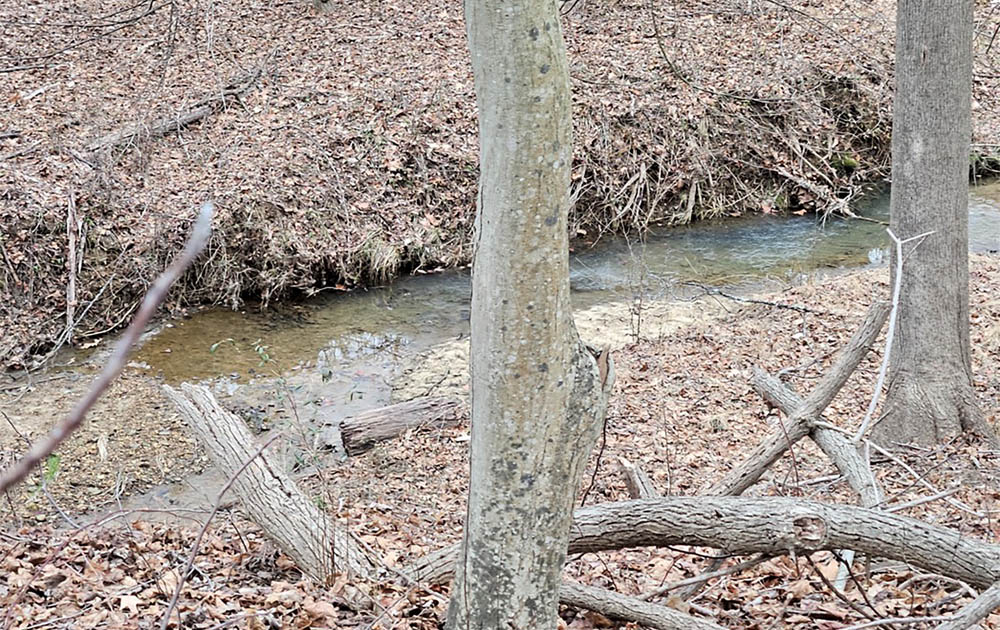
Environmental advocates have cited risks to the drinking water supply due to the site’s proximity to Willow Brook, a freshwater stream that feeds into the Swimming River Reservoir, the source of potable water for 300,000-plus Monmouth County residents.
A group of residents organized a GoFundMe campaign to hire a legal team and technical experts to testify against the wastewater plant at the previous planning board meeting.
At the Jan. 27 planning board meeting, similar concerns were raised about the amended plan. Residents warned the board that replacing the wastewater treatment plant with a regional sewer line could reduce local groundwater recharge and weaken long-term water security, especially during droughts.
They argued that a modern on-site treatment plant with subsurface leach fields would better treat wastewater, returning clean water directly to the local aquifer and watershed, helping maintain the area’s long-term water resiliency.
However, a majority of the planning board voted to approve the amended application that shifts wastewater handling from the on-site treatment plant to a new force main connection to the Bayshore Regional Sewerage system. During redevelopment, wastewater will be trucked off-site until the plant’s eventual decommissioning, expected within three years. Removal of the existing wastewater treatment plant and lagoon will be carried out under state and local oversight.
Board professionals testified that the application fully conforms to existing zoning laws and that outstanding wastewater and stormwater issues can be addressed through conditions of approval and permits issued by outside agencies.
Township planner Kate Keller cautioned board members that denying the redevelopment, which implements part of Holmdel’s state-mandated affordable housing plan, could undermine the entire fourth round affordable housing settlement and open the township to significant, multifront litigation from the redeveloper.
The application was approved under conditions regarding wastewater, decommissioning, trucking and erosion control. The only dissenting vote came from planning board member Wes Fagan, who said he was troubled by the prospect of residents living on the site before the new sewer connection is in place. Fagan called the interim wastewater handling “sketchy” and overly dependent on the state Department of Environmental Protection (NJDEP). He objected to on-site sewage storage, said he had not seen clear calculations comparing pervious and impervious coverage, and criticized the lack of definitive answers on when and how the lagoon would be closed, including work within the conservation easement.
Fagan also raised concerns about the stormwater pipe that runs beneath the lagoon, arguing it could provide a direct pathway for effluent to reach the stream and is critical to managing stormwater on the site. He noted that existing NJDEP discharge permits “run with the land” and said he would be more comfortable if the old on-site treatment plant and its permits were fully abandoned, so there would be no possibility of reverting to stream discharges in the future.
“I believe there are many elements that are incomplete in the site plan,” he said. “That liability can come back to, let’s say, bite us.”
The Amended Plan
Under the amended plan, a force main installed on the property would pump wastewater off-site through sewer lines connected to the Bell Works sewerage system. From there, the effluent would be pumped to the Bayshore Regional Sewerage Authority for treatment and discharge. “This eliminates any and all environmental considerations related to that property. There will be no runoff, there will be no spray grounds, nothing of that nature. It is simply a sewer system that will contain all the waste running through,” Impreveduto explained.
After exploring two options – a new plant or the force main connection – officials settled on the latter as a one-time exception meant specifically for Azura, Impreveduto said. “This in no way, shape or form sets a precedent for further development in South Holmdel. This is a one-off that we can allow through the authority we have through the redevelopment process.”
The force main itself will be deed-restricted, officials told residents, ensuring it cannot be used to support other or future developments. “The pipe will only have capacity for that development,” Impreveduto said, and no other project would be able to tap into it in the future.
The plan allows for the removal of the current above-ground sewage system, with CHA Partners committing to fully decommissioning it, the mayor said.
Additionally, “there are zero taxpayer dollars being dedicated to the force main and the sewer connection,” he said. The $6.5 million cost of the sewer project will be covered through a combination of sources: CHA Partners, the property redeveloper, will contribute $1 million to fully decommission and remove the existing sewage package plant; approximately $1.3 million will come from the township’s affordable housing trust fund, which is financed by developer fees and earmarked for projects with affordable components; and the remaining $4.2 million will be funded by a special assessment on units built on the property, with the township issuing a bond that will be repaid over 30 years by future residents of the property through annual fees.
“A special assessment is a mechanism where the township is able to impose an added tax upon specific properties that are benefited from a public improvement,” explained township attorney Michael Collins.
The committee also touted added benefits from the Azura project, including 5 acres deeded to the township for a fire and EMS hub and a 7,000-square-foot senior center. “The framework works for all parties and, I’d say most importantly, it works for the town,” Impreveduto said.
Resident Reaction
While residents initially applauded the township committee’s decision, many at the planning board meeting pleaded with the board to vote “no” on the amended plan, and opposition to replacing the current wastewater plant with a sewer line is now growing.
Residents have expressed frustration over the time and money they had to spend to compel officials to act.
“We had to go in on our own; we had to organize. We had to hire professionals, spend money, spend lots of time trying to protect ourselves and the environment when we thought that that’s what you would be doing. So the frustration grew,” resident Kristin Celauro said at the township committee meeting. On behalf of the community group, Save Monmouth Water, Celauro hired a legal team and experts to refute the developer’s plans.
At the planning board meeting, she called the amended plan “dangerous.”
Celauro said the issues raised by the Azura at Holmdel application are so serious that she and others are now working on state‑level legislation to ensure a similar situation cannot happen again anywhere in New Jersey. She said the proposed bill would be paired with an education initiative to teach children why drinking water and the broader environment must be actively protected, arguing that local decisions on development and wastewater in sensitive watersheds should be constrained more clearly by state law.
Some residents placed their ire on the planning board’s engineering firm, T&M Associates. Peter Franco voiced doubts about the firm’s suitability for the project. He criticized the engineers’ lack of preparation and failure to properly review wastewater treatment plans, even after several months. “They cost everybody a ton of money here. They failed at their job miserably, and this all could have been avoided if they would have done their job right,” Franco said. He urged officials to consider replacing T&M with a firm that will be more responsive and accountable.
“This process was horrible,” said resident Jay Yannello, who was part of an ad-hoc team set up by the township committee to provide input on the Vonage Redevelopment Plan. “I just hope you and anyone else that’s in your seats going forward realizes this town won’t have it,” Yannello told the committee. “We’ll have none of it. We need a smart, intelligent process for big decisions, or all hell’s going to break loose. And hell has broken loose on this.”
The article originally appeared in the January 29 – February 4, 2026 print edition of The Two River Times.