By Jody Sackett
While pretty, flowers are also essential to the pollinators heading into overdrive as summer approaches. Maybe you never got around to planting flowers (no judgment – life gets busy sometimes) but starting a garden in summer’s searing heat is tough.
So, perhaps this is the time to try a new option like the popular Bee Lawn, which is exactly what it sounds like – turf that includes native flowers to help local pollinators. Not only will the bees and butterflies love it, but sustainable nature-based landscaping like this promotes biodiversity and dramatically reduces maintenance.
Summer conditions can be stressful for green friends; not only do flowers wilt, but lawns struggle to survive, too. An easy solution to help both pollinators and summer turf is to cultivate a lawn designed to support beneficial insects while reducing monoculture grass deserts. Bee Lawns consist mainly of hardy grasses mixed with low-growing resilient flowers like clover, lance selfheal, and creeping thyme.
While you can purchase specific Bee Lawn seed mixes and start from scratch, an easier way is to use the lawn you already have; it most likely already contains at least some pretty white clover blooms and probably other low-growing, flowering cover, too. Molzon Landscape Nursey in Middletown offers white clover seed if you need to add some. You don’t need to do anything else for a Bee Lawn; just let the grass and clover grow.
And letting it grow is key.
Rutgers has a world-class Professional Golf Turf Management School with exceptional research facilities. Experts there recommend homeowners cut summertime lawns less frequently, to a height of two-and-a-half to three-and-a-half inches. Continuous mowing at lower heights weakens the turf, increases pests and stresses the grasses. Coincidentally, Bee Lawns flourish when turf is at a height of about three to five inches, which allows native clover enough space to grow and bloom. Letting your lawn grow to three-and-a-half inches (or more) will meet Rutgers’ recommendations and help the bees and butterflies, too.
A benefit of taller turf is decreased mowing frequency and reduced maintenance. You’ll spend less time and money moving the lawn and use less water because Bee Lawns are drought-tolerant. Fertilizer is unnecessary since the clover will fix nitrogen to feed your lawn; in fact, it was for this very reason that Scott’s marketed Clovex in the 1950s to increase clover in suburban yards.
Since you want the flowers to grow, there’s no need for weed killers that can wash off into rivers and streams. It’s a low-maintenance dream.
You’ll end up with a lawn that provides food and nesting spaces for pollinators and other essential insects that feed hungry birds. Less work for you, a stronger lawn and robust pollinator populations – what a win-win for all.
If you aren’t ready to commit your whole lawn to the pollinators, ease into the practice by gradually starting your Bee Lawn in a low-traffic area, creating a “pocket park” in the side yard or a backyard corner.
As with most environmental projects, getting the family involved is a great idea. One way to help with pollinator preservation is by making butterfly puddlers, ideally with recycled materials.
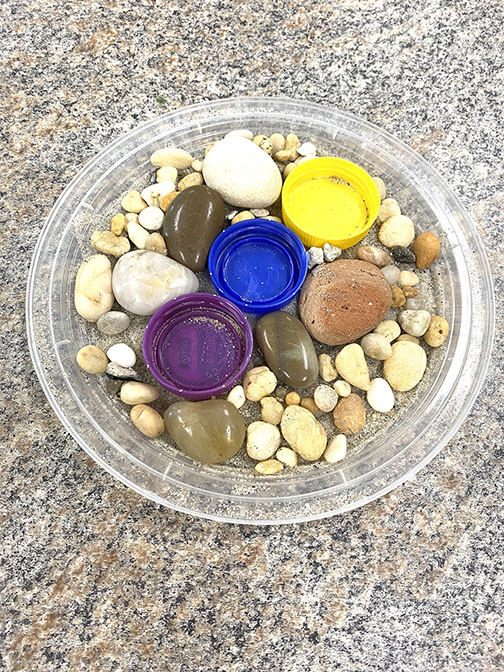
Butterflies use their curled-up proboscises like a straw to drink nectar and water. Because they can’t land on open water, they usually drink from dew or ground puddles. But on hot summer days, the dew evaporates quickly and puddles dry up. To help them, construct a simple butterfly puddler using a shallow pan, an old pie plate or the upturned clear top of a plastic takeout dish. Glue some plastic bottle caps to hold water and some “perching stones” (quarter-sized rocks) into the bottom of the pan. Sprinkle sand around the bottlecaps and stones to weigh everything down and keep it all in place. That’s it – you’re done! “Install” the butterfly puddler in your backyard, placing it in a slight depression in the dirt or mulch near flowers. Pour water in the bottlecaps and, voilà, you’re helping local pollinators survive hot spells.
Finally, if you want colorful flowers to brighten your backyard and help pollinators, check out local nurseries. They offer hardy native plants like purple coneflowers, black-eyed Susans, butterfly weed, and white wood asters. Plant them in your yard or patio pots. These lovely perennials will still be available for purchase and planting throughout the summer, but be sure to water them religiously so they’ll survive the hot, dry weather.
For more information about Bee Lawns, native plants, and tours of Pollinator and Monarch Butterfly Waystation gardens, visit the Rutgers Master Gardeners of Monmouth County Spring Garden Days Plant Sale this weekend, 8 a.m. to 5 p.m. May 17 and 9 a.m. to 3 p.m. May 18 at the Monmouth County Agriculture Building in Freehold on Kozloski Road. There will be many free presentations on horticulture, composting, gardening and, of course, plant sales.
Enjoy your lazy summer as you literally watch the grass grow, knowing that while relaxing, you’re actually helping precious pollinators. And don’t forget to search for lucky four-leaf clovers – the odds are in your favor now.
The article originally appeared in the May 16 – 22, 2024 print edition of The Two River Times.