How to keep your Labor Day party safe from foodborne illness
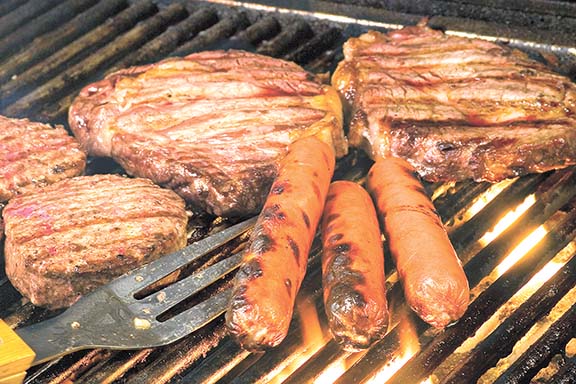
Keep your guests happy and healthy this Labor Day by practicing smart food safety. Don’t use the same serving implements for raw and cooked foods and separate meats from other foods when storing.
By Jamie Jablonowski, MPH, BSN, RN, CPH
It’s Labor Day, which means one last big summer barbecue to gather friends and family. And you want to leave your guest with fun memories, not a stomach bug. According to the Centers for Disease Control and Prevention (CDC), 48 million people get sick from foodborne illness each year, leading to 128,000 hospitalizations and 3,000 deaths.
While outdoor dining and large gatherings can present unique food-safety challenges, there are simple steps you can take to prevent foodborne illness this holiday weekend.
THE RISKIEST FOODS
Some foods carry a higher risk of causing foodborne illness, according to the CDC, including raw or undercooked poultry, meat, seafood or eggs; raw or undercooked sprouts; unwashed fruits and vegetables; cut melon; unpasteurized milk, juice, cider, or soft cheese; and raw dough or raw batter made with uncooked flour. While these foods can safely be part of your end-of-summer celebrations, proper precautions should be taken to ensure harmful bacteria are not on the guest list.
PREVENT CROSS-CONTAMINATION AT THE GRILL
Sukrut Dwivedi, D.O., is the section chief for Infectious Disease and medical director of Infection Prevention and Antimicrobial Stewardship at Monmouth Medical Center. “The biggest mistakes I still see at cookouts are pretty basic, but keep happening,” he said.
The CDC suggests raw or marinating meat, poultry, seafood and eggs should al- ways be kept separate from all other foods. This means storing them in the refrigerator in sealed containers, so juices don’t leak onto other foods.
When preparing food, use one cutting board for raw meat, poultry and seafood, and another plate or cutting board for all other foods such as bread or vegetables. Raw chicken does not need to be washed, as washing raw poultry can cause germs to pass onto nearby food or countertops.
“People use the same tongs or platter for raw burgers and then the cooked ones,” which is a bad idea, Dwivedi warned.
ENSURE FOOD STAYS OUT OF THE DANGER ZONE
Harmful bacteria such as Staphylococcus aureus, Salmonella enteritidis, Escherichia coli O157:H7, and Campylobacter (the main culprits of food poisoning) can grow in what the U.S. Department of Agriculture (USDA) calls the “danger zone.” The danger zone is temperatures between 40°F and 140°F, where bacteria can grow and can double in number in 20 minutes.
“A lot of people judge doneness by color instead of a thermometer,” Dwivedi said. “Use a thermometer: 165°F for poultry, 160°F for ground meats, 145°F with a rest for whole cuts.”
If reheating meals, food should reach an internal temperature of 165 °F or until hot and steaming.
ENSURE YOUR SIDES STAY FRESH
Dwivedi reported that, along with undercooked ground meat and poultry, foods such as potato salad or coleslaw that sit in the sun are also at high risk. Produce can also be a source of infection. “We’ve seen E. coli linked to frozen berries and Salmonella tied to jalapeños in recent out-breaks, so it’s not just the meat you have to watch,” he said.
Dwivedi also suggested checking the federal recall lists before purchasing produce.
STORING FOOD SAFELY
According to the USDA, meat, poultry and seafood should remain in the refrigerator or in a cooler at 40°F or below prior to cooking. Foods that require refrigeration should never be left out for more than two hours, and no more than one hour if the temperature is above 90°F.
When storing food in the refrigerator or freezer, avoid crowding items to allow cool air to circulate. Refrigerator temperatures should be at or below 40°F and freezers set to 0°F.
Ready-to-eat foods, such as deli meats, are at especially high risk for Listeria and the risk increases the longer the product is stored. “Listeria is unusual because it grows at refrigerator temperatures and affects deli meats, prepared salads and soft cheeses,” Dwivedi said. The risk increases if the refrigerator temperature exceeds 40°F.
It is important to note that the same bacteria that cause food to look spoiled or smell bad can be different from the bacteria that cause foodborne illness. Often, there may be no signs of harmful pathogens hiding in food, which is why proper storage and cooking methods are so vital.
THOSE AT HIGHEST RISK FOR FOODBORNE ILLNESS
Dwivedi explained that the highest risk groups for food-borne illnesses include children, pregnant women, older adults and anyone immunocompromised (cancer patients, transplant recipients, individuals on strong immunosuppressants). “What might be a rough 24 to 48 hours for a healthy adult can turn into dehydration, bloodstream infection, or a hospital stay for them,” he said.
HOW TO RECOGNIZE FOODBORNE ILLNESS
According to the CDC, the most common symptoms of food poisoning are diarrhea, stomach pain or cramps, nausea, vomiting and fever.
“Most typical food poisoning is miserable but self-limited,” Dwivedi said. “You should get checked if there’s a high fever, blood in the stool, signs of dehydration (dizziness, almost no urine), you can’t keep liquids down for more than half a day, diarrhea lasting past three days, or any neurological changes such as confusion or muscle weakness.”
DON’T FORGET HAND HYGIENE
According to the CDC, handwashing is one of the most effective tools for preventing food poisoning. Wash hands before, during and after preparing food and before eating. You should wash for at least 20 seconds with soap and water. In a 2023 observational study by the USDA, those observed failed to wash their hands properly 97% of the time. Almost half of the individuals spread germs to spice containers because of inadequate handwashing.
Fortunately, with a few effective food preparation methods, you can serve a memorable meal safely. These simple food safety practices will also come in handy as the holiday season quickly approaches to ensure everyone stays happy and healthy around the family table.
This article originally appeared in the September 3-9, 2026 print edition of The Two River Times.