By Sunayana Prabhu
MONMOUTH COUNTY – Spotting a film star or production crew in your town or a neighbor’s backyard may no longer be an unusual sight. From Steven Spielberg to Robert DeNiro, Adam Sandler to Timothée Chalamet, celebrities are all around the Two River area as filming has gained momentum in New Jersey.
Now, several municipalities are earning a “Film Ready NJ” state certification, which establishes uniform, film-friendly rules that can transform towns into potential Hollywood hotspots.
Tinton Falls and Shrewsbury are the latest municipalities in the area to introduce the state-formatted Film Ready ordinance to regulate filmmaking within their borders; Red Bank, Holmdel and Oceanport, along with several other towns across the state, have already completed some or most of the process.
Adopting a Film Ready ordinance is one part of the five-step process to obtain a Film Ready NJ certification from the New Jersey Motion Picture and Television Commission (NJMPTVC), which promotes municipalities for film production in the state.
According to the Tinton Falls ordinance, the municipality has established regulations concerning permits for commercial filming and photography and set guidelines for film crews, residents, and borough officials to create a film-friendly system that will ease collaboration with production companies.
Municipal managers around the Two River area have been hashing out finer details, working through their schedules to get certified. “We are just about there,” said Red Bank borough manager Jim Gant. Gant will be participating in the workshop, Getting Ready to be Film Ready, sponsored by the Municipal Managers Association March 20, with Jon Crowley, executive director of the NJMPTVC. Red Bank updated its Film Ready ordinance last year.
Filming in the state is up 8% from last year and more than 26 municipalities have adopted the Film Ready ordinance. Thirty more are expected to follow suit by the end of 2025.
The Film Ready NJ Process
The first step in the certification program is a mandatory workshop for elected officials, held quarterly across the state. These workshops teach participants how to create film permit ordinances, understand production safety protocols, and explore the economic benefits of hosting film productions.
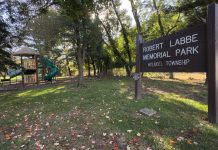
Municipalities must also showcase their towns by submitting high-quality photographs of landmarks such as city halls, parks, marinas, and unique architectural sites to the film commission’s online location library.
The goal of the certification is to standardize the process and make it easier for production scouts to find filming locations.
“We’re looking to build consistency throughout the state so that when a production comes, they know what to expect,” said Crowley. The commission runs the workshops and helps municipalities get certified.
Towns must also develop consistent permit processing procedures, establish uniform fee structures, and create clear guidelines for production interactions to eliminate bureaucratic uncertainty.
Crowley, an Emmy Award-winning showrunner and producer, explained the quiet economic revolutions evident in small communities opening their doors to filming. When a production comes to town, he said, it often spends significant money locally – on hotels, restaurants, hardware stores and hiring local crew members. Crowley shared an example of a six-day film shoot that spent nearly $30,000 in Atlantic Highlands. He also noted that during the filming of “Happy Gilmore 2” at Beacon Hill Country Club in Middletown, the production “replaced the turf” before packing up, leaving the location looking better.
Diverse Landscape, Skilled Workforce
“New Jersey is a lot more than the opening title sequence of ‘The Sopranos,’ ” Crowley said, pointing out the state’s diverse landscape, which can double for locations like Washington, D.C., Times Square, and parts of Africa and Southeast Asia. Additionally, 40% of experienced New York crews live in New Jersey, providing a skilled workforce.
New Jersey also offers a wide variety of filming locations, including big cities, small towns, mountains, beaches and period-specific architecture, Crowley said, adding that the state’s diverse geography makes it a unique destination for film productions.
There are also several upcoming projects in the state, including a Steven Spielberg film production, a 15-day shoot scheduled at a private residence for the movie “The Whisper Man” starring Robert DeNiro, and the Bruce Springsteen biopic, “Deliver Me from Nowhere,” which was filmed extensively in Asbury Park. Crowley described the Springsteen project as a “love letter” to the Two River area.
Economic Boost from Film
Both businesses and residents can get involved by contacting the film commission. Residents who wish to rent their properties to production crews can list their information in the commission’s online location library. Businesses can join the online production services library to help production companies find a network of support services within a film-ready municipality for a smooth filming schedule. Available services listed online not only help boost the economy and tourism of towns but also assist production companies on a tight schedule and budget.
The film commission has also scheduled a Film Ready workshop March 26 for municipal officials and county representatives seeking to attract film productions. The free workshop, running from 9 a.m. to noon at the Carteret Performing Arts Center, will cover the state’s film-friendly certification process.
The workshop is part of a broader strategy to position New Jersey as a competitive film and television production destination.
In 2023, production companies spent $592 million in New Jersey. “This year, we’re going to exceed $600 million in qualified spend,” Crowley said. The state’s appeal as a film destination also stems from generous tax incentives. Qualified production companies can receive a transferable tax credit of up to 35% for some cast and crew salaries.
New Jersey is home to almost 70 sound-stages, with another 70 expected to be completed by 2026. The state offers a wide range of filming spaces, from small areas to fully soundproofed stages up to 36,000 square feet.
Recently, besides “Happy Gilmore 2,” filmed at Beacon Hill and Ideal Beach in Middletown, Timothée Chalamet was seen filming the Bob Dylan biopic “A Complete Unknown” in Red Bank, Atlantic Highlands and Asbury Park.
The 160-person technical crew of “A Complete Unknown” was at the Count Basie Center for the Arts for two and a half days. About 100 extras dressed in period clothing for the scene in which Chalamet performs as Dylan onstage with Joan Baez, played by Monica Barbaro. The film garnered eight Oscar nominations this year, elevating the Jersey Shore’s profile.
“It’s great exposure for our organization,” Izzy Sackowitz, chief operating officer for the Basie, said in a Two River Times article from Dec. 20, 2025. “They were looking for a well-kept historical theater. It’s really cool to get our name out there. It’s great for the local economy, too.”
Navigating Production Challenges
Despite the economic benefits, film productions can present unique challenges for municipalities and their residents.
“Filmmaking is a creative process, and all sorts of things can come into play that don’t normally affect other businesses, like weather or illness,” Crowley explained.
“We had a production that was scheduled to film on a street on a Monday, but one of the actors got sick, and they wanted to move to a Friday. The local police were not expecting to be filming on a Friday, which is typically a busy night with people out shopping.”
In such scenarios, the film commission has successfully mediated and resolved the issues. “We were able to come in and say, ‘OK, how can we make this work? Maybe we can flex to Thursday or Saturday or Sunday,’ working out creative solutions that make the municipality happy as well as the production.”
The commission assists municipalities in several ways: it coordinates with the Department of Labor regarding child actor regulations, finds alternate locations when original sites become unavailable, mediates scheduling conflicts, and ensures minimal disruption to local community life.
“Sometimes you need a subway platform. Well, guess what? New Jersey’s got an underground subway platform,” Crowley said. “We can work with the Department of Transportation in trying to facilitate filming schedules in a way that’s not going to disrupt commuters.”
Crowley said the commission “jumps into action in any number of different ways to ensure both the production and the municipality have a positive experience.”
The article originally appeared in the March 20 – March 26, 2025 print edition of The Two River Times.