By Sunayana Prabhu
A cup of joe is grounded in American culture but nearly all of it is sourced from coffee farms around the world. As new tariffs imposed by the Trump administration percolate down to cafes in every neighborhood, homegrown and family-run roasters in the Two River area are doing their best to navigate the economic landscape already strained by the effects of climate change.
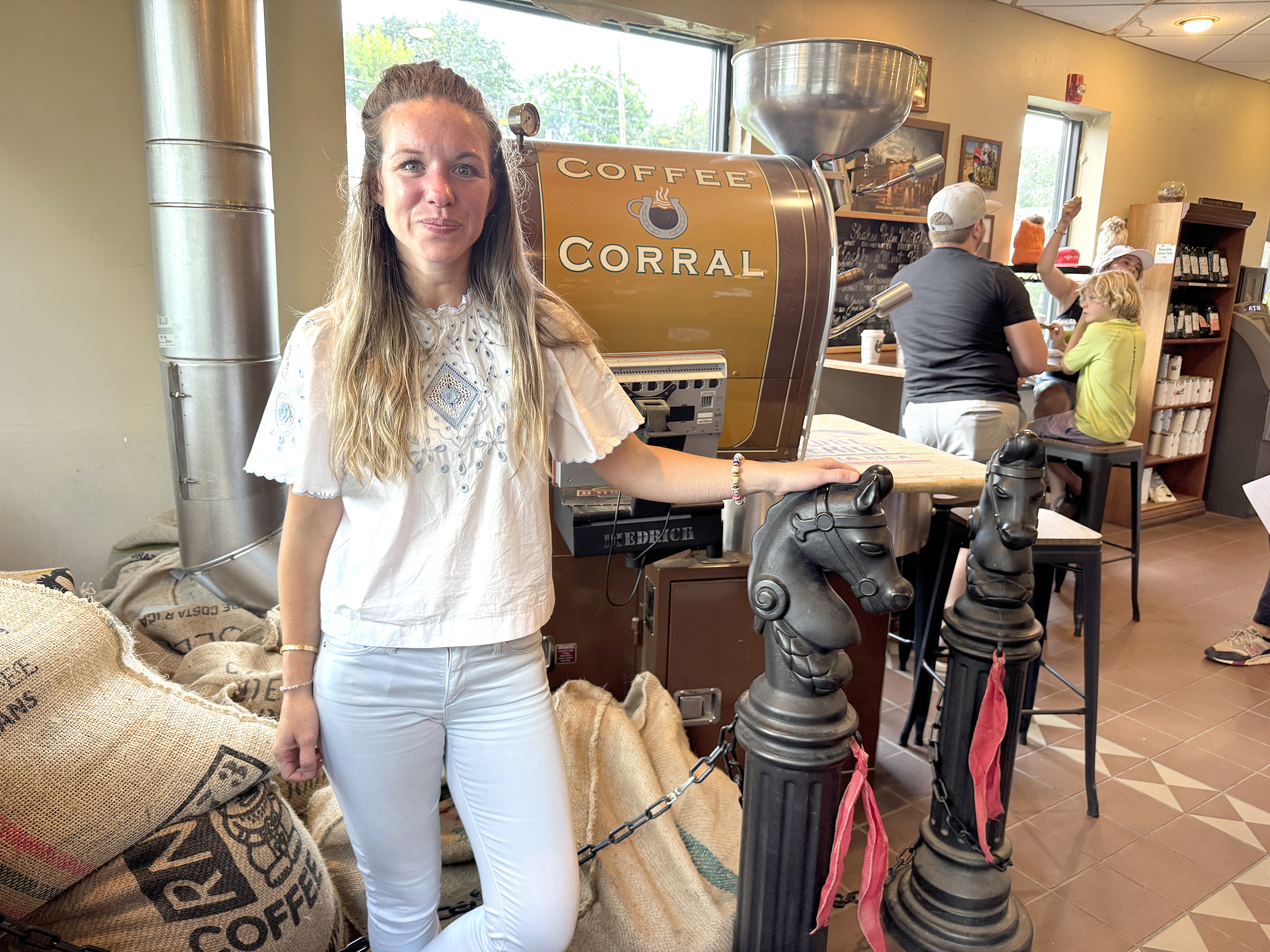
The tariffs are going to be “detrimental” for small coffee businesses, said Courtlyn Crosson, co-owner of Coffee Corral in Red Bank, warning of dire consequences.
Higher Tariffs Impact Coffee Supply Chain
A sweeping tariff order was signed by President Donald Trump April 2, designating certain tariff rates, which were initially set to take effect July 9, to be implemented Aug. 1. According to the executive order, a baseline 10% tariff will be levied on most imported goods, with additional country-specific tariffs ranging from 11% to 50%. Brazil, the largest supplier of coffee beans to the United States, is facing a proposed 50% tariff.
Importers pay the tariffs to Customs and Border Protection, which examines and allows coffee containers into the United States. That increase in cost is passed on to the roaster and finally the consumer. For instance, when a shipment of green coffee with a declared value of $100,000 is subject to a 10% tariff, importers are liable to pay an additional $10,000 upfront. “There’s no way that roasters can absorb that cost,” Crosson said, concerned about the significant impact of tariffs on imports from major suppliers, including Brazil and Vietnam.
Currently, a typical Brazilian coffee priced at $4.50 could potentially spike to $7, Crosson said, which is “just not realistic.”
According to coffee trade data published by the National Coffee Association (NCA), a nonprofit that advocates for policies that advance the U.S. coffee market, more than 66% of Americans drink coffee each day and “more than 99% of America’s coffee must be imported – mostly raw (or “green”) coffee beans.” Coffee plants thrive in warm, tropical regions, which limits large-scale cultivation in the U.S. to areas like Hawaii and Puerto Rico. As the leading global consumer of coffee, the United States relies heavily on imports to meet its high demand.
Depending upon the form in which coffee is imported, the NCA notes it must be stored, cleaned, shipped, roasted, packed, distributed, marketed, prepared before landing on the consumer’s table, “with every $1 in coffee imports generating $43 of value for the U.S. economy. The United States’ top sources of green coffee beans are Brazil (32%), Colombia (20%), Vietnam (8%) and Honduras (7%).”
While coffee traders warn the tariffs may disrupt supply chains and push consumer prices higher, the White House executive order justifies tariffs as a necessary step to address the U.S. trade deficit and promote fair trade practices.
Legal challenges have delayed full tariff implementation to Aug. 1, but the coffee sector has already felt economic and operational impacts since the announcement in April.
A Legacy of Resistance in Every Cup
“Coffee can’t be produced in the United States in the quantity that it would need (to be),” Crosson said. “The little bit that maybe Hawaii produces is not even enough to supply people in New York City for one day of coffee,” she said, noting the Specialty Coffee Association is fighting for exemptions from the federally dubbed “liberation day” tariffs impacting a beverage whose history itself is rooted in defiance.
In the era of the Boston Tea Party, coffee emerged as a symbol of American resistance, as colonists rejected British tea due to steep taxes imposed by King George III. American colonists responded by naming coffee the unofficial national drink marking a cultural shift from tea to coffee.
Coffeehouses soon became central meeting spots for revolutionaries like Paul Revere, John Adams and George Washington, along with members of the Sons of Liberty. The first public reading of the Declaration of Independence took place outside Merchant’s Coffee House in Philadelphia. Years later, a New York City coffeehouse served as the backdrop for Gen. George Washington’s celebratory welcome before his inauguration as the first president of the United States.
Given the current scenario, many may struggle to afford their morning java or even find a local coffee shop, as the potential impacts of tariffs extend beyond pricing: roasters fear business closures due to financial strain.
“I do think, if these tariffs go into place, you’re going to see a lot of places go out (of business), a lot that maybe right now are making it on a day-to-day basis, a week-to-week basis,” said Crosson.
Coffee Roasters Turn to Innovation, Adaption
Just a few feet away from the international coffee chain Starbucks is Rook Coffee on Red Bank’s White Street. Unlike some chains, Rook Coffee distinguishes itself through local charm and meticulous sourcing of beans from Ethiopia, Costa Rica, Colombia, Guatemala, Nicaragua, Sumatra and Uganda.
Started by two childhood friends in a humble 300-squarefoot shack in Oakhurst, Rook Coffee is perhaps one of the fastest-growing local roasters, with 11 stores around the Jersey Shore. The company just announced the signing of a lease for a new 10,000-square-foot brewing facility and headquarters space on Shafto Road in Tinton Falls, a major expansion that comes at a challenging time.
Many coffee businesses, including Coffee Corral and Rook, confirmed buying in advance to lock in pricing with the suppliers before tariffs go into effect. However, tariffs are not the only aspect driving up coffee prices. Imported green coffee beans are already facing challenges from severe droughts and extreme weather patterns due to climate change.
According to data from the U.S. Bureau of Labor Statistics, coffee prices jumped roughly 11% in May from the same month last year – a rate of inflation nearly four times higher than the national average.
The surge is largely driven by a supply shortage caused by drought conditions, combined with strong consumer demand. Roasters warn that tariffs on Brazilian imports could further increase prices.
“Coffee prices are going up, and coffee prices have been higher over the last year and a half to two years than we’ve seen in a really long time. We have to be nimble, and we have to navigate carefully,” the president of Rook Coffee, Brandon Purcelly, said.
The company implemented a small pricing increase at the beginning of this month but hopes to keep pricing as stable as possible.
Rook anticipates officially moving into its Tinton Falls facility by November, banking on innovation to sustain the company. “It takes us a long time to develop a new flavor, sometimes over a year, multiple iterations,” Purcelly said, explaining that the upgraded facility on Shafto Road en- ables faster development of new cold brew flavors, includ- ing limited releases, and allows more room for innovation.
The new space will allow Rook to double cold brew pro- duction and improve office operations. While the compa- ny currently processes 6,000 to 8,000 pounds of coffee per week, yielding 3,500 to 4,500 gallons of cold brew, the new setup is designed to at least double that capacity.
While small businesses are working cautiously to lower operating costs, adopt strategies to buy stock in advance or lock in rates with suppliers for the next few months, they’re hoping for a more permanent resolution. The NAC is actively working to get coffee exempted from these tariffs, with CEO Bill Murray advocating for relief at international events.
“We just have to be very price-conscious and smart right now. We did raise our prices a bit in April to get ahead of it, but in the same respect, you can only ask the coffee drinkers to spend so much on a cup of coffee,” Crosson said.
“It’s uncertain times for everyone.”
However, as a passionate roaster, she wants to lead with hope despite the challenges that lie ahead. “I feel like we made it through the pandemic. We have made it through other tough times. I don’t think we’re going anywhere because of it (tariffs), but it’s just another challenge we kind of have to figure out now.”
The article originally appeared in the July 17 – July 23, 2025 print edition of The Two River Times.