By Stephen Appezzato
RED BANK – After years of delays, a plan to remediate the former borough landfill along the Swimming River and construct a new park has been reinvigorated.
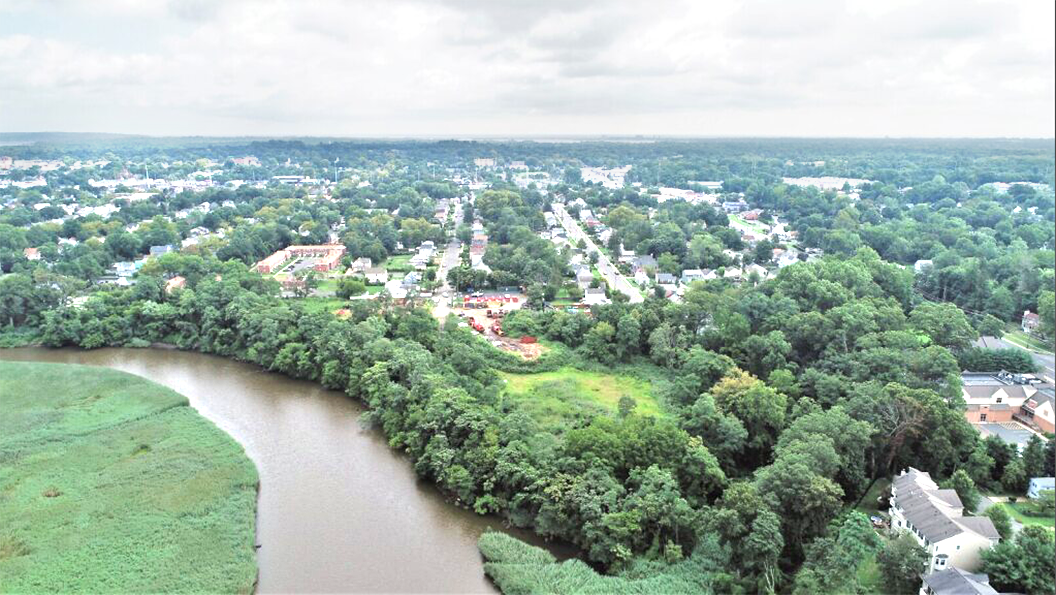
On the heels of a partnership announcement between the borough and the Monmouth Conservation Foundation (MCF) in April, the nonprofit announced last week it received a $500,000 grant from the Environmental Protection Agency to tackle site environmental studies and create an updated remediation plan for a 210-acre tract on Red Bank’s West Side, focusing on the landfill area.
The news comes after years of project dormancy.
In the past, “Red Bank had some issues with changing the form of government and having some disagreement among council people, so it kind of laid fallow for a while,” explained MCF executive director Bill Kastning. MCF is a land trust that secures funding and partnerships to preserve green space, create parks and protect natural resources in Monmouth County.
“With the new leadership at work, we’re happy to say we’re now making progress,” Kastning said.
From 1922 to 1983, 8.6 acres of the 210-acre tract housed the borough’s landfill, which is now the biggest undeveloped parcel in Red Bank. A brownfield, the site was a dumping ground for bulk, vegetative and dry industrial waste and housed an incinerator which has left the area contaminated. Plans and multiple studies to remediate the blighted property began in 2008 but went unrealized. In 2023, the borough designated the property a priority in its new master plan and life breathed into the project.
According to the master plan, the borough had an agreement with the Department of Environmental Protection (DEP) to remediate the site by 2023 and has paid $95,000 in fees since 2016 to the agency. In a statement to The Two River Times, borough manager Jim Gant said the DEP “has been extremely supportive and understanding of the Borough’s constraints and delays,” and has “worked with the Borough and our professionals to determine an appropriate extension for remediation.” Gant confirmed the borough will continue to pay the annual fee, which adjusts each year, and is focused on properly managing the project timeline. A new deadline to fully remediate the site was also set for May 2029.
“This has legs,” Kastning said. “It’s just a matter of going through the motions with the DEP and the EPA, and getting all the approvals. Once we get all the approvals of the remedial action work plan, then we can start the remedial action,” he said.
By partnering with MCF, Red Bank can solicit more funding for the project and benefit from the organization’s institutional knowledge. As MCF is a private nonprofit, it can receive donations – like a $2 million commitment from an anonymous donor in 2021 pledged toward the construction of the park – and its recent $500,000 EPA Brownfield Community-Wide Assessment grant, which the borough was not eligible to apply for as it was technically the polluter.
“We have the flexibility to navigate processes and help municipalities get these kinds of initiatives to the finish line,” Kastning said.
Karen Keene, MCF director of development, explained that community engagement is a major conditional component of the EPA grant.
“When you look at brownfields that are contaminated, naturally, there are questions – sometimes concerns – from the community. They want to understand what was there, is it safe, what’s possible. You know, the long-term ramifications,” she said.
To answer these questions, MCF has access to EPA educational resources for guidance and a community outreach plan in place. The organization will use its “on the ground” connections in local service organizations to solicit feedback and provide answers to residents. “We set up a network of folks that we would plan to work with and leverage to have these meetings and informational sessions,” Keene said, including connections with Pilgrim Baptist Church, Parker Family Health Center and Lunch Break. Similarly, a community liaison working for the borough will also facilitate outreach campaigns.
In Red Bank’s 2023 master plan, the cost of remediating the brownfield was estimated between $5 million and $10 million, with park construction costing a similar amount. MCF’s $500,000 will cover pre-remediation activities, like an updated environmental assessment and creating a remediation plan. The borough will apply for money from the state DEP’s Hazardous Discharge Site Remediation Fund to help cover the remediation and park construction. While the borough applies for these state funds, MCF can fundraise from private donors.
The borough previously floated the idea of building a skatepark at Sunset Park, but official plans are open-ended. Keene said it’s unlikely it will become a community garden as the land will be capped and treated for contamination. According to MCF, there is a vision to build a trail connecting the park – located along the Swimming River – to the Navesink River, and to advance this the borough has been strategically acquiring land easements in the target area. Kastning also estimated site remediation could begin in two to three years.
Despite many years of delays and inaction due to political and administrative changes in the borough, Keene gives credit where credit is due. “They (the borough) did their due diligence and had careful work, and realized that they were facing these funding gaps,” she said, prompting them to enter a partnership, which enables both parties to serve a shared goal for the community. Since 2008, the borough has contracted four remediation investigations – the latest in 2016. “We’ve really thought this through to the end and it’s a great partnership,” Keene said.
The article originally appeared in the May 30 – June 5, 2024 print edition of The Two River Times.