By John Spinelli
MIDDLETOWN – As electric vehicle (EV) sales grow, Two River firefighters are adapting to the new technology with new tactics and one local business is stepping up to help.
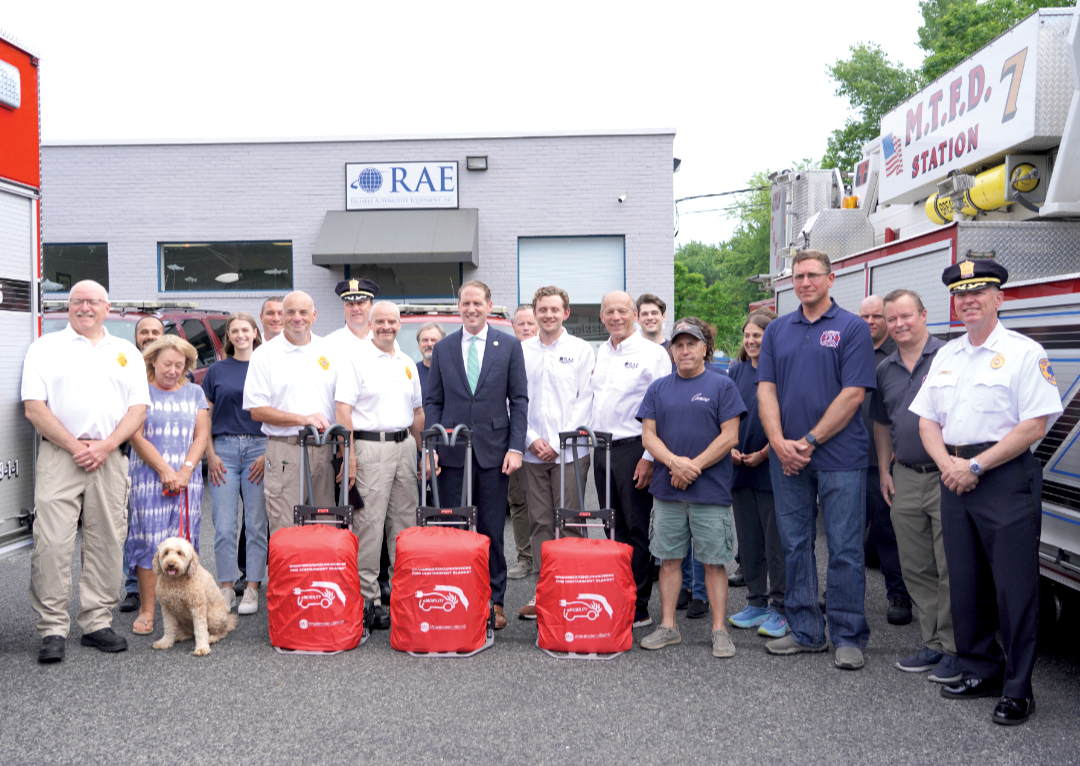
Traditional procedures are less effective in fighting and containing electric car battery fires, so during a ceremony last month, Reliable Automotive Equipment, located in the Belford section of Middletown, donated three new fire containment blankets to the Middletown Fire Department. The blankets are made by Wielander and Schill; Reliable is the German company’s North American distribution partner and was proactive in sourcing the best fabric for the blankets, which will contain a fire while letting water permeate it.
“This is a tremendous step to making their job safer and easier,” Middletown Mayor Tony Perry said.
Reliable Automotive president David Gruskos said it was his “pleasure to give back to the volunteers” who do so much.
The approximately 26-by-20-foot blankets, which cost about $6,000 apiece, are certified to withstand temperatures up to 2,012 degrees Fahrenheit and can endure short-term temperatures up to 2,462 degrees, Gruskos explained. A blanket “can be swiftly deployed by two individuals within one minute.”
While “efficient and powerful,” Gruskos said EV batteries “can be prone to thermal runaway if damaged or improperly handled. This could result in a fire that is difficult to extinguish, posing significant danger to the nearby area.” Thermal runaway occurs when lithium-ion batteries damaged in an accident reignite hours or days after the fire is extinguished.
The gift comes as many states, including New Jersey, are looking to reduce reliance on gasoline-powered cars. Last year Gov. Phil Murphy’s office announced a ban on the sale of new gasoline-powered vehicles beginning in 2035. The governor said the goal is to significantly reduce carbon emissions by 2050. That decision, like other “green” projects such as wind energy off New Jersey’s coast, received a mixed reception. But there is no doubt the transportation sector and consumers are embracing EVs: According to MarketWatch, “about 1.6 million EVs were sold in the U.S. in 2023 – a 60% increase from the 1 million sold nationwide in 2022. The U.S. accounted for 9.7% of all new EV registrations worldwide in 2022.”
“It’s a whole new ball game with the newer cars, but this a great way to handle the fire protection needs of the community,” said Middletown Fire Department assistant chief Daniel Kelly about the new equipment.
“This is huge for us. Today gives us another tool to being ahead of the curve of getting control of a fire early. A simple blanket like this could potentially save lives,” added second assistant chief Kevin Morrissey.
One blanket will be kept at the Lincroft Fire Company and another at the Port Monmouth Fire Company to maximize coverage for a quicker response; the additional blanket will be with the police department. The blankets will also be used to aid nearby towns if needed.
Other Two River towns are aware of this new challenge.
“Thankfully, we haven’t had any electric vehicle fires yet this year,” said Sea Bright Fire Chief Charles Murphy, but, he noted, Sea Bright and other shore towns have seen an increase in electric-powered bikes and scooters, which also use lithium-ion batteries. The Sea Bright Fire Department also covers Sandy Hook.
Other methods can be effective for those towns without blankets. “Another strategy some departments are doing is placing the car (battery) in large containers of water which seems to be effective long term,” he said. “But now you have a new problem: the need to rid the water somewhere appropriate, because it is now highly contaminated.”
With more and more EVs on the road, fire departments may be looking to budget for this new technology or cooperate with neighboring departments in the future.
The article originally appeared in the July 4 – July 10, 2024 print edition of The Two River Times.