By Michael LaRocca
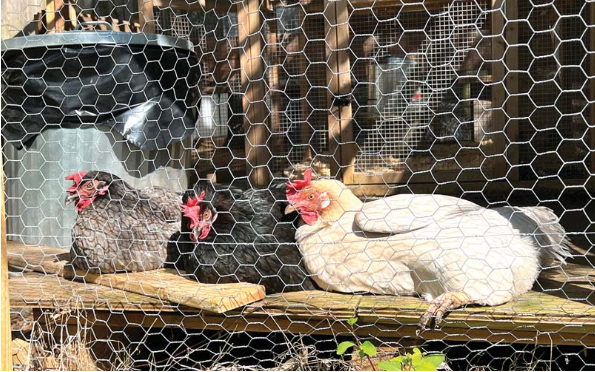
RED BANK – If you live in Red Bank and start waking up to clucking, do not be alarmed. You have not been teleported to a farm in your sleep. It might just be that your neighbors are taking advantage of one of the borough’s more recent ordinance revisions.
In May, the borough council unanimously approved revisions to its ordinance regarding keeping and raising live poultry or fowl on residents’ properties, relaxing some of the previous regulations.
Before the changes, chickens or other fowl had to remain in coops 40 feet from a dwelling. Now, they are only required to stay 12 feet away. And to combat animal loneliness and overpopulation, the ordinance states that residents must own at least four but no more than 12 of any fowl or poultry.
“I think we did it all with a lot of common sense and for the good of the community,” said Paul Proietto, chairman of the Red Bank Animal Welfare Advisory Committee. “(The previous distance regulation) had no common sense to it because there’s not that much ground in a lot of the places in Red Bank. It’s an urban town; it’s not a place where you get acres and acres of farmland.”
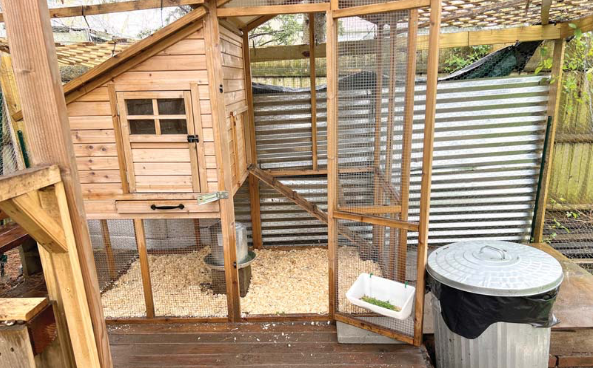
Keeping backyard chickens has its benefits: they are efficient pest controllers and a renewable source of eggs, among other advantages. If Red Bank residents can get used to the maintenance, noise and scent of their feathered companions, raising chickens can be a fun and rewarding pastime.
“The coop needs to be cleaned on a regular basis to keep the smell down, especially in an area as densely populated as we are,” said TJ Moss, a member of the Red Bank Animal Welfare Advisory Committee and the owner of 12 chickens. “But if somebody’s properly cleaning it on a bi-weekly to monthly basis, depending on how many chickens they have, the smell won’t become an issue.”
The ordinance also comes with a few restrictions. Residents are not allowed to own roosters or sell live poultry or eggs from their homes unless they have a permit from the health department.
“We wanted to get a better understanding of what the people were looking for, but also to put together some common guardrails to make sure that if you did have chickens, that it wasn’t out of control,” Proietto said.
Regulations on the raising of live poultry differ from town to town across the Two River area. Atlantic Highlands and Holmdel have strict regulations, Red Bank has more relaxed rules, and Fair Haven and Oceanport ban chickens outright.
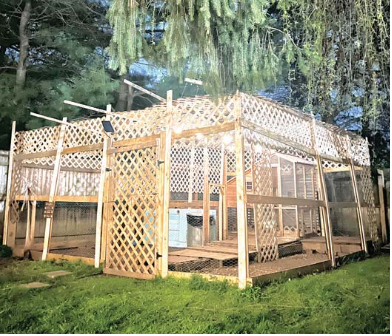
“We had it before where, because of the 40-foot setbacks, our animal control would actually come out to people’s houses and write them tickets or take their herds,” Moss said.
“It’s a big part of people’s livelihood. It’s a big part of people’s family life at home. So we want to allow access to everybody to have chickens in a safe way.”
When Fair Haven decided in 2023 to ban chickens and other farm-like animals to protect the health and well-being of borough residents, it was met with criticism from residents who believed keeping backyard chickens was a nonissue.
“I’ve had chickens for a couple of years now,” Fair Haven resident Gontran de Quillacq told The Two River Times at the time. “There’s only one person of the 33 people in my neighborhood who has ever raised any complaint. So, the idea that it is offensive to others is a bit surprising.”
For now, Red Bank is confident in its decision to charge headlong into making this practice more accessible for residents borough-wide.
The article originally appeared in the July 4 – July 10, 2024 print edition of The Two River Times.