By Sunayana Prabhu
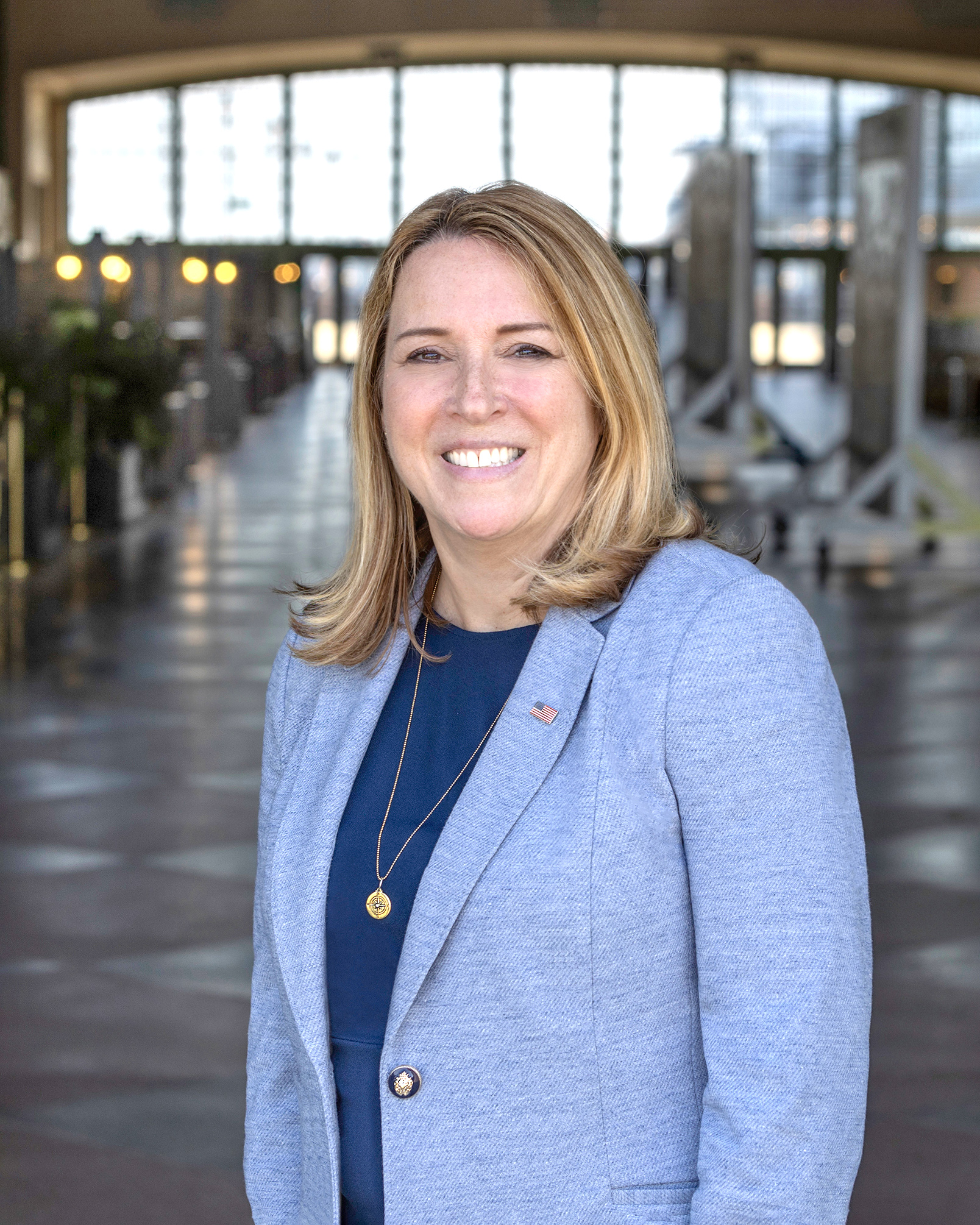
SHREWSBURY – Mayor Kimberly Eulner, a Republican, is running unopposed in the upcoming Nov. 5 election. In January 2024, Eulner took the oath of office as interim mayor following the resignation of Mayor Erik Anderson who left to join the Monmouth County Board of County Commissioners. In November, voters will select a candidate to complete the remaining two years of Anderson’s term.
Shrewsbury follows a borough form of government comprised of a mayor and a six-member council, with all positions elected at-large on a partisan basis during general elections. While the mayor is elected directly by the voters to a four-year term of office, council members are elected to serve three-year terms on a staggered basis, with two seats coming up for election each year in a three-year cycle.
Even though she is running unopposed, The Two River Times invited Eulner to share her background and perspectives with Shrewsbury voters. Her responses have been lightly edited for style.
The Two River Times: Please share your background and accomplishments. What prepares you to lead in your municipality?
Kim Eulner (R): I am a lifelong Shrewsbury resident. I have raised my two sons, Mark and Michael, in my childhood home and have strong family ties to the community. My sons and I are graduates of SBS (Shrewsbury Borough School) and RBR (Red Bank Regional High School). I am a member of the Shrewsbury Historical Society and the Homesteaders.
As mayor, I made community outreach and involvement and modernized borough operations my priority. I was previously a member of the New Jersey State Assembly for Legislative District 11 and served on the borough council from 2018 to 2021. While on the council, I served as liaison to the Environmental Commission and Garden Club. I work for a local data company and am also a licensed real estate agent.
TRT: What are your priorities for the upcoming term and how do you plan to address them?
Eulner: A. Public safety. Ensuring our first responders are properly equipped; continuing to address traffic and pedestrian safety.
B. Planning for the future. Master Plan Update for upcoming 10 years; planning for increased development in surrounding towns.
C. Controlling costs by expanding shared services with surrounding towns and Monmouth County; exploring other health care providers.
D. Increase volunteer levels and participation.
TRT: What strategies will you use to increase public participation in local government?
Eulner: A. Expand my presence in and around town at public events and just in general.
B. Communicate to new and long-term residents the details of our existing volunteer opportunities.
C. Continue and upgrade the updates in the community newsletter, on the website, and on social media and in-person participation by the mayor and council
TRT: What do you see as the biggest challenges facing your municipality? How do you plan to address this challenge?
Eulner: A. Lack of meaningful school funding – de facto increases tax burden on property owners; we pay out more tax dollars than we get back.
B. External mandates related to housing and the increasing cost of health care for public employees.
C. Address these issues directly with the state government, discuss the uniqueness of Shrewsbury Borough, work to identify ways to reduce the cost of health care for our employees and retirees. Consider how we can attract good police officers, as well as fire and first aid volunteers. Investigate the feasibility of Shrewsbury Borough offering financial incentives/tax breaks to first responder volunteers.
TRT: How do you plan to approach budgeting and resource allocation?
Eulner: A. The mayor does not vote on the budget in our borough form of government (as it does with township committee forms of government, i.e., Middletown Township).
B. I support the borough council continuing to proactively assess all borough costs (vehicles, agreements, shared services) to ensure the borough maintains a sound budget. The council strives to provide a high level of services to our residents while maintaining a budget that is as low as possible.
C. Work with neighboring towns and the county to identify shared service opportunities (finance, tax assessor, DPW services/equipment, etc.)
D. Continually seek cost-saving opportunities, for example, we outsourced mowing which enabled us to save money as well as free up time for our DPW staff to concentrate on higher-value projects and tasks.