By Sunayana Prabhu
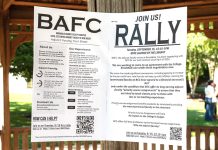
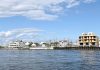
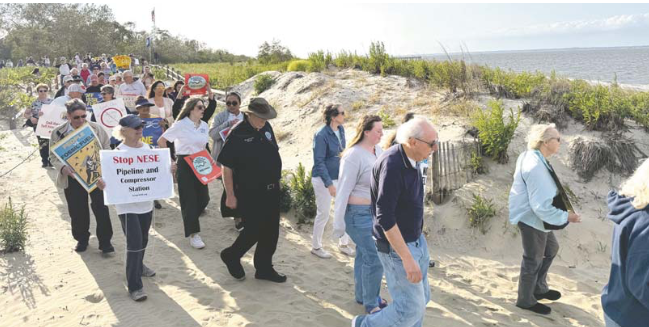
MIDDLETOWN – With the Verrazzano-Narrows Bridge in the distance and the waves of Raritan Bay at their backs, more than 100 activists, community leaders and elected officials gathered in the Port Monmouth section of Middletown Sept. 9 to once again rally against the proposed North East Supply Enhancement (NESE) pipeline.
The natural gas project has resurfaced – again – after numerous failed attempts. Williams Companies, an energy company based in Oklahoma, through its subsidiary Transco, reapplied this year for state permits to construct a 23.4-mile offshore pipeline through Raritan Bay and a compressor station in Franklin Township. The infrastructure would carry natural gas from Pennsylvania to New York City.
The project has faced years of pushback from environmental advocates and coastal communities concerned that the impact of a natural gas pipeline through the Raritan Bay would damage marine ecosystems, pollute air and water, and lock the region into decades of fossil fuel use. The New Jersey Department of Environmental Protection (NJDEP) has denied the project’s permits several times since 2017, citing environmental concerns. The NJDEP had a single public hearing on the latest application Sept. 10. Written comments will be accepted through Sept. 24 online at dep.nj.gov/nese.
Enviornmental, Economic Stakes
The Bayshore event, hosted by the nonprofit environmental group Clean Ocean Action, included speakers who voiced several concerns, ranging from potential environmental destruction and public health risks to economic impacts. Groups including Water Spirit, NY/NJ Baykeeper, the Sierra Club, Food & Water Watch and others urged Gov. Phil Murphy to reject the renewed application, calling NESE a “zombie project” that has returned despite repeated denials.
Environmental groups argue that Williams-Transco’s nearly $1 billion pipeline would stir up contaminated sediment from the bay floor, harm fisheries and jeopardize marine mammals, including whales that feed in the area.
At the rally, Tricia DeVoe, a whale-watching naturalist and founder of Save Our Whales Now, elaborated about marine life threats from the proposed pipeline. “The construction will stir up over a million tons of toxin-laden muck that will contaminate the food chain,” she said. DeVoe noted the pipeline’s proposed route would directly impact critical whale feeding grounds, potentially harassing over 5,000 dolphins and 43 whales, including 12 endangered North Atlantic right whales.
Greg Remaud, director of NY/NJ Baykeeper, said the bay’s habitat supports commercial clam harvesting as well as striped bass and fluke fishing.
Others pointed to economic concerns tied to tourism. “The New Jersey coastal tourism and recreation economy every year supports $14 billion in GDP and 180,000 in jobs,” said Matt Gove of the Surfrider Foundation. “This project is such a bad idea and so annoying because we’ve been fighting it for so long.”
Some of the opponents also questioned the project’s alignment with New Jersey’s clean energy goals. “There is no benefit to New Jersey to building a pipeline that spews pollution all along the way and perpetuates a fossil fuel industry for another generation,” said Amy Goldsmith, New Jersey state director of Clean Water Action.
Elected officials from the Two River area also voiced strong opposition. “Don’t mess with our bay,” said Atlantic Highlands Mayor Lori Hohenleitner, who described Raritan Bay as essential to the region’s economy and quality of life. “No good will come from messy NESE, only bad. We are counting on Gov. (Phil) Murphy and his love for our beautiful waterways. This project must be stopped,” she said.
Red Bank Council member Ben Forest said his town passed resolutions opposing NESE in both 2019 and 2025. “This project has zero energy benefit to Monmouth County and New Jersey,” he said, adding that the pipeline construction and use are damaging to the environment. “It promotes the use of fossil fuels over affordable renewable, by definition, contributing to climate change. And climate change is a catastrophe that municipalities are already dealing with and will continue to deal with.”
Rumson Council member John Conklin urged coastal residents to take note of the risks of resuspending toxins from the bay floor. “I ask that the residents of the towns that benefit from these majestic (Navesink and Shrewsbury) rivers, from Sea Bright, Oceanport, Monmouth Beach, Little Silver, Red Bank, Middletown, Long Branch, to a degree, and Fair Haven, become aware of the potential toxic cocktail that might be unleashed on their doorstep, and take a proactive approach to have their voices heard,” he said.
“Even though we were just celebrating the defeat against Williams-Transco just last year, it seems like the saga against NESE continues. However, you know what? We are here for the long game. They call NESE the zombie project. But we’re also not going away,” said Anjuli Ramos, New Jersey Sierra Club state director.
Ramos said the proposed pipeline construction will impact major roads, railways, housing developments and businesses, as well as critical freshwater ecosystems, coastal wetlands, tidal wetlands and habitats for threatened and endangered species on land and in the water. “Even though NESE is back, make no mistake, opposition is growing.”
In recent weeks, 19 towns, including several Two River area municipalities (Atlantic Highlands, Red Bank, Middletown, Highlands, Monmouth Beach, Rumson and Sea Bright) have passed resolutions against the construction of the NESE pipeline.
‘Zombie Project’ Resurfaces
Williams-Transco first applied for permits for the project in 2017, followed by additional attempts in 2018, 2019 and 2020. Each time, the NJDEP rejected the project, citing potential harm to marine life and water quality. A Sept. 24, 2019, article by The Two River Times noted that the “DEP issued a statement following its ruling articulating that the application did not demonstrate ‘a compelling public need’ and noting concerns that dredging associated with the project could negatively impact surface water quality in the Bayshore region.”
This year, the company refiled in both New Jersey and New York, with an aim to begin construction by late 2025.
The project cannot advance without approvals from both states. The Murphy administration has been prioritizing clean energy initiatives, but environmental groups have said his leadership will again be tested. “Here we are, nearly six years later, and we’re facing the same exact project under even more stringent rules and laws that the state of New Jersey has on the books, and yet, somehow, we don’t have a commitment yet from this administration to stop this pipeline,” Matt Smith from Food and Water Watch said. The governor’s office did not respond to requests for comment by press time. He further added that the entire state of New Jersey emits just under 100 million tons of carbon dioxide equivalents annually. The NESE pipeline would represent nearly a 15% increase in the state’s entire greenhouse gas footprint.
The article originally appeared in the September 18 – September 24, 2025 print edition of The Two River Times.