By Sunayana Prabhu
MONMOUTH COUNTY – Shore towns near the upcoming Netflix Studios on the former Fort Monmouth are emerging as hubs of New Jersey’s surging film and television industry.
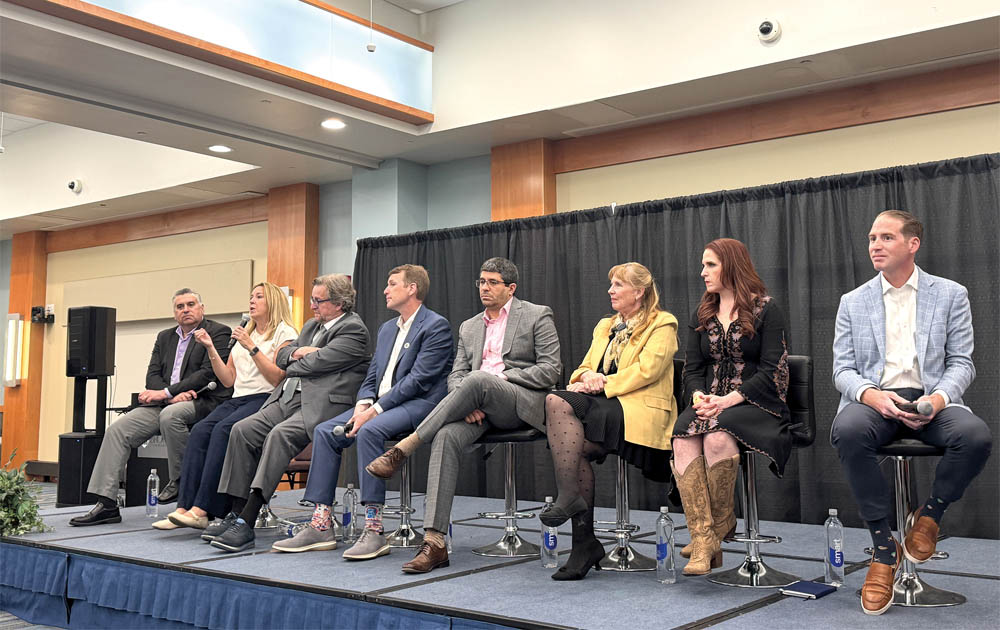
To address the opportunities – and responsibilities – that come with the buzz and the boom, the Eastern Monmouth Area Chamber of Commerce (EMACC) hosted a community forum titled “Film – The Future of Monmouth County. Are You Ready?”
The forum, held at Brookdale Community College in Lincroft April 16, drew over 350 participants, including residents, small business owners, students and creative professionals. Industry leaders, educators, Monmouth County commissioners and Two River area mayors addressed participants as the county anticipates a potentially long-term production boom that could reshape its economy – if communities are ready for it.
The transformation is well underway. Two weeks ago, Netflix began erecting the first of its 12 soundstages on the former U.S. Army post. It is expected to be finished by summer. Eatontown’s Crystal Inn, not far from the new studio, is basking in newfound limelight after the Netflix show “Big Mistakes,” co-created by Emmy Award-winner Dan Levy, filmed scenes in the hotel. According to Netflix officials, the production hired more than 300 local cast and crew and worked with more than 500 New Jersey vendors.
Just a few miles north, in Middletown, actor Adam Driver is filming “Rabbit, Rabbit” at the former Circus Liquors property on Route 35, the site of Calico the Evil Clown.
“A tsunami of jobs” is coming, said Diane Raver, founder of the Garden State Film Festival, who also leads the New Jersey Film Academy at Brookdale. The academy focuses on entry-level roles, such as production assistants, grips, electrics, wardrobe assistants, script supervisors and assistant editors.
In just over a year, Raver said, the program has certified 93 students and arranged roughly 300 work-based learning opportunities.
“We need to be able to very quickly stand up certificate programs so that people can quickly move into the industry,” Brookdale Community College President David Stout, Ph.D., said. “Nobody wants to spend two, four, 10 years getting a degree so they can work in this industry.”
Officials from Shrewsbury Borough, located less than a mile from the gates of Netflix, have likened the film production wave to the historic California Gold Rush of 1849. “Everybody went West thinking they were going to make a lot of money. Who actually made money? Not the people looking for gold; it was the person who provided the shovels,” Shrewsbury Council member Jim Daly said, noting that local vendors supplying film productions will see the biggest gains.
“Go ask the local businesses,” Monmouth County Commissioner Director Thomas Arnone said, referring to visitor spending in Asbury Park that peaked during the recent Garden State Film Festival. Tourism and the arts already generate about $8 billion annually in Monmouth County and support an estimated 35,000 seasonal jobs, Arnone noted, but the film industry is rapidly adding to that revenue by helping businesses expand beyond seasonal tourism. The impact of that revenue is noteworthy: Losing it, Arnone said, would add about $1,000 a year in taxes to each household countywide.
Film Production
Strong in New Jersey
While several major U.S. production centers are reporting downturns, New Jersey is an exception, according to Jon Crowley, executive director of the New Jersey Motion Picture and Television Commission (NJMPTV).
Crowley, a resident of Atlantic Highlands, said he wasn’t surprised when he saw a recent Hollywood headline that read, “Film production down everywhere in the United States – except New Jersey.”
In 2023, Crowley said film and TV production generated $592 million in “qualified spend” – the money productions must spend in the state to receive New Jersey’s tax incentives, including spending on hotels, rentals, construction materials, wardrobe, catering and countless local services.
By 2024, that figure had climbed to $834 million, a 41% year-over-year increase, Crowley said. Crew hires nearly doubled, from 17,000 to 30,000.
“These people (film crews) don’t come with hotel rooms. They don’t come with rental cars. They don’t come with food. They’re buying all that when they get here,” Crowley said. “It’s a small army that lands.”
He said the state expects a similar 40% growth rate for 2025 as numbers are finalized.
The surge is being driven in part by multibillion-dollar studio investments.
In addition to Netflix’s nearly $1 billion production hub, Lionsgate is developing a studio in Newark, while Paramount has expanded its Bayonne presence, with production in New Jersey surging across all three companies.
Area Mayors
Discuss Impact
Middletown Mayor Tony Perry said the surge is already evident, noting multiple simultaneous productions currently filming in town. In addition to “Rabbit, Rabbit,” the Netflix series “Innocent Girl,” starring Kerry Washington, is expected to begin filming soon along the Navesink River, he said.
Municipalities now have to quickly put “toolkits” in place, Perry said, to handle logistics, traffic, police details and community notifications.
Shrewsbury Mayor Kim Eulner said the borough adopted ordinances to limit filming hours, require permits for any pyrotechnics and ensure coordination with police and volunteer fire departments.
“We think we’re really set for when things do come to town,” Eulner said.
Mayor Anthony Talerico Jr. of Eatontown said fears about traffic and congestion near the Netflix Fort Monmouth site have been tempered by the nature of production schedules.
“They’re (film crews) coming in super early, then working late,” he said. “I don’t think a campus with 12 studios is really going to impact the way that you would look at if it were like a Costco or Walmart with constant traffic in and out all day long.”
Perry brought up the need for short-term rentals (like Airbnb) as productions seek housing for cast and crew in a county that already suffers from a shortage of hotel rooms.
“Right now, Middletown does not allow any short-term rentals under 30 days,” he said, adding that municipalities should take another look at that “because we have to be inventive as to how we are going to create new revenue.”
Towns Compete for Shoots, Spending
Several Monmouth County towns are racing to become “Film Ready New Jersey” communities, a state designation that streamlines permits and markets local assets to production crews. Since the program began in 2023, 58 towns in the state have been certified. Middletown was the first in Monmouth County, followed by Little Silver, Shrewsbury, Oceanport, Eatontown and Tinton Falls.
The program requires towns to adopt a film ordinance, clear permitting and listings in the state’s NJ 411 directory, a production services directory on the New Jersey Motion Picture and Television Commission’s website. It serves like a phone book or yellow pages for production companies that connects them with local businesses. Production companies also prefer using local talent and businesses to reap additional state tax benefits for spending, on top of the 30-35% tax incentive the New Jersey Film & Digital Media Tax Credit Program provides for filming and creating digital media content in New Jersey.
And the payoff can be immediate, Crowley said, recalling local gains that included a $19,000 one-day order at a balloon shop for a parade sequence in actor Billy Eichner’s film, a 25% to 30% sales boost for a sub shop in Cranford that fed a crew filming Steven Soderberg’s next film, full off-season hotel bookings in Cape May County during Steven Spielberg’s movie production, and nearly $6 million spent on local talent for the “Happy Gilmore 2” production.
Area nonprofits are also benefiting. Perry said the “Rabbit, Rabbit” production set in Middletown is donating unused clothing to 180 Turning Lives Around, a domestic violence and sexual assault support organization, and is donating surplus food to the Middletown food pantry and groups like Lunch Break.
“Let’s not waste it,” Perry said. “There’s somebody today that is in need of food, that is in need of clothing. If you’re not going to reutilize it, we will.”
Officials at the EMACC program said that nearly anyone near a film set could benefit, including laundromats, hardware stores, landscapers, pet handlers, classic car owners, even animal trainers and child care providers.
“When you watch a show, start breaking it down,” Crowley explained, in terms of props used to create the scene. “Studios are not going to keep that on hand 24/7. They can just go rent it,” which opens up a gamut of adjacent industries.
“Every business in this room should be looking for the talent that you service to register your business, to make sure you are considered,” Talerico said, noting the state’s production guide and vendor registries are resourceful tools. He urged every business – from florists to bakers – to sign up on the state NJ 411 directory so they appear in searches when productions look for vendors within a certain radius.
“Monmouth County isn’t being changed. It’s being expanded,” said Jennifer Eckhoff, EMACC executive director. “Prepared communities will benefit the most.”
The article originally appeared in the April 30 – May 6, 2026 print edition of The Two River Times.