By Jody Sackett
MIDDLETOWN – Residents of Monmouth County have received a wonderful gift – one that can make being outdoors even more rewarding this autumn. The 90-acre Scudder Preserve, in the Navesink section of Middletown, was officially accredited in July as a Level I Arboretum by ArbNet. Among its many treasures are a state-designated 201-year-old tulip tree, rare American chestnuts, immense white oaks and abundant wildlife, all of which the public is welcome to enjoy.
The Monmouth Conservation Foundation (MCF), which owns and stewards the preserve, has opened it to the public for free as a community resource for conservation, environmental education and outdoor exploration.
“This is easily one of the most unique properties in New Jersey, and provides an outstanding opportunity to learn more about ourselves and our involvement with nature and history,” Tom Dallessio, MCF’s executive director, said.
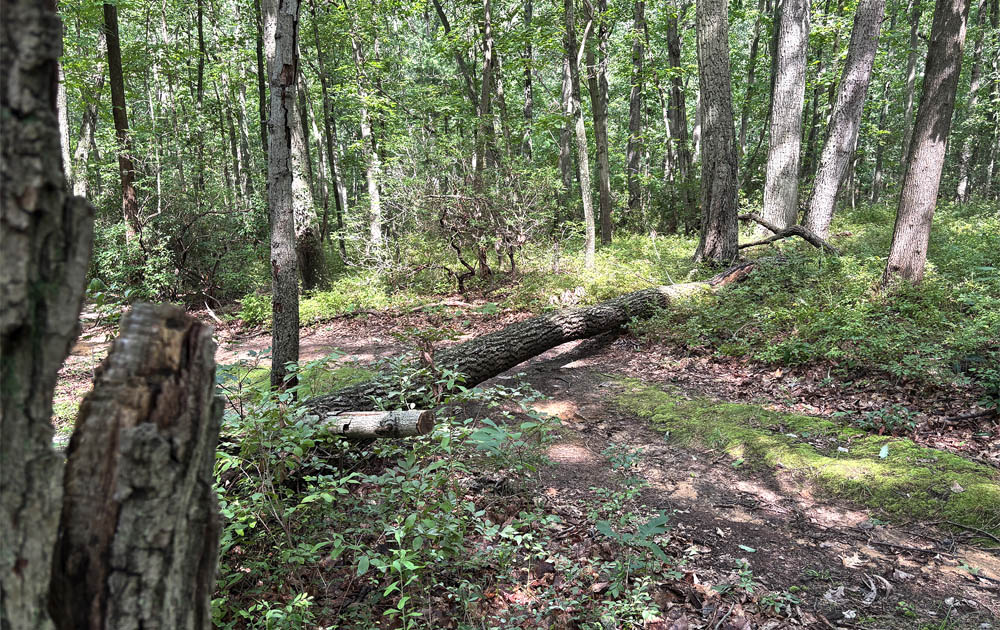
Driving down the narrow, bumpy dirt road to the preserve feels like stepping back in time to rural colonial roots. Located at 85 Browns Dock Road, adjacent to Huber Woods, Scudder Preserve contains an extraordinary variety of habitats: mature forests, wetlands and ponds, the bubbling Claypit Creek stream corridor, wildlife-filled meadows, historic buildings and winding nature trails.
As an accredited arboretum, the preserve joins an international network dedicated to studying and conserving trees. Connecting Habitats Across NJ has also recognized the property as a valuable core wildlife habitat, identifying essential areas needed to maintain ecological connectivity throughout the state.
A Legacy of Conservation
The preserve’s story began more than 40 years ago, when landowners Richard “Dick” and Elizabeth “Libby” Scudder strove to protect their property from development. They donated partial conservation easements to the Monmouth Conservation Foundation land trust. By 2012, when Dick passed away, the couple had donated their entire 90 acres to New Jersey Audubon, which in turn gifted the property to MCF in 2024. D&R Greenway Land Trust and MCF now jointly hold the conservation easements, ensuring the land’s long-term ecological integrity.
MCF is thrilled with its new preserve.
“For more than 40 years, the Scudder family cared for the property with preservation in mind, followed by stewardship by the Audubon Society, before it found a home with MCF. Now Scudder Preserve supports abundant wildlife, established trees, and dynamic, resilient ecosystems. That’s what conservation can do,” Lauren Orme, MCF Communications & Engagement programs manager, said.
A Living Laboratory
This first land ownership provides a rare opportunity for MCF to restore native plants, improve forest and meadow health, control invasive species, protect water quality and increase the property’s resilience to climate change. MCF also plans to renovate the original Scudder homestead into offices and educational space. Significant funding made this work possible, including a $500,000 grant from the New Jersey Resources Coastal Climate Initiative and a $1 million anonymous donation.
MCF has wasted no time getting started. In just two years, it has accomplished a lot. A forest stewardship plan is already in place, and a Natural Resource Inventory has documented the property’s plants and trees. Several plant identification signs have been installed, with more to come. Nature trails are being upgraded, and the Rhododendron Trail has been linked to adjacent Huber Woods.
MCF is working with Rutgers to incorporate stormwater management by designing bioswales and a native-plant rain garden, which will reduce sediment and nutrient runoff into the pond. MCF also completed an invasive species assessment, with control efforts currently underway.
With its diversity of plants and wildlife, Scudder Preserve is truly an open and living laboratory for the community.
Restoring a Historical Landscape
Keith Clayton, MCF’s new stewardship manager, is busy restoring habitats and improving trails. He’s tackling invasive mugwort, knotweed, honeysuckle and Japanese wisteria to protect and encourage precious native plants growing nearby.
“It’s incredible to see so many species that you don’t usually see in one place,” Clayton marveled. As part of the preserve’s plant identification project, he’s been tagging multiple species to showcase native trees and plants.
Clayton emphasizes that conservation does not mean erasing the property’s history. “The Scudders loved their ornamental plants, too, and we want to show how you can incorporate natives into beautiful gardens,” he explained.
“That balance between history, horticulture and conservation is part of what makes Scudder Preserve special, and MCF can now help create connections for people to the land,” Dallessio said.
Volunteers are the lifeblood of nonprofit organizations, and MCF is developing a volunteer engagement strategy to identify where volunteers can make the greatest impact. Initial opportunities are expected to include habitat restoration, trail work and control of invasive trees such as Norway maple, Tree-of-Heaven and Devil’s Walking Stick. Clayton would also love to bring back meadow pollinator plants such as colorful coneflowers and goldenrods to create a cohesive landscape where one ecosystem flows naturally into another.
What’s Ahead?
MCF already offers free conservation programs to the public at the preserve, including evening hikes, guided birdwatching and monarch butterfly tagging with the Field to Flight Foundation. Plenty more programs are on the way.
If you can’t make it to the preserve, MCF also brings educational conservation programs directly to the community. Last year its Conservation Van brought programs to more than 3,000 students, with approximately 75% of them in underserved schools.
Clearly, this is a magical place and Jack Tassini, MCF Board of Trustees president, agrees. “MCF, working with state, Monmouth County and Middletown Township officials, hopes that Scudder Preserve will provide opportunities for people – especially children – to enjoy, learn about and help protect our natural environment,” he said.
Fall Activities at Scudder Preserve
Autumn may be one of the best times to explore the area. “Scudder Preserve is beautiful all year long, but the mixed species will start to turn soon in autumn,” Clayton said. He added that “the Rhododendron Trail in fall is gorgeous, as is the landscape view from the top of the meadow.” Because onsite parking is limited, Clayton advised visitors to park at nearby Huber Woods and walk to the preserve.
Here are a few ways to make the most of your visit:
• Join an MCF program. Check MCF’s website at monmouthconservation.org for upcoming programs, including guided hikes, nature art, birdwatching, fairy houses and activities around the pond.
• Explore the trails. Hike the preserve’s nature trails, enjoying fresh air and exercise while uncovering the surprises of autumn. Listen for pond frogs, watch butterflies visit late-season flowers, compare the acorn varieties you find, and keep a sharp eye out for chipmunks and foxes. Track down the enormous landmark tulip tree. Also, why not adopt the Swedish custom of plogging – picking up litter as you hike – to help keep the preserve safe for wildlife?
• Go birding. Autumn is prime migration season, so bring binoculars and hike to the top of the Meadow Trail for an excellent vantage point. Smartphone apps like Fincherr (see page 28) and Merlin can identify birds by their looks and calls, and BirdCast provides local migration predictions and data.
• Try forest bathing. Borrowing from the Japanese practice of shinrin-yoku, forest bathing involves deliberately and mindfully moving through the woods. Take time to touch bark textures and quietly observe the brilliant colors surrounding you. Breathe deeply to appreciate nature’s scents and secrets and reduce stress. Look for distinctive tree branch configurations, seed pods scattered along trails, fallen-leaf patterns and listen for bird calls echoing from the canopy.
Most importantly, just slow down. Scudder Preserve isn’t a place for marathon training. It’s a place to relax and to experience firsthand the gentle wonders that decades of conservation have accomplished.
The article originally appeared in the September 17 – 23, 2026 print edition of The Two River Times.