By Sunayana Prabhu
In the Nov. 3 general election, voters will decide federal, Monmouth County government and municipal and school board races.
For U.S. Senate, Democratic incumbent Cory Booker is seeking a third term in a contested race. In the House of Representatives, all 12 of the New Jersey district seats are up for election. Two of those seats, from Congressional Districts 4 and 6, serve the Two River area and are contested. Republican incumbent Christopher H. Smith, representing District 4, and Democratic incumbent Frank Pallone Jr., representing District 6, are up for reelection.
Additionally, Monmouth County government races include the office of county surrogate and two county commissioner seats.
U.S. Senate
Current U.S. Sen. Cory Booker faces three challengers: Republican Justin Murphy; Independent Veronica Fernandez, running under the End the Corruption designation; and Joanne Kuniansky of the Socialist Workers Party. Booker won a special election in October 2013 and was reelected to a full six-year term in November 2014 and again in 2020. New Jersey voters have not sent a Republican to the U.S. Senate since Sen. Clifford Case won reelection in 1972.
Currently, Republicans hold 53 of the 100 Senate seats, while Democrats hold 47. Those 47 include two independents, Angus King of Maine and Bernie Sanders of Vermont, who caucus with Democrats.
Democrats would need a net gain of four seats to flip the Senate 51-49 in their favor. A gain of three would produce a 50-50 tie, with Republican Vice President J.D. Vance as the tiebreaker.
U.S. House of Representatives
Congressional District 4 covers both parts of Monmouth and Ocean counties, and District 6 covers portions of Middlesex and Monmouth counties.
According to Smith’s official congressional website, he is currently on his 23rd two-year term and chairs the Foreign Affairs Committee’s Africa subcommittee.
Smith faces Democrat Rachel Peace. According to her website, Peace was born and raised at the Jersey Shore and is a mother and small-business owner. She says she advocates for policies that would make life more affordable for New Jersey families, from healthcare and housing to food and education.
In the 6th District, Pallone is currently serving his 19th term. According to Pallone’s official congressional website, he was first elected Nov. 8, 1988, and is the top Democrat on the House Energy and Commerce Committee.
Pallone is being challenged by Republican Hillary Herzig of Oceanport. According to her website, Hertzig supports small businesses and suspending the gas tax. She also advocates for “innovative flood resilience” and other environmental initiatives.
Monmouth County
In the Monmouth County Surrogate race, Democrat Anthony L. Cherry, a Monmouth County criminal defense attorney, is challenging Republican incumbent Maureen T. Raisch. Raisch is seeking a second term as county surrogate. The county surrogate serves a five-year term.
In the county commissioners’ race, four candidates are running for two three-year term seats. The Monmouth County Board of County Commissioners has five seats, which have all been held by the GOP since 2011.
Incumbent Republican Erik Anderson, a former Shrewsbury mayor, is running for reelection for a second term. Republican Tony Perry, Middletown’s current mayor, is seeking the seat currently held by Ross Licitra, who is not seeking reelection.
Democrats Chelsea Tanner and Sophia J. Ugarte are challenging the GOP for the county commissioner seats.
During a League of Women Voters virtual forum Sept. 28, candidates for Monmouth County surrogate and county commissioner seats debated issues. Here is an excerpt from their discussions.
Surrogate
The Monmouth County Surrogate’s Office handles many court-related and estate-related services. In general, it probates wills and administers estates when someone dies. It oversees guardianship matters, including guardians of incapacitated persons, funds for minors and adoption filings, among other responsibilities.
“On the campaign trail, the No. 1 question that was asked was, ‘What is a surrogate?’ ” Cherry said. “That’s why I want to bring the ‘3Es’ to that office: education, empathy and efficiency, to make sure people are aware of the services that are provided.”
Raisch has held the office for the last four years. “With records dating back to the 1700s, we service over 8,500 families each year,” Raisch said. “I’m proud of the work we’ve done to make the surrogate’s office more accessible, more responsive, and easier for families to navigate.”
“My system right now understands over 115 languages,” Raisch said about using artificial intelligence. “So, they (residents) can ask any question in any language,” she said, adding that her office already has satellite locations and electronic filing. She also defended electronic filing as a way to help people who cannot easily travel.
Cherry cautioned against allowing technology to replace human assistance.
“I love innovation,” he said. “We want to ensure that we also have the services of human beings.”
Asked about protecting information in the surrogate’s office as government agencies increasingly use artificial intelligence, Cherry said “we have to have safeguards in place.”
Raisch said the surrogate’s office operates differently from many county agencies because it is funded primarily through fees.
“My budget is decided on what revenue I bring in, so the pressure on the taxpayer is very low,” she said. She added that her employees are cross-trained so the office can continue operating when workers are absent without necessarily hiring additional staff.
Cherry said he would examine the budget and seek outside funding.
“I would want to see how the budget is currently,” he said. “But I also think that just finding grant money is possible to help offset charges.”
He said additional resources could allow the office to expand its community presence.
County Commissioners
The four county commissioner candidates repeatedly clashed over rising property taxes, spending and the use of outside funding.
Tanner, with a background in budgeting, finance, procurement and grants, said she wants to use outside funding to reduce the burden on residents. “There was a $25 million grant that the state had available that we did not go for, and there’s a lot of funding out there. It’s just a matter of us going for it. I would like to implement that as county commissioner,”Tanner said in her opening statement.
Ugarte has a background in energy efficiency and said she would begin by examining existing spending. “We are wasting money,” she said. “Understanding where our money is going is a top priority.”
Anderson defended the county’s existing efforts to find outside funding and promoted shared services.
“In 2025, Monmouth County secured $40 million dollars in grants from the state and federal government,” Anderson said. “So far through 2026, we’ve secured 45 million dollars in grants.”
Perry noted a $3 million fund from the federal government for the floodgate project which is nearing completion next year. He urged municipalities to work through the county’s shared services agreement to ensure taxpayers are not burdened.
The candidates generally supported preserving open space but differed on how the county should balance preservation with development and existing properties.
Ugarte said unused buildings and other existing structures should be considered before developing additional land.
Anderson noted that Monmouth County has preserved 19,000 acres of property. He added that residents two years ago voted to increase the county’s open space fund. “The county is actively and aggressively purchasing open land or buying conservation easements and development rights to preserve what makes our county so beautiful,” Anderson said.
Tanner said the issue requires balancing open space with development. She also agreed that unused properties could provide alternatives to new development.
On development issues, Anderson stressed that individual municipalities, not the county, retain much land-use authority. “The municipal land use law really is focused on a local level.”
But he added that the county is working on a broader planning effort. “We’re undertaking actually a comprehensive plan for the county master plan,” Anderson said. “The county is always cognizant of balancing appropriate development while preserving the beauty of our county.”
Perry suggested using redevelopment agreements to balance land use for commercial, residential or open-space preservation purposes. “Utilizing empty parking lots that are not being utilized at all and placing housing there is probably the right thing to do, depending on the municipality,” he said.
Tanner decried some of the county actions regarding land use: “There are a lot of vanity projects that have been promoted,” she said.
“There’s open space, but not everyone is receiving the reward,” Ugarte added.
The issue of data centers also arose at the virtual forum. Several Monmouth County municipalities have passed zoning ordinances banning data centers. The four candidates expressed support for some form of regulation of large data centers while maintaining local control.
Tanner suggested “guardrails” to ensure data centers don’t burden residents in any way.
“Regulation, regulation, regulation,” Ugarte said. “I think that AI is out of control at the moment. But again, at the end of the day, we need to be ready to move the county forward safely for everybody.”
Anderson said municipalities have zoning authority and should act before development occurs.
“They need to be smart about it, and they need to be proactive about it,” he said.
Perry pointed to Middletown’s ordinance concerning large data centers. “There seems to be this big bad wolf kind of syndrome when it comes to data centers, but it’s the hyper data centers that we need to be careful of,” Perry said. Hyper data centers are massive facilities designed to handle extremely large-scale demands with high efficiency and scalability.
The candidates also discussed election administration, access to voting and the role of local election officials.
Anderson said the county’s bipartisan election board is functioning effectively.
“We have a board of commissioners for the elections that is comprised of an equal number of Republicans and Democrats,” he said. “We do have fair and free elections in Monmouth County and, as commissioner, I’ll continue to support that.”
Perry noted the division of election responsibilities among county officials.
“You have the clerk. You have your superintendent of elections, and then you have your board of elections, all with their own responsibilities and duties to protect every single legal vote that is cast in every single election,” he said.
Tanner said voting access should not be a partisan issue. “We are hearing there’s a lack of accessibility. They cannot get to the voting polls. They do not know how to vote by mail,” she said. Ugarte added that officials should make sure residents can physically reach polling locations.
“Perhaps looking into how we can make sure that people can get to their polling sites, and just making sure that all polling sites stay open,” she said.
The Two River Times has previewed the contested elections in the run-up to Election Day. More previews are available at tworivertimes.com.
Monmouth County Voting Guide
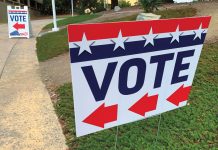
There are three ways to vote in the 2026 general election: by mail, early in-person voting or in-person voting on Election Day. To vote by mail, completed ballots must be postmarked or submitted by drop box or in person no later than 8 p.m. Tuesday, Nov. 3. Early in-person voting started Saturday, Oct. 24, and will continue through Sunday, Nov. 1. Tuesday, Nov. 3, is general election day with polls open from 6 a.m. to 8 p.m. To find your designated polling place, visit monmouthcountyvotes.gov.
Disabled voters will have multiple options to cast their ballot. New Jersey utilizes Democracy Live, an organization that helps voters with disabilities to cast their vote privately and independently. To access this option a disabled voter should reach out to the Monmouth County Clerk Christine Hanlon’s office and indicate that they are unable to complete a paper ballot without assistance and wish to vote using an accessible vote-by-mail ballot.
If voters need assistance or have questions, they can contact the county clerk’s office or call the state voter information/protection hotline at 1-877-NJVOTER
(1-877-658-6837).
This article originally appeared in the October 29-November 4, 2026 print edition of The Two River Times.