By Emily Schopfer
WEST LONG BRANCH – The new building that will house the renamed Bruce Springsteen Center for American Music will officially open to the public June 7. While that is more than two months away, Eileen Chapman, the center’s director, offered a peek into what the public can expect at the unveiling – an interactive experience that will include multiple exhibits, a 241-seat, two-floor theater, and more.
The original archives were held at the Asbury Park Public Library and have been housed at Monmouth University’s Lauren K. Woods Theater as the Bruce Springsteen Archives and Center for American Music since 2011, Chapman said. They now include “nearly 48,000 items from 47 countries ranging from articles and oral histories to concert memorabilia and promotional materials,” according to the university’s website.
The new cultural center, a two-story, 32,000-square-foot building at Norwood and Cedar avenues, will offer documents and items for public viewing in a glass-enclosed room and through digital archives.
Chapman has been involved in the arts well before becoming the center’s director. She was the general manager for The Stone Pony in Asbury Park, associate director of the Center for the Arts at Monmouth University, and was the owner of the state’s first CD music store, Almost Live CD Center in Belmar, from 1986 to 2000.
She recalled years of hard work and setbacks in getting the musical ephemera to the university, but her passion for what would eventually become the center was unrelenting. While neither she nor Monmouth University expected The Boss to be its catalyst, she feels Springsteen is the perfect person to be the center’s heart.
Springsteen’s music has been described as the Jersey Shore sound, and Chapman agrees. “It’s horn-based, it’s a little bit of R&B to it, but I happen to believe there is a specific sound that encompasses this Monmouth County area,” and this sound is definitely heard in Springsteen’s music, she said.
Asbury Park played a significant role in creating that trademark Springsteen sound. “The West Side of Asbury Park, there were a lot of black clubs, R&B clubs, soul clubs, jazz clubs, and a lot of those musicians, especially even in the 1960s, couldn’t get gigs on the East Side,” Chapman said. “I know that Bruce and Southside (Johnny), and others went over to listen to what was happening on the West Side and picked up some of that sort of R&B technique from what they were hearing.”
Springsteen’s 1973 debut album was titled “Greetings from Asbury Park, N.J.”
Another reason Springsteen represents the center’s mission is that he was inspired by a range of genres. “When you hear Bruce talk about the songs that inspire him,” Chapman said, “he goes way back, and really points to a variety.”
Chapman hopes that, just as many musical genres inspired Springsteen, the center can help the public understand American music through a more diverse lens.
While Springsteen may be the heart of the center – one exhibit is dedicated to his songwriting process, with his handwritten lyrics decorating the walls – Chapman said the center’s purpose is to showcase all of American music.
Chapman said the mission is to expand the public’s idea of what American music is, from spirituals through modern music. Slave hymns, Delta blues, Indigenous American music, protest music – the center will work to broaden not just what people think of, but what they experience when they ask, “What does it mean for music to be American?”
“They may not even experience a lot of that prior to coming here, and especially young kids who definitely don’t have those resources to learn about the earliest sounds of what music was,” Chapman said, referring to the diversity of American music that the center aims to embody.
Involving young people specifically is very important to Chapman, who said the center has partnered with Monmouth students in the past and will continue to do so at the new center. Chapman also said she is excited about the possibility of arranging field trips to the center to inspire younger students, too.
Many musical artists, both past and present, are featured. Through the center’s American Music Honors award, it plans to honor artists annually, celebrating those “who have demonstrated artistic excellence, creative integrity, and a longstanding commitment to the value of music in our national consciousness,” according to the center’s website, springsteencenter.org. The center will host its 4th Annual American Music Honors event April 18 at Pollak Theater on Monmouth’s campus. Guests can enjoy the awards and live music in “rock star casual attire.”
In addition to the archives and American Music Honors exhibits, Chapman previewed a variety of interactive displays, including studio and concert rooms. Guests can experience simulated live concerts and recording sessions without ever leaving the center.
There are homages to Springsteen’s roots that only New Jerseyans may catch, including the walkway to the center’s entrance, which is designed to replicate the iconic herringbone wooden boardwalks of the Jersey Shore.
From guests’ first steps, this walkway establishes that Springsteen and the inspiration he pulled from his home state are at the heart of this center. After all, Springsteen wrote his breakout 1974 song “Born to Run” less than a mile away from Monmouth’s campus, at a small rental cottage in West End Court.
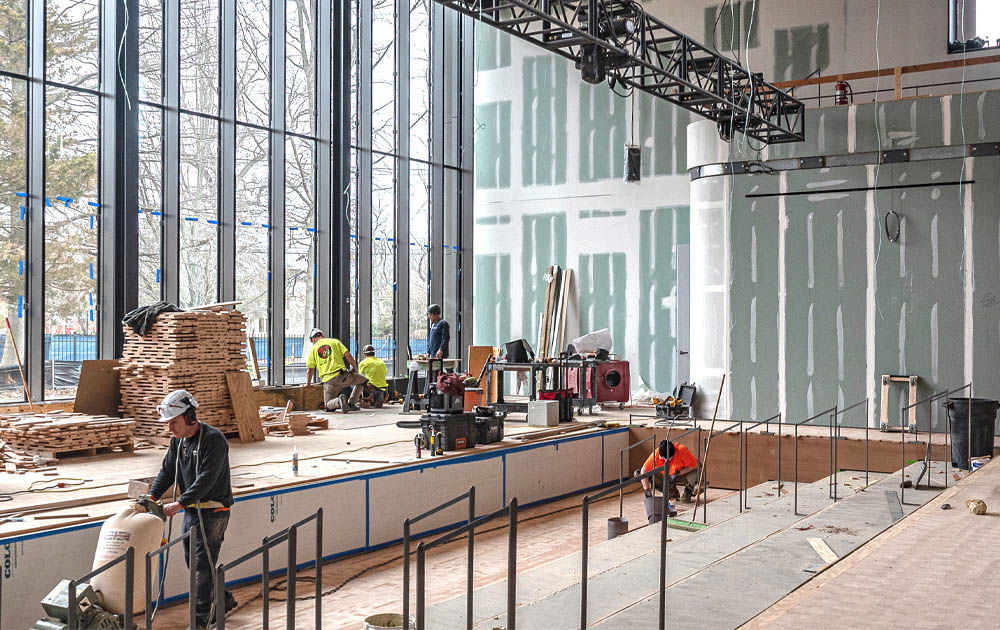
Springsteen, through a short film playing exclusively in the new theater, will also guide visitors through the world of American music. The theater, with floor-to-ceiling windows showcasing Monmouth’s Guggenheim Memorial Library, will be the one and only home to this short film, according to Chapman.
The center was completely funded by external donors, with some even donating from as far away as Italy, according to Chapman. Through the “Name A Seat Campaign,” those who wish may donate to the center’s building fund, having their name inscribed on the back of a seat in the theater.
Chapman said that the current plan for handling ticketing is not set, but initially, there will be timed, ticketed entry slots. For more information, visit springsteencenter.org.
The article originally appeared in the March 26 – April 1, 2026 print edition of The Two River Times.