By Mary Ann Bourbeau
SHREWSBURY – A century before Rosa Parks fought for racial equality on a Montgomery, Ala. bus, a brave teacher challenged racist streetcar policies in New York City, taking her fight to court in 1854 and winning a landmark victory for African American rights.
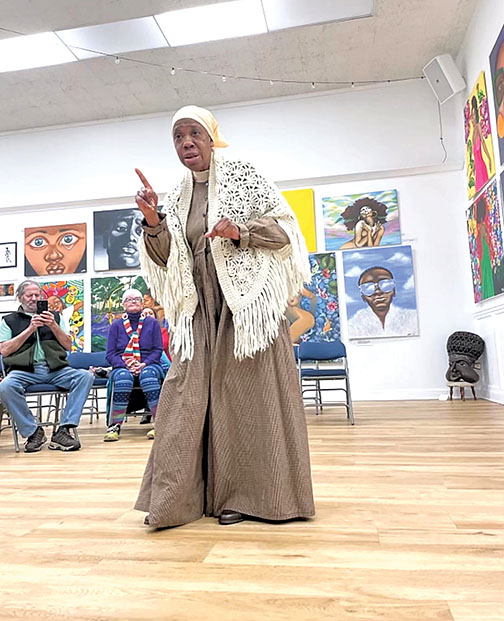
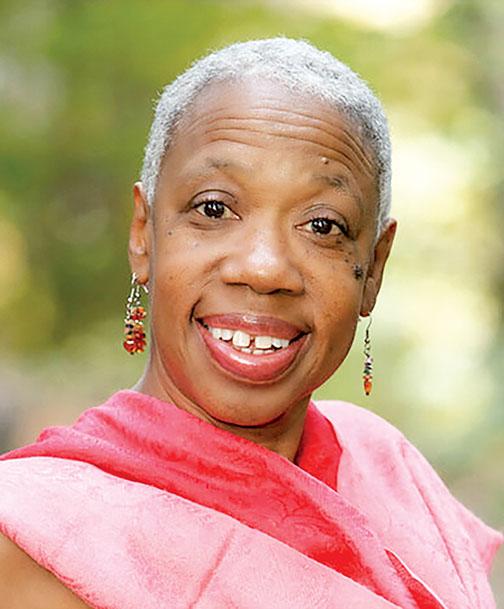
The Monmouth County Library Eastern Branch in Shrewsbury is presenting a program to honor Elizabeth Jennings, known as the Nineteenth Century Rosa Parks. Asbury Park performance artist Lorraine Stone will skillfully embody Jennings, bringing her extraordinary story to life at 1:30 p.m. Wednesday, Feb. 26. This Black History Month event is sponsored by the Friends of the Monmouth County Library. The program is free, but guests should register in advance to guarantee a seat.
“If you have not seen one of her programs, Lorraine is fantastic,” said Adult Services Librarian Deborah Alfano. “It should be a fascinating program. Her depiction and dress of the person captures the essence of the time, place and individual.”
Jennings was the daughter of Thomas L. Jennings, a successful tailor and leading member of the National Colored Convention Movement. Her mother, Elizabeth Cartwright, was a writer and founding member of the Ladies Literary Society of New York, a group founded by elite Black women to assist the poor and offer aid to escaping enslaved people. On July 16, 1854, Jennings boarded a streetcar that would take her to choir practice at her church. But that particular streetcar did not accept African American passengers. She refused to disembark and had to be forcibly removed by police.
“The streetcar driver told her there was another car behind them with ‘more of her people,’” said Stone. “But she was in a hurry. She didn’t set out to challenge anything. She was just trying to live her life.”
The incident was discussed in her family’s church and in the New York newspapers, eventually gaining national attention and support. Jennings’ lawyer, future U.S. President Chester A. Arthur, sued the Third Avenue Railroad company, the conductor and the driver. The court ruled in her favor. Jennings was awarded about $250 in damages and the company was ordered to desegregate its streetcars. But the victory was short lived. Several years later, her family was forced to flee New York City during a time of increasing racially charged violence. They sought safety in New Jersey, living for a time in Long Branch and Eatontown. Eventually Jennings returned to New York City where she helped found the first kindergarten in the city for Black children in her home on West 41st Street.
“People only know a small sliver of information about these women,” said Stone. “I wish we had more education around the women I portray and those times in history. We all stand on the shoulders of women like Harriet Tubman, Ida Wells and Sojourner Truth.”
Stone is a founding member of the Asbury Park Reporter, the Asbury Park Museum and the T. Thomas Fortune Cultural Center in Red Bank, and is a 30-year member of the Dunbar Repertory Company. She has made a career out of immersive storytelling based on the lives of female African American historical figures. She dresses in the authentic wardrobe of the day and writes the script for each character so she can accurately inhabit the persona of women such as Tubman, Truth, Wells, Mary Bowser and Parks.
“I love being a storyteller,” she said. “I learn as much as I can about these women. There isn’t a recording of anyone but Rosa, so the voice I bring is from studying the person and assuming a voice I think is like hers. I get joy when I see people smile and become energized by learning something new.”
To register for this program, call 732-683-8980 or monmouthcountylib.org.
The article originally appeared in the February 20 – 26, 2025 print edition of The Two River Times.