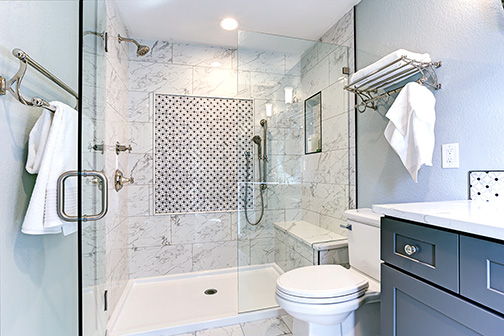
A walk-in shower with a bench and a handheld shower head can make bathing safer for seniors than a more traditional bathtub and shower setup. 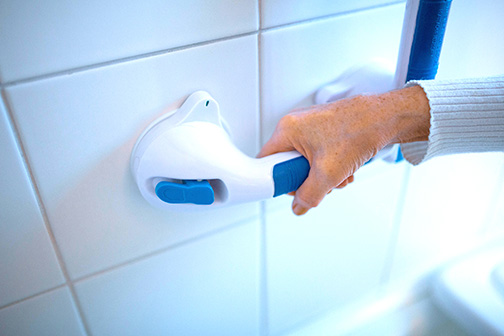
Installing a grab bar in the shower can help seniors get up and down more easily, reinforcing their stability on wet surfaces. 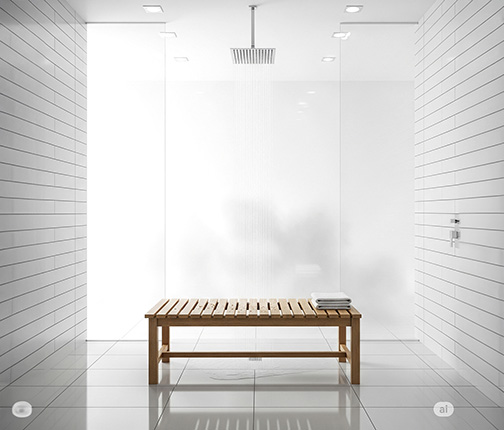
If there is space, placing a seat in the shower can help seniors bathe safely and maintain their independence longer.
By Elizabeth Wulfhorst
Maintaining a sense of independence throughout retirement can inspire seniors to make the most of their golden years. For many, nothing is more representative of their ability to stay self-sufficient than remaining in their home.
One of the main areas of a home that harbors the most pitfalls for seniors is the bathroom. As we age, it becomes increasingly difficult to balance and maintain the flexibility needed to step into a bathtub. Certain medications can cause lightheadedness, particularly in warm environments. Add slippery, wet surfaces and foggy mirrors and the bathroom can be a treacherous setting.
According to the Morbidity and Mortality Weekly Report published in 2020, falls are the leading cause of injury among older adults. “In 2018, an estimated 3 million emergency department visits, more than 950,000 hospitalizations… and approximately 32,000 deaths resulted from fall-related injuries among older adults,” the report noted.
Injuries aren’t the only downside to a fall: A study published in the Journal of the American Geriatrics Society in 2018 showed that “older adult falls result in substantial medical costs.”
“In 2015, the estimated medical costs attributable to fatal and nonfatal falls was approximately $50.0 billion. For nonfatal falls, Medicare paid approximately $28.9 billion, Medicaid $8.7 billion, and private and other payers $12.0 billion. Overall medical spending for fatal falls was estimated to be $754 million,” according to the results of the study.
While several variables can determine how long seniors live independently, including health and mobility issues, some small, safety-centric adjustments to a property can help individuals remain at home for as long as possible. Some of these safety modifications can be handled with DIY skills, while others may require a contractor-led renovation.
One easy, cost-effective way to improve safety is to increase the lighting in bathrooms (and throughout the home). A well-lit space is easier to navigate, especially at night. As we age, nighttime trips to the bathroom become more frequent, so adding lights or simply increasing the wattage of bulbs in light fixtures can make bathrooms safer and more accessible. A motion-activated light or a plug-in nightlight with a sensor are simple, low-cost ways to add lighting to dark areas.
After making the bathroom brighter, the next step is to clean it up. A cluttered bathroom is a potential safety hazard. Extraneous items can easily end up on the floor, including bathing essentials like shampoo and soap. A bathroom storage system for a vanity and an organizer for items inside a shower or tub can decrease the likelihood they end up on the floor, where they can pose a tripping hazard. Seniors with reduced flexibility may struggle to bend over and pick up items, which can cause muscle strains or falls.
Regular bathmats and rugs can also pose a problem for seniors who shuffle or don’t walk as well as they used to; nonslip, low-profile mats are essential. Consider placing a nonslip mat inside the shower or tub as well. If space allows, a shower chair can be very helpful for ensuring safety while bathing. Some Medicare and Medicaid providers may cover the cost.
A project that may require a contractor but can make a significant difference in terms of safety is installing grab bars. Grab bars are often found in public restrooms, but they’re equally useful in bathrooms in private homes, particularly in seniors’ residences. Grab bars can be installed in the bathtub or shower stall to help seniors get up and down easily, reinforcing their stability on wet surfaces. Grab bars can also be beneficial by toilets.
While we’re on the subject of toilets, consider elevating the toilet height, which can make it easier for seniors to sit down and stand up when using the bathroom. Toilets compliant with the Americans with Disabilities Act (ADA) are roughly 18 inches taller than standard toilets, which can make a big difference for seniors. If you can’t afford a new toilet or don’t want to go through the process of replacing an existing one, consider purchasing a toilet seat riser. Many models come with built-in handles or arms and cost between about $30 and $90.
If you have the budget, a reputable contractor can help make a bathroom safe by renovating your existing shower. Seniors whose current bathrooms feature a traditional shower setup that requires them to step over a tub can renovate the space and replace it with a walk-in shower. A walk-in shower eliminates the need for seniors to step over a bathtub, significantly reducing the risk of falls during bathing. Additional shower renovations include lowering fixtures, installing a handheld shower and installing a bench, which allows seniors to sit down while bathing.
Regardless of the renovation options you choose, making the bathroom safer should be a top priority for seniors looking to remain in their homes independently.
The article originally appeared in the July 24 – 30, 2025 print edition of The Two River Times.