COURTESY BROOKDALE
MONMOUTH MAYORS RALLY AT BROOKDALE TO SHAPE REGION’S FUTURE
Leaders align on a bold “Farm-to-Shore” vision connecting agriculture,
Main Street and innovation to drive economic growth
LINCROFT – Brookdale Community College convened its second annual President’s Summit of Monmouth Mayors, bringing together leaders from across Monmouth County for a day of collaboration, strategy and forward-thinking dialogue focused on the region’s future.
Held during National Community College Month and in alignment with the New Jersey League of Municipalities’ Local Government Week, the summit united mayors, educators, state and county officials, non-profit leaders, business innovators, and students around a shared goal: strengthening communities and advancing economic opportunity across the county.
A VISION FOR REGIONAL GROWTH
This year’s summit introduced a bold 2026 agenda, “Harvesting Opportunity: Connecting AgriTech, AgriTourism, and Main Street for Regional Growth.” The initiative calls for aligning agriculture, food systems, tourism, hospitality, workforce development, and technology to create a more connected and resilient regional economy.
Brookdale President David M. Stout, Ph.D., opened the event by underscoring the college’s role as a trusted convener and driver of community impact.
“Community colleges are uniquely positioned to bring people together, listen to the needs of the region, and build pathways that support both economic growth and quality of life,” said Stout.
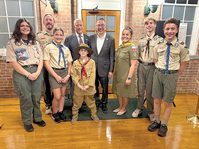
The summit featured remarks from Monmouth County Commissioner Director Thomas A. Arnone; New Jersey Department of Agriculture assistant secretary Joe Atchison; New Jersey Conference of Mayors president Mayor Jason Cilento; and Assemblymember Alex Sauickie (R-12), representing the New Jersey Legislature, along with student leaders from the Monmouth County Vocational FFA Program.
KEYNOTE:
A FARM-TO-SHORE FUTURE
A keynote address by Jack L. Harris, Ph.D., a sustainability expert from Rutgers University, set the tone for the day with a compelling call to action: Build a “Farm-to-Shore” food system that connects Monmouth County’s agricultural base with its coastal economy.
Harris outlined this regional model to link agriculture in the western part of the county with coastal communities, tourism, and hospitality industries, thereby creating a more integrated and resilient local economy.
He emphasized that food systems are not just about agriculture, but about strengthening supply chains, supporting small businesses, and driving long-term economic resilience.
“Communities thrive when institutions listen, collaborate, and build capacity with intention,” Harris said, pointing to the opportunity for Monmouth County to lead with a coordinated, for ward-thinking approach.
COLLABORATION AT THE CORE
“If you don’t have a strong partnership with your municipality, you’re not going to get anything done,” was the message from Kim Guadagno, CEO of Mercy Center. It resonated across the room as the summit shifted from vision to action.
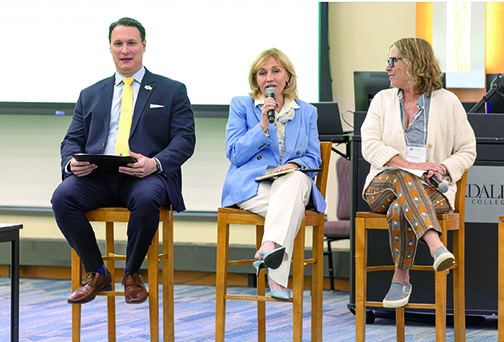
A dynamic panel moderated by Jackeline Mejías-Fuertes, regional director of the New Jersey Small Business Development Center at Brookdale, brought together leaders from government, nonprofit, and business sectors, reinforcing that no single entity can solve complex regional challenges alone.
Panelists emphasized that building a strong, inclusive, and economically vibrant Monmouth County requires intentional collaboration across sectors.
Atchison highlighted the importance of access, noting that “we don’t have a food availability problem, we have a food access problem,” and pointing to the need for stronger systems that ensure residents can reach fresh, nutritious food.
Cilento reinforced the role of municipalities in shaping outcomes through planning and infrastructure. “We need to think about how people get food through walkability, transportation, and smart zoning,” he said.
Marilyn Schlossbach, restaurateur and CEO of the Marilyn Group, brought a business perspective, stressing the importance of sustainability across the entire ecosystem. “If everyone in the chain isn’t making money, it’s not a movement, it’s a hobby,” she said.
Karyn Moskowitz, founder and executive director of New Roots, Inc., underscored the importance of equity and innovation, noting that “equitable access means everyone can participate in the same local food system, regardless of income.”
Together, the panel highlighted key priorities, including stronger coordination across municipalities, workforce pathways aligned with emerging industries, improved food access, and the revitalization of Main Street through entrepreneurship and innovation.
A REGIONAL CALL TO ACTION
The summit concluded with a collective commitment to continue building a coordinated, countywide ecosystem, one that supports agriculture, innovation, tourism, and workforce development while ensuring equitable access and opportunity for all residents.