By Melissa Ziobro
The eyes of the world will soon turn to the Paris 2024 Summer Olympics. The first events – two men’s soccer matches – take place Wednesday, July 24. The formal opening ceremony will be held Friday, July 26. Over 10,000 athletes (including over 20 New Jerseyans) will compete in 32 different sports. There are 329 medal events.
Millions of tourists are expected to flock to Paris to bear witness and security, as you can imagine, will be tight. The Associated Press reports that a force of up to 45,000 police officers will be augmented by some 10,000 soldiers, based out of the largest military camp in Paris since World War II.
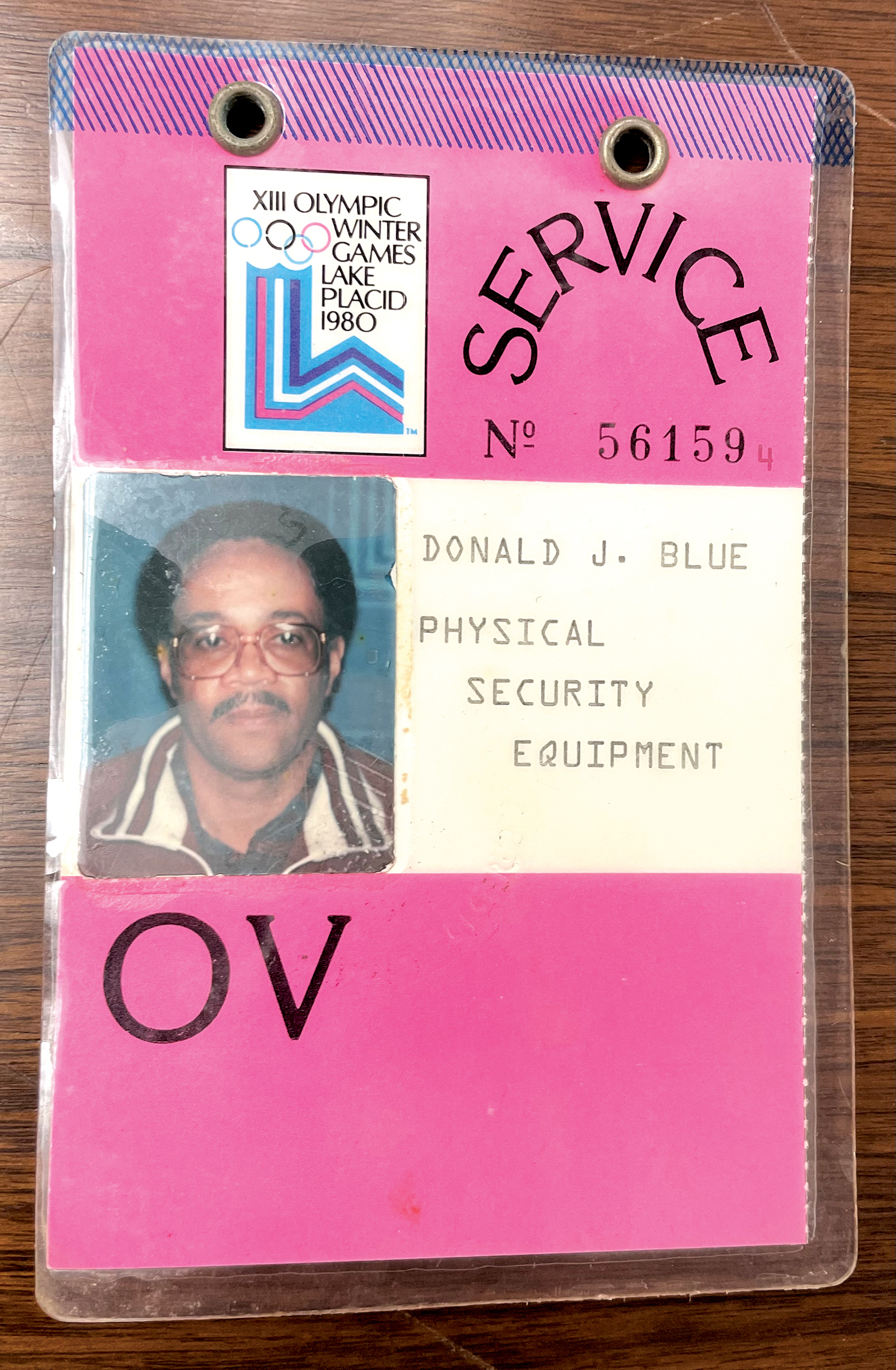
Tight security for the Olympic games is not a 21st century concern. In 1980, personnel from Fort Monmouth deployed to the Lake Placid Winter Olympics with a sensor system intended to secure the perimeter of the games. The story has nearly been lost to history, but those involved are sharing their stories in advance of this summer’s games.
The Lake Placid 1980 Winter Olympics took place during both the extended Cold War and other tense international crises. In November 1979, Iranian militants had taken dozens of Americans hostage at the United States Embassy in Tehran. The Americans were still in captivity as the Lake Placid games unfolded. In December 1979, the Soviet Union began an invasion of Afghanistan. This led then-President Jimmy Carter to call for an international boycott of the 1980 Summer Games in Moscow, a call more than 60 nations would ultimately heed.
In addition to these very real, contemporaneous concerns, the Olympic games were targeted in the past. On Sept. 5, 1972, eight Palestinian terrorists representing the militant group Black September broke into the Olympic Village in Munich. They killed two members of the Israeli team and took nine hostages. All nine Israeli hostages were killed in the fighting that ensued, as were five of the terrorists and one police officer. The Olympic Games paused for 34 hours and a Mass was held in the main stadium to commemorate the victims. The games continued at the insistence of International Olympic Committee President Avery Brundage, who famously said, “The games must go on!”
Thus, security was a top concern as Lake Placid planning proceeded and Fort Monmouth stepped up to provide the Remotely Monitored Battlefield Sensor System (REMBASS). Developed by Fort Monmouth personnel in coordination with contractors like RCA, REMBASS is an intelligence system intended to provide military commanders with information about hostile activity. The high tech system detected the movements of both vehicles and personnel by use of sensors in possible areas of enemy action. The technology was cutting edge, but the concept was simple: Save the lives of American troops and help win wars by detecting and reporting on enemy movements.
The project traces its roots to the Vietnam War era. Then-Secretary of Defense Robert McNamara wanted an electronic means to detect and help destroy supplies traveling the Ho Chi Minh Trail before they reached the battlefield. The desired electronic blockade didn’t quite happen. But efforts to do so introduced technology that improved the U.S. Army’s ability to monitor the battlefield in all weather and light conditions. As one technical report noted, “The first tactical unattended ground sensor system was the Southeast Asia Operational Sensor (SEAOPS) system. Fielded in 1967, SEAOPS provided an ‘electronic curtain’ to detect the movement of enemy troops and supplies into South Vietnam.” As the system evolved, the Army eventually replaced it with REMBASS.
REMBASS was an improvement over SEAOPS for a number of reasons, including fewer false alarms. As REMBASS project team member Donald Blue Sr., an Army veteran and longtime Fort Monmouth civilian employee, recently recalled, “REMBASS provided sensors that are designed to pick up targets. It could be personnel, it could be trucks, it could be tanks… And it’s used on a battlefield to support the troops.”

While REMBASS was still in its early stages, Blue and his colleague Frank Dennis took it to help New York State Police and the FBI secure the perimeter at the Lake Placid 1980 Winter Olympics. Blue recalled that he and Dennis would take turns spending a week at the Olympic Village. While stationed on site, they would eat in the same facilities as the athletes.
As Army civilians, they didn’t wear uniforms but dressed in clothing the government provided, including down jackets, insulated pants and boots.
“We had a snowmobile in case we had to go out and check a sensor, if something happened to it, we went on a snowmobile,” Blue said. He recalled one instance, humorous in retrospect, when something triggered a sensor on the perimeter of the Olympic Village. As it turned out, “guys were having a party out there and we had a sensor that picked up the movement… and also picked up the sound,” Blue said. “We contacted the SWAT team because we didn’t know what it was and the state police SWAT team went out and scared them, all dressed in black!”
But false alarms like this one proved that REMBASS worked. It helped secure the Lake Placid Olympics and increased respect for the technology. The system was eventually deployed on the battlefield and has been used in countless noncombat situations since its inception, including along the U.S./Mexico border and the demilitarized zone between North and South Korea.
Eventually, some of the REMBASS concepts were mainstreamed. As Dennis observed, sensors that the average American uses every day, like those in any Ring, Blink or Nest product, are all, in some ways, outgrowths of that technology.
Melissa Ziobro is the Director of Public History at Monmouth University and was the last Command Historian at Fort Monmouth prior to its closure. Her book “Fort Monmouth: The US Army’s House of Magic” was published earlier this year.
The article originally appeared in the July 25 – July 31, 2024 print edition of The Two River Times.