By Sunayana Prabhu
When Risa Clay speaks, everyone listens. Even when projecting every word is an effort, Clay, the Tinton Falls Council president, can bring a room to order, refusing to let spasmodic dysphonia disorder silence her.
Speaking up hasn’t been easy for Clay since being diagnosed with the rare neurological disorder that affects the vocal cords. “It was like a really bad case of laryngitis,” Clay said, recalling her initial symptoms 17 years ago when she was an administrator at Red Bank Regional High School (RBR).
“My voice would be cracky, very shaky and, sometimes, in my case, people are mistaken, thinking I am either very upset or very sad or very angry,” Clay said.
According to the National Institute of Deafness and other Communication Disorders (NIDCD), spasmodic dysphonia, also known as laryngeal dystonia, is a chronic voice disorder where the muscles in the larynx experience involuntary spasms, disrupting normal vocal fold vibrations and causing voice breaks. In severe cases, speech may become difficult to understand. The cause of this condition is unknown but it may run in families and is believed to result from abnormal brain function, particularly in the basal ganglia, which is involved in planning, patterning and initiating muscle movement.
The disorder can manifest as either adductor spasmodic dysphonia, where the vocal folds stiffen, or abductor spasmodic dysphonia, where they remain open. There is also a rare mixed spasmodic dysphonia where the muscles that open and the muscles that close the vocal folds don’t work properly.
Diagnosis and Treatment
Diagnosis generally involves evaluation by a team of specialists, including an otolaryngologist, speech-language pathologist and neurologist.
According to Kimberly Kuman, executive director of the nonprofit Dysphonia International, it takes a careful process of elimination by a laryngologist, a subspecialist in otolaryngology who focuses solely on the voice and throat, to accurately determine the condition.
“There’s no test for diagnosis, so there’s no blood test. It doesn’t show up on a scan. And so really, diagnosis is listening to the voice and basically excluding other vocal issues, like cancer or nodules,” Kuman explained.
After diagnosis, treatment options are limited. While there is no cure, treatments such as botulinum toxin injections (Botox), voice therapy and, in some cases surgery, can help manage symptoms.
The most common approach is periodic Botox injections to temporarily paralyze the affected vocal fold muscles.
According to the NIDCD, botulinum toxin “weakens muscles by blocking the nerve impulse to the muscle.” But Kuman noted that this solution is far from perfect. “The injections only last three to four months, so it’s an ongoing process. And they don’t work for everyone,” she said. The injections are more effective with adductor spasmodic dysphonia than with abductor spasmodic dysphonia.
Living with a Voice Disorder
Since her diagnosis, Clay has approached the disorder with a teacher’s mentality. “I felt like, all right, this is happening to me, but I’m going to make this a learning experience because I’m an educator. I’m going to use this as a learning opportunity for my students,” she said.
Her students and community rallied around her, offering support on her toughest days. That spirit of resilience has carried through to Clay’s current role as council president, a position she was appointed to in 2023 during her second term on the council.
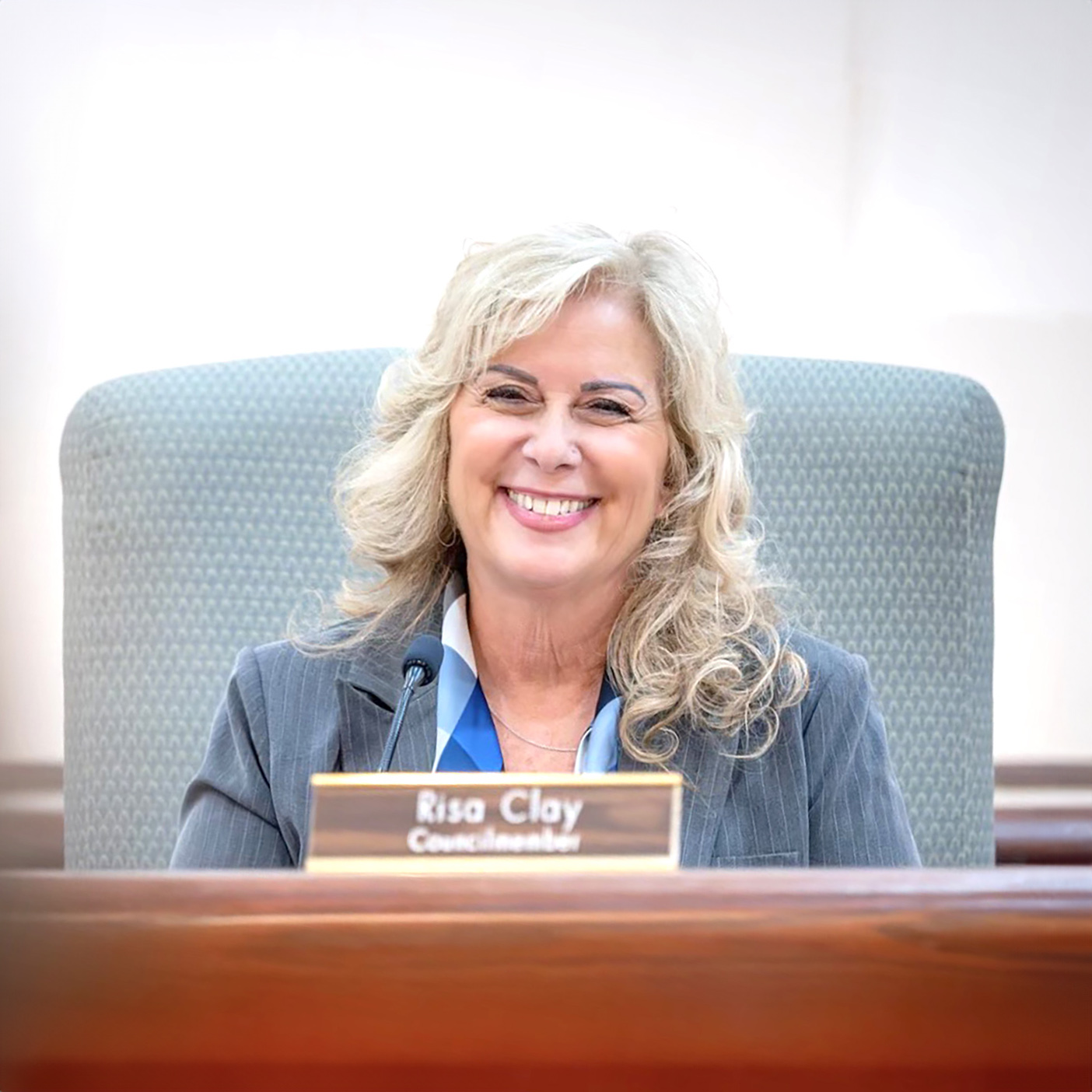
The best way to kill the fear of speaking up for individuals struggling with voice disorders is to be “upfront” about it in public, Clay said. “Sometimes people don’t realize that they’re doing it, but they’ll start looking at you in a weird way,” which can make the speaker “self-conscious.” Whenever she finds herself in such a situation, Clay said she is honest about her disorder. “I am 100% public about my voice,” Clay said. “You just have to take a deep breath and put yourself out there.”
Another politician with a raspy voice affected by spasmodic dysphonia is former 2024 presidential candidate Robert Kennedy Jr. who recently dropped out of the race. He has been open about his condition on public forums, bringing it much needed public awareness.
While the increased public speaking demands have been daunting for Clay at times, she remains committed to being a voice for her constituents in Tinton Falls. “There’s so much pressure when you’re the council president,” Clay said, particularly at times when “people are acting out.”
But she is determined to persevere. “Whatever the quality is, it is still my voice, and I know that I can do good things.”
The Challenge of Helping Others
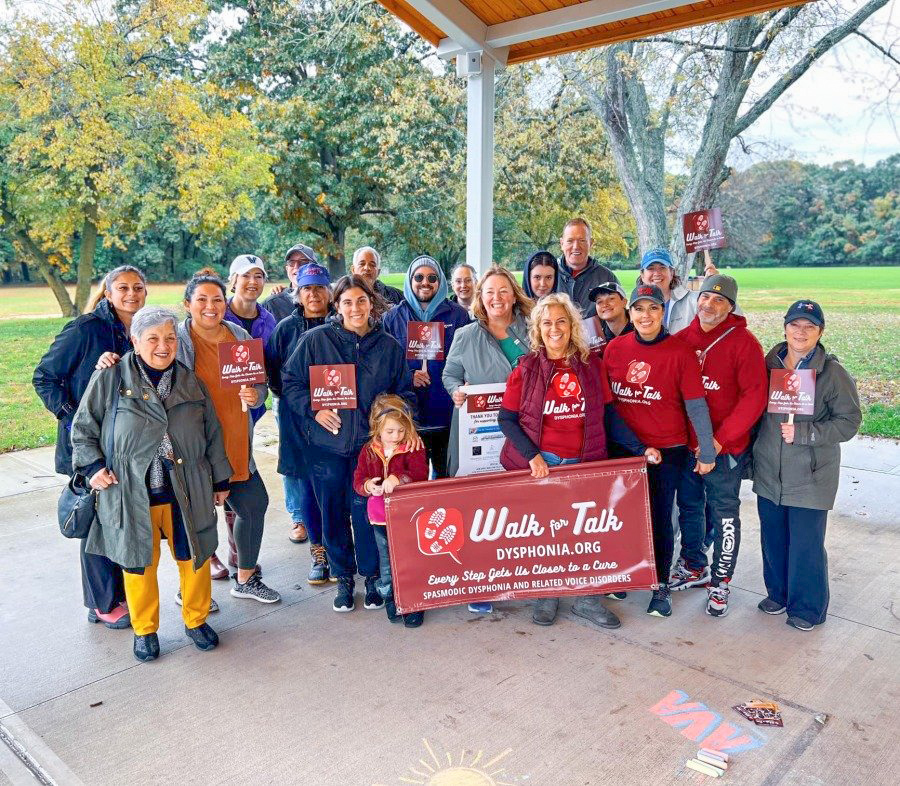
To help others with vocal cord disorders find their own voice, Clay hosts a monthly support group through Dysphonia International. The group, which meets virtually, provides a space for people with conditions like spasmodic dysphonia, vocal tremors and even long-term COVID-19 voice issues, to connect and share their experiences. Clay said her goal is to raise awareness and let people know they don’t have to suffer in silence, a mission that will take center stage at Dysphonia International’s upcoming annual Walk for Talk event spearheaded by Clay in Tinton Falls Saturday, Oct. 19.
Unlike large charitable walks for cancer, AIDS or autism, the grassroots event in Tinton Falls is organized individually by people who want to raise money and spread the word within their own community about vocal disorders. While there is no entry fee, organizers are hoping to raise awareness and collect donations. According to Clay, last year the event collected about $12,000 with the support of local sponsors and supporters. The funds are primarily put toward research for an effective cure which remains a challenge.
Dysphonia International has been funding research grants and also mobilizing health care professionals, as well as patients, for Medicare reimbursement and better insurance coverage for botulinum toxin treatments.
Medicare is considering a change in rules for insurance coverage of botulinum toxin that would be “very limiting” to the patient community, Kuman said. “It’s also taking control away from the physicians in how they inject and how they treat the patient because they’re changing what muscles can be injected, the dosage and also how frequently.”
Compounding that challenge is the dearth of research needed for diagnosis and a cure. “One of the biggest challenges is actually getting researchers who are interested in this condition,” Kuman said.
The bulk of the research the nonprofit has funded has been in the last four years. “It’s been hard,” Kuman said. “People don’t think of voice conditions as a disability.” Rare voice conditions are lesser known compared to other physical disabilities like those affecting vision and hearing.
“If all of a sudden your voice is impaired, it doesn’t affect just one part of your life, but every aspect of it – your identity, your social situations, your family, your friends, your employment,” said Kuman. “So I think that people underestimate the impact” of voice disorders.
For more information, visit dysphonia.org.
The article originally appeared in the September 5 – 11, 2024 print edition of The Two River Times.