By Sunayana Prabhu
COLTS NECK – Kushner Companies has announced the imminent groundbreaking of its Colts Neck Manor project after winning a critical state permit that held up its progress for years. The controversial project is now only one more permit away from construction, while resistance to the development continues.
“We are nearing completion of all of our required entitlements and we’ll be breaking ground in the coming weeks,” Michael Sommer, chief development officer of Kushner, the New York-based real estate company, told The Two River Times during the Monmouth Square groundbreaking event in Eatontown May 9. Kushner also owns and is developing that project.
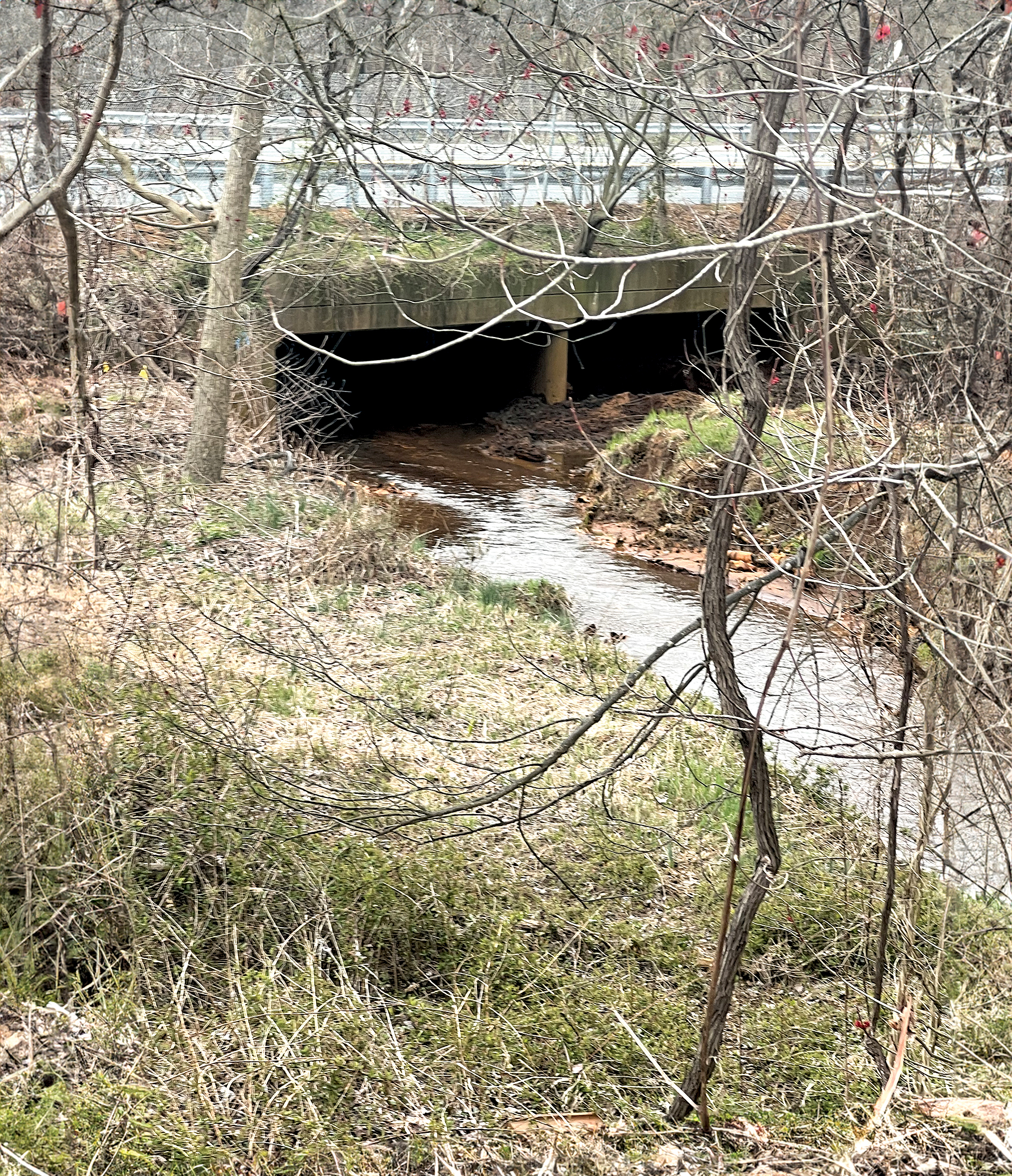
Colts Neck Manor is a multifamily residential project with an affordable housing component on nearly 40 acres of long-vacant land at 302 Route 537, near Colts Neck High School and Five Points Park. Environmentalists consider the parcel vulnerable due to its proximity to the state-designated critical-1 freshwater stream Yellow Brook, which feeds into the Swimming River Reservoir. The reservoir supplies drinking water to nearly 300,000 Monmouth County residents.
Since the project was announced in 2006, residents, environmental groups such as the Sierra Club, the League of Women Voters, engineers and other members of the public from all over Monmouth County have testified to its shortcomings at every level of government. Many banded together to form the grassroots group Concerned Citizens to fight the project.
Kushner’s announcement for Colts Neck Manor comes after almost a decade spent seeking government approvals for an underground sewage treatment system that will nearly quadruple the state’s limit of allowed wastewater disposal from 20,000 to 71,500 gallons a day. On March 21, the New Jersey Department of Environmental Protection (NJDEP) issued the critical New Jersey Pollutant Discharge Elimination System-Discharge to Ground Water (NJPDES-DGW) permit that allows the project to move forward.
Facilities that discharge pollutants into the groundwater require NJPDES-DGW permits. The goal of this permitting program is to restore, enhance and maintain New Jersey’s groundwater quality.

Concerned Citizens has challenged the approval, arguing the NJDEP based its decision on the developer’s “self-certified” engineer, “who misrepresented site conditions in the material they submitted to the NJDEP. As a result, modeling on which the permits were based does not reflect actual soil conditions nor demonstrate that their proposed onsite wastewater treatment system will work as designed,” former mayor of Colts Neck and Concerned Citizens member RoseAnn Scotti said in an email to The Two River Times.
The group also commissioned a report from an independent hydrologist (the firm TRC, based in Connecticut) to confirm their concerns about the environmental threats they have been relentlessly warning officials about at all public township and county meetings and through state departments.
“We hired a hydrologist to… conduct the proper testing to validate our technical data and our belief that our water supply was in danger of being contaminated from untreated fecal coliform bacteria,” Scotti said. “I believe it is a disgrace that citizens had to use their hard-earned dollars to do a job that the government should have done to protect their health and safety.”
TRC’s report confirmed and identified serious issues with the proposed Amphidrome septic system. The report found local soils would obstruct proper wastewater treatment and likely cause untreated discharge to surface in the Yellow Brook tributary, “rather than percolate to aquifer levels as intended.” The report also warned the proposed system could not remove all contaminants.
“Most alarmingly,” the report cautions that in case of a system failure, the onsite wastewater treatment system operator would have “less than a day to restore the system to operation or risk a major overflow of raw sewage on slopes above Yellow Brook.”
Kip Cherry, the conservation chair of the Sierra Club of Central Jersey, said NJDEP’s permit is “meaningless” until a critical Treatment Works Approval (TWA) permit is issued. The permit is still pending with the department. “It’s one thing to say you’re going to have a certain discharge, it’s another thing to be able to demonstrate how that is going to be achieved through the treatment itself,” Cherry said.
The TWA permit is required to construct and operate the proposed septic system and is currently under review by the NJDEP. It could be the last permit in a series of many spanning nearly a decade needed to start construction.
In an email response to questions, Lawrence Hajna, press director for the NJDEP, said Kushner has assured the state that the proposed Amphidrome treatment system “will include ultraviolet disinfection to meet the discharge limits at the point of discharge in the DGW permit,” in addition to “treatment to meet the Ground Water Quality Standards at the point of discharge.”
However, Cherry believes the NJDEP is “depending upon the disposal field to finish the job,” where good bacteria from the wastewater are supposed to kill harmful bacteria. Given the “slope of the groundwater” on the Colts Neck Manor parcel, “the problem,” she said, is that the effluent will not stay within the disposal field long enough for this to happen and will “not get properly processed, treated.” Potentially carcinogenic, toxic forever chemicals and “pollutants will survive the wastewater treatment system. That’s our concern,” said Cherry.
“The proposed system will only be approved if it has been deemed capable of treating and disposing of the estimated volume of sanitary sewage in a manner that is protective of human health and the environment,” Hajna said. He also noted that the NJDEP’s permit “does not authorize a direct discharge to a surface waterbody, namely Swimming River.”
Before the developer could receive state approval, the county had to amend its Water Quality Management Plan, which ensures clean drinking water for all.
In February of this year, the Monmouth County Board of County Commissioners passed a site-specific amendment to the Monmouth County Water Quality Management Plan. This amendment allowed Kushner’s application to qualify for the last leg of state permits needed to proceed with construction.
Cherry argued that the county’s approval itself is “incomplete.”
“If you look at the wording of the approval, it exempts the very thing that they’re (county commissioners) supposed to be approving,” she said, citing the county’s February resolution. Part of the resolution states: “Whereas, any amendment to the WQMP does not make any determination of, nor pass upon either the quality or the management of wastewater.”
According to Cherry, the county commissioners “took away their responsibility… which is the whole purpose of their approval.”
When issuing the final permit, the NJDEP asked the developer to incorporate changes to the facility description, design flow and disposal field size. The modification pertains to the project’s expansion from 48 townhomes when first proposed in 2006 to the 360 units currently planned on the site with the underground advanced septic system.
Scotti said multiple levels of government failed over many years to adequately address residents’ concerns. “The local Colts Neck government failed us. The planning boards at the local level and the county level failed us. The Monmouth County Board of Commissioners failed us. The commissioner of the NJDEP failed us. The governor failed us and the Legislators that we contacted failed us.”
Kushner’s representatives have pushed back, convinced that they will meet all water quality standards and regulatory requirements. “I am not aware of the (hydrologist’s) report,” said Laurent Morali, the chief executive officer of Kushner Companies, at the Monmouth Square groundbreaking.
Morali admitted unfamiliarity with any reports presented by residents and environmentalists. “Everything we do is going to be using the best standards of water quality, air quality, traffic, all the norms that we have to abide by – federal, state, local – we are abiding by them. It’s not exceeding them. So, I’m not worried,” he said.
Colts Neck Manor will be Kushner’s third project in Monmouth County. The developer recently broke ground on a mixed-use development in Long Branch in addition to the redevelopment of Monmouth Mall into Monmouth Square.
The article originally appeared in the May 23 – May 29, 2024 print edition of The Two River Times.