By Stephen Appezzato
HIGHLANDS – As the November election approaches, Highlands residents took to the streets to raise awareness about a major issue that will appear on the ballot.
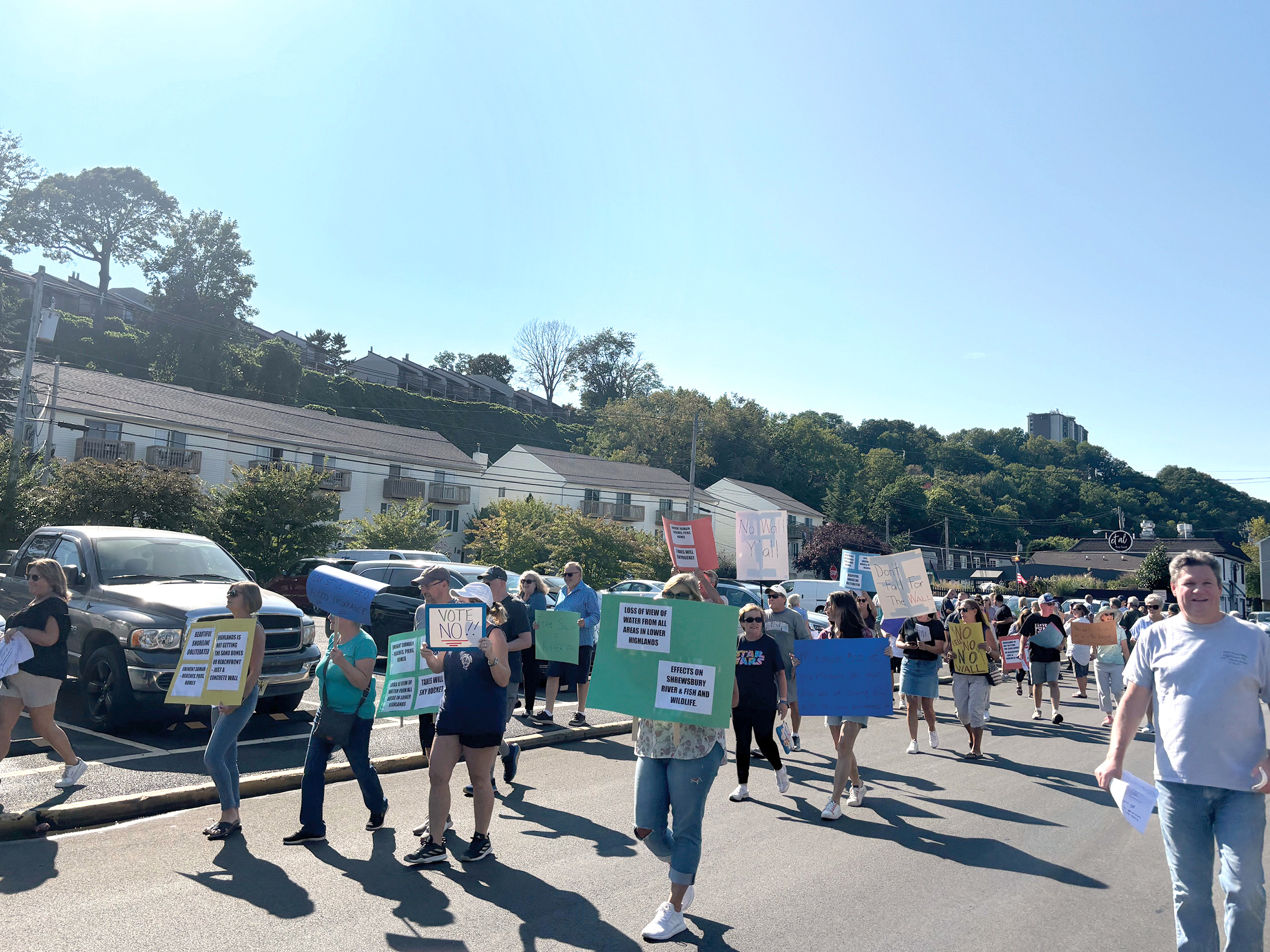
On Saturday, residents marched through downtown to voice their concerns about the proposed Army Corps of Engineers floodwall project.
“The purpose of our rally was mostly to raise awareness in town about the upcoming resolution being proposed for Nov. 5, and to get people to vote,” said resident Kathy Barrett. “Every vote really does count,” she added.
Barrett and fellow resident Mary Conroy organized the rally after noticing that many locals were unaware of the ballot question. Their goal was to ensure that more residents were informed about the upcoming vote.
The issue centers around a nonbinding ballot question meant to gauge residents’ support for the Army Corps of Engineers’ proposed $130 million floodwall project. Supported by federal and state governments, the project would require $13 million from municipal funds for construction. The plan includes approximately 10,000 linear feet of floodwalls along the town’s borders, along with other protective features. In addition to a portion of construction costs, the borough would face about $452,000 in annual maintenance fees.
“Something like this will forever change our town,” Conroy told the crowd at the rally. “The problem is that no one knows about it. Sometimes, things pass that people don’t want, simply because not enough people know to say ‘No.’ ”
Although the ballot question is nonbinding, it will serve as a measure of public opinion to inform the borough council’s decision on whether or not to move forward with the project, which is still in the design phase.
During the rally, demonstrators chanted slogans like “Don’t fall for the wall” and “No wall” as they marched down Bay Avenue, highlighting environmental, economic and safety concerns related to the proposed floodwall.
“A lot of people worry that if the wall is built, combined with runoff from the hill, downtown Highlands will become like a bathtub and the main problem won’t be solved,” Barrett said. While a major focus of the project is to protect against storm surges from the town’s eastern waterfront, many residents believe that most flooding is caused by downhill runoff and overflowing storm drains. They fear that a floodwall would trap stormwater downtown, exacerbating the issue.
“This town floods a dozen times a year, easily. But it’s not from the water breaching the shoreline; it comes from what we saw this morning – it comes from the sewers, it comes from the rain on the hill,” one resident explained.
Another major concern is the potential impact on the local economy, which relies heavily on waterfront access. At a previous public information session, Army representatives confirmed that the wall would block ground-level waterfront views.
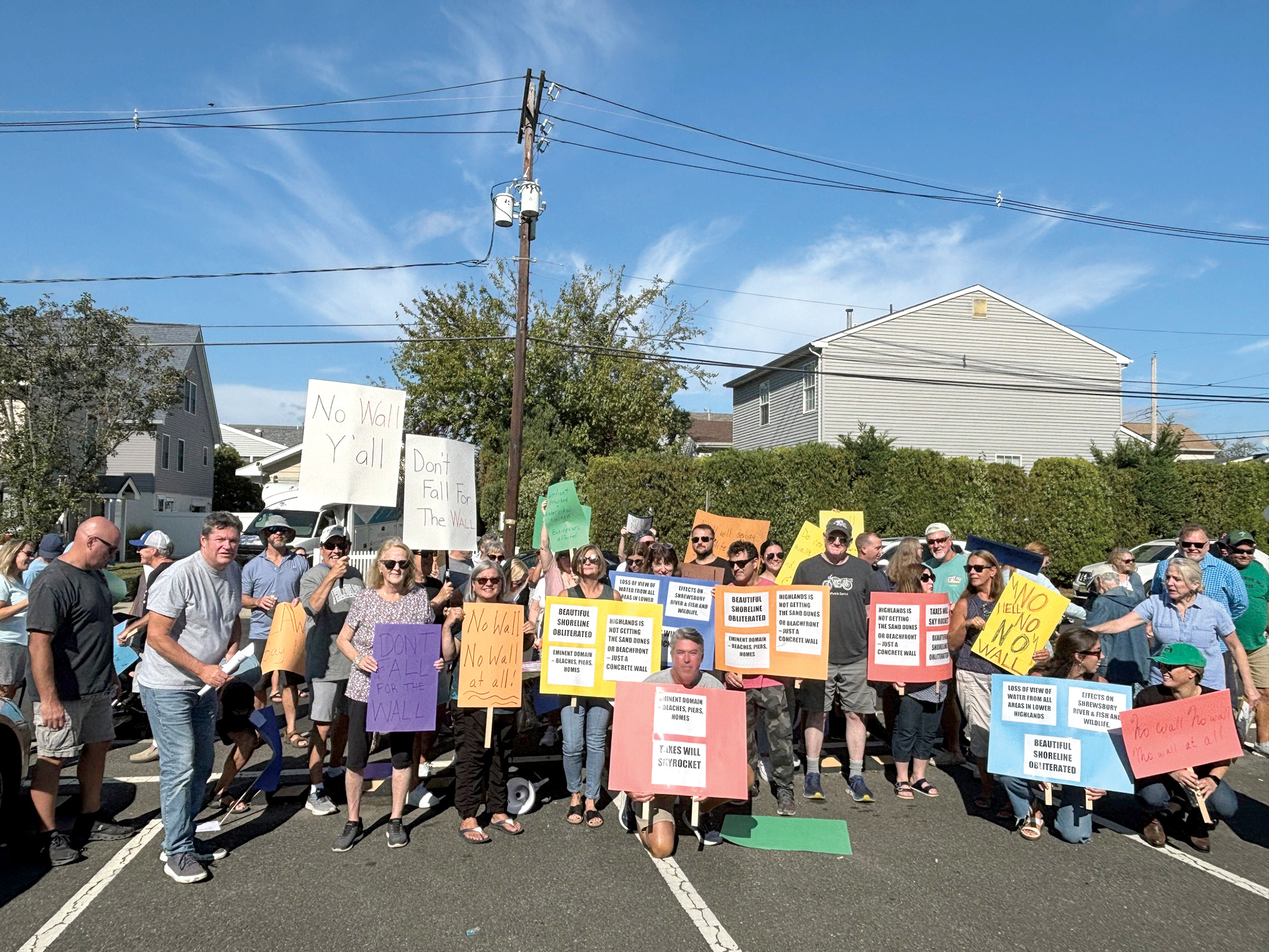
“So what’s going to happen with businesses?” Barrett asked. “A lot of the livelihood of the town depends on people coming in to enjoy the beautiful waterfront views, and those won’t be there anymore. People won’t visit for that. The beaches will largely be destroyed. We’re very concerned about the wildlife and it’s going to make things very difficult for fishermen and marinas,” she said.
“It compromises what makes this town unique and what drives its economy,” another resident added.
In addition to these concerns, residents were also troubled by the possibility of eminent domain being used if the project moves forward.
Under the current proposal, if the wall is approved, the borough would need to secure voluntary easements from property owners to build the structures. In cases where property owners do not agree, the town would likely have to acquire land through eminent domain, a legal process where the government can force property sales for public projects.
“You have to remember that this wall will lead to eminent domain in certain parts of town,” Conroy warned. “The Army Corps sees Highlands as having only 81 waterfront residents, but some of those properties house more than one resident.”
“And they may decide they need a certain number of homes and take people’s homes away,” Barrett said.
Highlands has a long history of dealing with flooding, dating back to the early 1800s, according to the Army Corps of Engineers. The floodwall project itself dates back to the 1990s, but it was paused in the 2010s after the borough passed a resolution to halt the initiative. In recent years, planning resumed due to continued damage from storms and predictions of a 0.7-foot rise in sea level over the next 50 years.
Despite this, many residents feel that the town’s flooding problems need to be addressed in a different, more affordable way.
In a statement to The Two River Times, Highlands Mayor Carolyn Broullon said the borough has been working with its engineers to explore solutions. The most promising one, she said, is the Highlands & Monmouth Hills Flood Mitigation and Green Infrastructure Project, which is in the “pre-award” stage.
“The project will help address how we flood with the unique combination of from the hills and through our outfalls that feed into our storm drains,” Broullon said. This plan is estimated to cost $16.2 million, with a FEMA BRIC grant covering about $12.2 million.
Ahead of the November election, the borough will host another public information session Oct. 7 at Henry Hudson Regional High School. Residents are encouraged to attend to learn more about the floodwall proposal and the town’s future vulnerability to flooding.
The article originally appeared in the September 26 – October 2, 2024 print edition of The Two River Times.