By Sunayana Prabhu
HOLMDEL – Nearly 106 new affordable units will have to be constructed in the township and 129 existing units must be rehabilitated to code under the state’s fourth round of fair share housing obligations.
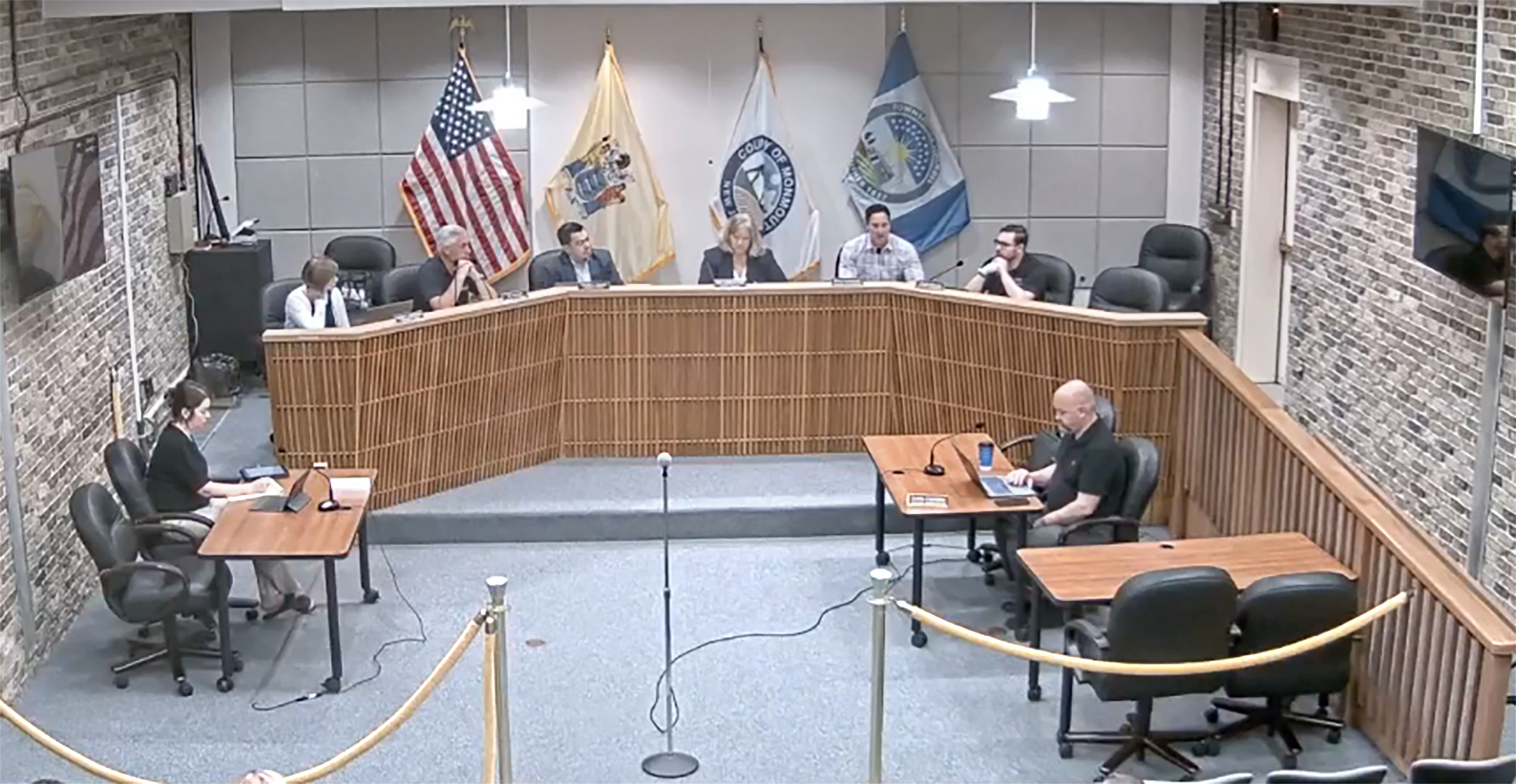
The good news is the township planner has proposed a fair share housing plan that not only fulfills these requirements but also leaves a potential surplus of over 34.5 units applicable to the fifth round in 10 years’ time. The plan was approved at the latest township committee meeting June 27.
Last week, several Two River-area municipalities adopted their fair share housing plans in compliance with the New Jersey Department of Community Affairs, which helms the statewide affordable housing program. The plan is intended to clearly outline projects zoned to integrate the state-mandated affordable housing targets, thereby satisfying the fourth round of housing obligations through 2035. All municipalities must participate in the program or risk losing zoning powers to builders’ lawsuits. The state provides immunity from these lawsuits to municipalities that comply with Trenton’s housing mandates.
Holmdel’s Legal Battle
Holmdel has been walking a tightrope, trying to balance development and preservation within its borders. The township has been operating on “parallel paths” to satisfy the state mandate, while making efforts to “prevent as much development in Holmdel as possible,” committee member Rocco Impreveduto said at the June 27 meeting.
On the one hand, the township has been meeting deadlines set by the state to establish its affordable housing plan. On the other hand, since last year, the township has been fighting the state’s new Fair Share Housing Act, joining 20 other municipalities in a legal battle currently awaiting a federal court hearing.
“This is the only governing body in 40 years that actually sued the state over the obligation,” Impreveduto said.
The state’s Fair Share Housing Act enforces the Mount Laurel doctrine, a state Supreme Court directive from the 1980s that compels municipalities to meet affordable housing requirements in 10-year cycles called “rounds,” ensuring housing opportunities for all. The fourth round of affordable housing obligations began this year and runs through 2035. The township has argued that its infrastructure and environmental vulnerability cannot support more development. After much pushback, township officials negotiated with the state’s Fair Share Housing Center (FSHC) to bring its housing obligations down to 106 new units.
Holmdel’s fair share housing plan, unanimously adopted at last week’s meeting, provides a roadmap for the town’s affordable housing strategy through 2035, with potential surplus credits that could benefit future housing rounds.
Township planner Kendra Lelie prepared the plan and enlisted three projects that will help meet both of the needs defined by the state – the prospective need, requiring the construction of 106 new affordable housing units, and the present need, requiring rehabilitation of 129 existing low-to-moderate-income units.
Rehabilitation Units
Addressing the rehabilitation units first, Lelie noted that the township reduced that number to just one unit through a review of housing conditions and existing repairs needed. Lelie explained that a “windshield survey” by the construction officials found that only four units met the criteria for poor condition. Factoring in the three previously rehabilitated units, the township’s rehabilitation obligation was further adjusted from four to one unit.
The municipality will continue to provide funding for “anybody interested in taking advantage of that rehab program,” Lelie clarified. Qualifying homeowners must be classified as low- or moderate-income, accept a 10-year property lien, and receive a minimum $10,000 investment in major home system repairs.
Prospective Units
In terms of new affordable units, the New Jersey Department of Community Affairs calculated that Holmdel should build 133 units over 10 years. That number would be realized through 20% of any new project (80% would be market-rate housing), numbers that make projects viable for developers. The number of new developments required in the township would increase exponentially using these parameters.
The township initially calculated its need at 98 units, but received strong pushback from the Fair Share Housing Center, a nonprofit that advocates for affordable housing. “Through mediation, we settled at 106 units,” said Lelie.
Lelie used three approaches to meet the needs: extending affordability controls on existing units, redeveloping the former Vonage site into a senior housing project, and converting an existing Route 35 property into a 100% affordable housing development.
Extending affordability controls is a technical process that allows municipalities to maintain low-income housing units without constructing new developments. Lelie explained that for a unit to be considered as a credit toward a town’s affordable housing obligation, two things have to occur – it has to be deed restricted for a minimum of 30 years to be available to only low- and moderate-income households, and secondly, the extension process requires municipalities to provide $20,000 to the current homeowner, effectively renewing the property’s affordability restrictions for another 30-year period. “Once that 30 years is up, there is an opportunity to extend those controls for another 30 years,” Lelie said.
Township attorney Michael Collins further clarified that the $20,000 or any cost of that nature that the municipality pays to a homeowner “would come from the Affordable Housing Trust Fund, so that would not be a general expense that taxpayers are bearing.”
In Holmdel’s affordable housing plan, 17 existing units will have their controls extended, a strategy that helps the township meet its 106-unit affordable housing obligation with minimal new construction. “It saves the ability to have to build new units,” Lelie said. “You’re using existing housing stock to meet the obligation.”
In addition to using those 17 units to meet the 106 target, redevelopment of the former Vonage property with senior housing will significantly help meet the affordable housing numbers.
Although 48 affordable units will be available through the senior development off Newman Springs Road, the township will only use 31 units “toward the satisfaction of the obligation in the fourth round. The remainder will go to the fifth round” as surplus credits, said Lelie. The township will also be leveraging “15.5 bonus credits” from the Vonage site redevelopment as allowed under the Fair Housing Act.
Lelie told the township committee that “the Fair Housing Act allows you to take half bonus credits up to a maximum of 25% of the number of units you are providing for any redevelopment of an existing commer- cial property.” The provision of these bonus credits incentivizes municipalities to rede- velop commercial properties for housing, offering additional credits that can help sat- isfy affordable housing obligations.
The transformation of the former Vonage site from a commercial property to a mixed-use development enables the township to claim these bonus credits, effectively reducing the number of new units it must create to meet affordable housing requirements.
The third project that will be put toward the town’s affordable housing target was approved during the third round of obligations, but the developer did not receive site plan approvals, and the project stagnated, leaving the township with deficit units. The township is now in talks with the Walter Group to develop “100% affordable housing” with 80 family rental units on Route 35. The Walter Group has previously developed two similar projects on Middle Road and on the Holmdel-Hazlet border.
Developing this project will require the municipality to either negotiate with the current property owner or condemn it through eminent domain, Lelie noted.
Constructing a fully affordable housing development will significantly reduce the proposed unit density of the project while maximizing state housing credits. “All units will be affordable,” Lelie said, adding further that the township will receive “11 bonus credits” because “you receive a full bonus credit for each 100% affordable housing unit.” The 7.7-acre site will be developed at approximately 10.3 units per acre, a “lower density than what was originally proposed,” Lelie said.
The article originally appeared in the July 10 – July 16, 2025 print edition of The Two River Times.