By Jody Sackett
Luckily for residents, coastal Monmouth County is on the Atlantic Flyway, a unique major migrating highway for birds and butterflies. That means we are treated to abundant bird populations passing through the sky each day.
Even luckier for wildlife, there’s now a fabulous new highway rest stop.
This autumn, the American Littoral Society created a native plants pollinator garden on Sandy Hook to provide both food and shelter for visiting wild friends, to sustain and power them through their long journeys. The garden will also serve as a year-round habitat for residential animals.
Native plants are an essential aspect of the new pollinator garden. These plants evolved here over the centuries, so they thrive in the local climate and soils. Indigenous wildlife also evolved here, adapting to native plants for food and shelter. Even migrating birds and butterflies evolved to use the available native resources here as they travel along the flyway.
Just like hungry folks on the Garden State Parkway searching for a Wawa, migrating creatures need appropriate high-energy nutrients and a protected place to chow down. The problem arises when much of the original native plant flora is gone or diminished, due to development and other factors. Wildlife can’t always just change their diets, any more than humans could just start eating tree bark, so they suffer when there’s no recognizable food around.
The Littoral Society, like the fabled cavalry, has come to help. According to Tim Dillingham, the society’s executive director, the nonprofit has a long partnership with the Monmouth County Audubon Society (MCAS). “We love to work in partnerships with other groups, communities and schools,” said Tim.
For years, the society and MCAS have worked together to promote conservation, create and restore bird habitats, and educate people about caring for wildlife. Both organizations wanted to help local and migrating species by providing more critical food and shelter on the flyway. With a grant from MCAS in 2023, the society decided to meet this need by creating a pollinator garden full of native plants in the front yard of their Fort Hancock Officers Row building, adjacent to Sandy Hook Bay.
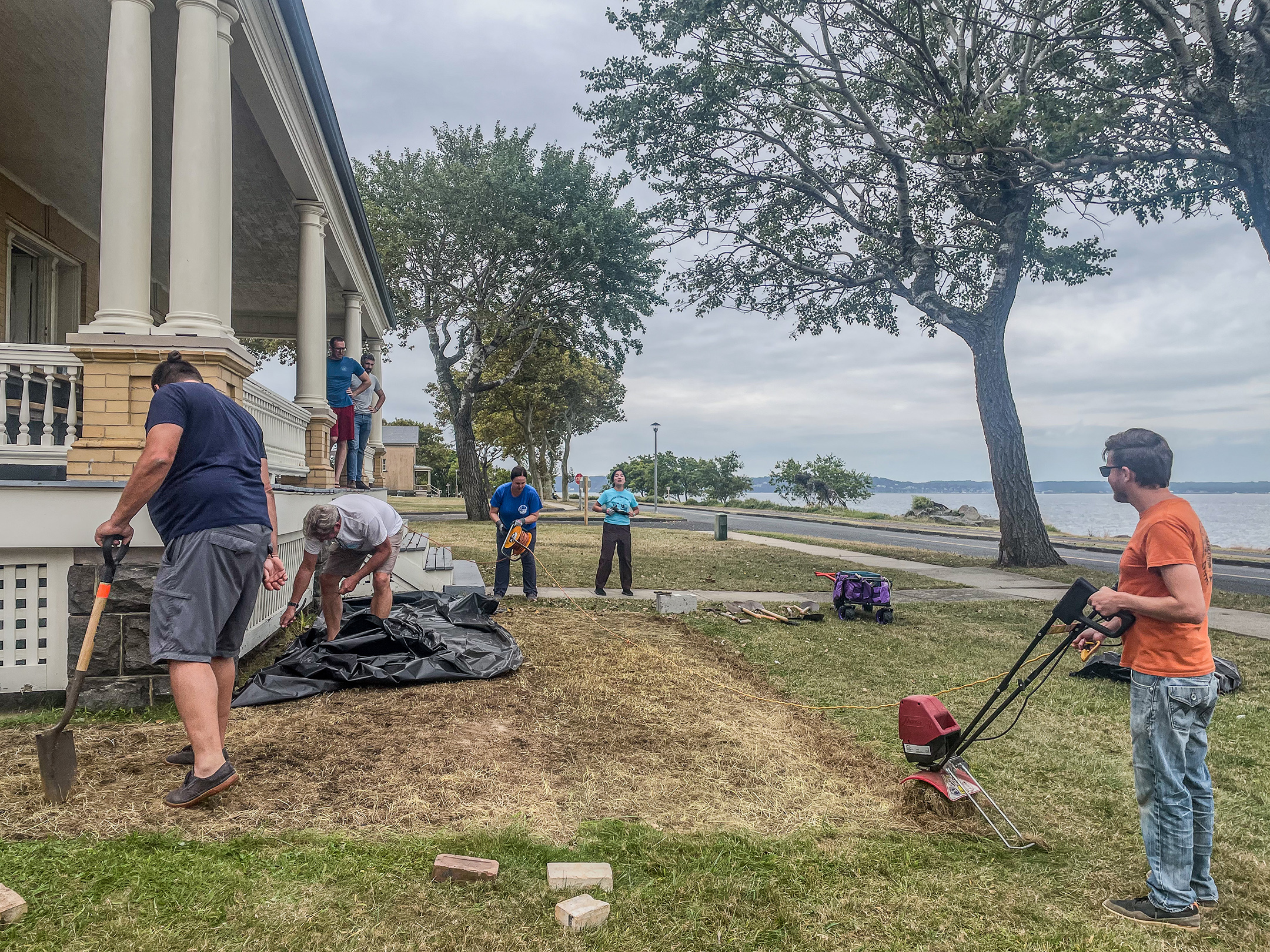
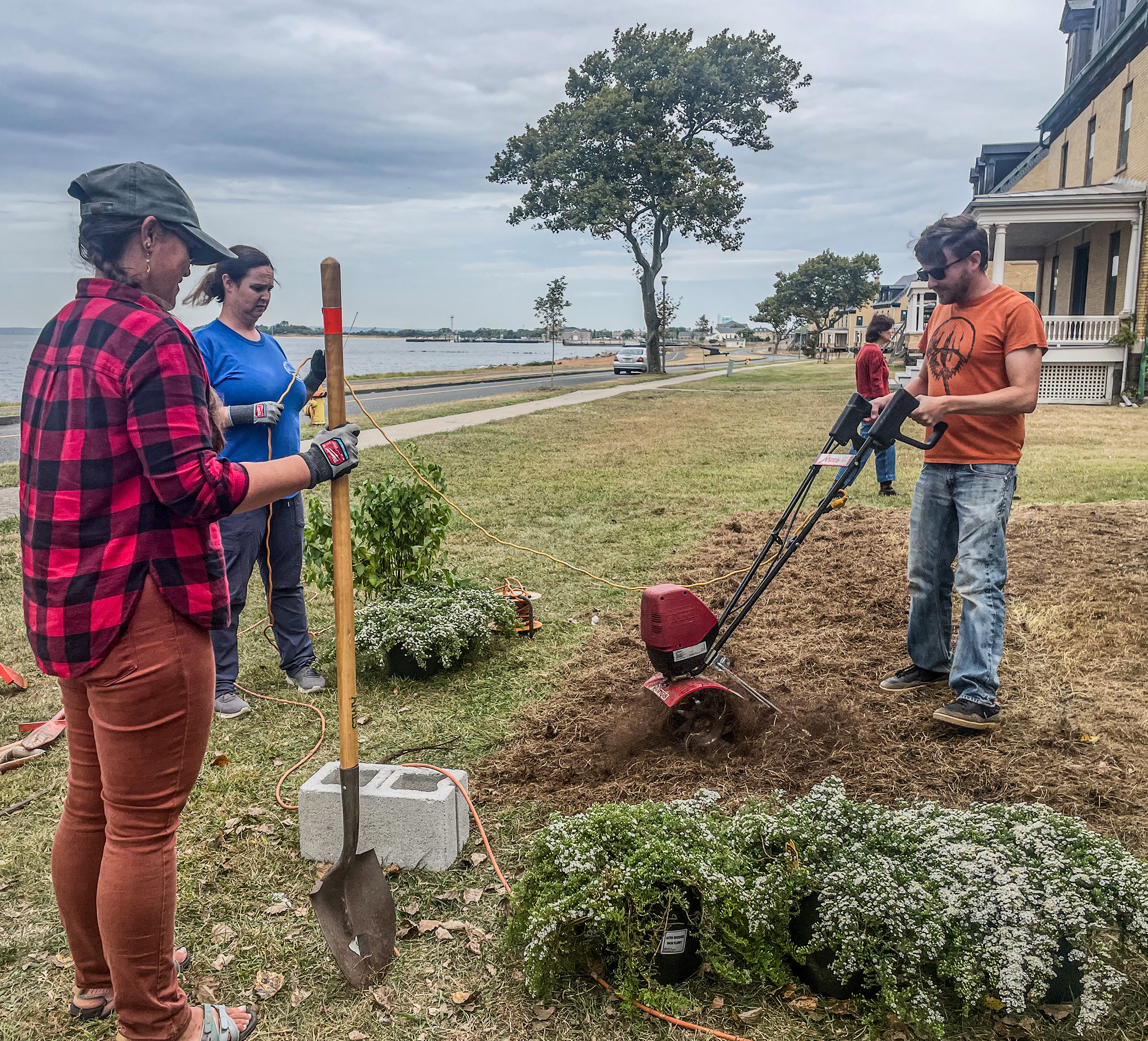
The project began this spring with basic site preparation. Solar fabric was spread over the lawn area where the garden would be installed, to kill off existing weeds and grass during summer so the area could be tilled and ready for fall planting. In September, volunteers planted over a dozen different types of natives, including beach plum, bearberry, milkweed and Virginia sweetspire. These species, selected by Lucia Osborne, the society’s Delaware Bay Program director and native plant expert, are crucial in providing winter fruit and seeds, nectar and pollen, and safe cover, too.
Katrina Majewski of Prototype Design Group designed this sustainable urban garden. The society plans to install informational signs at the garden to educate Sandy Hook visitors on the urgent need for more native gardens to support wildlife and protect the environment.
As the plants grow and thrive, they will provide a variety of food sources and habitats for coastal critters. But native gardens are environmentally beneficial in many other ways. Since the plants are adapted to local weather, rainfall, and growing conditions, they are hardy and don’t require fertilizer or pesticides, which means there are fewer harmful chemicals entering the waterways. The plants flourish with minimal care, survive droughts, and their deep roots hold the soil in place to reduce erosion and increase groundwater infiltration. And they boost biodiversity, attracting a wider variety of wildlife.
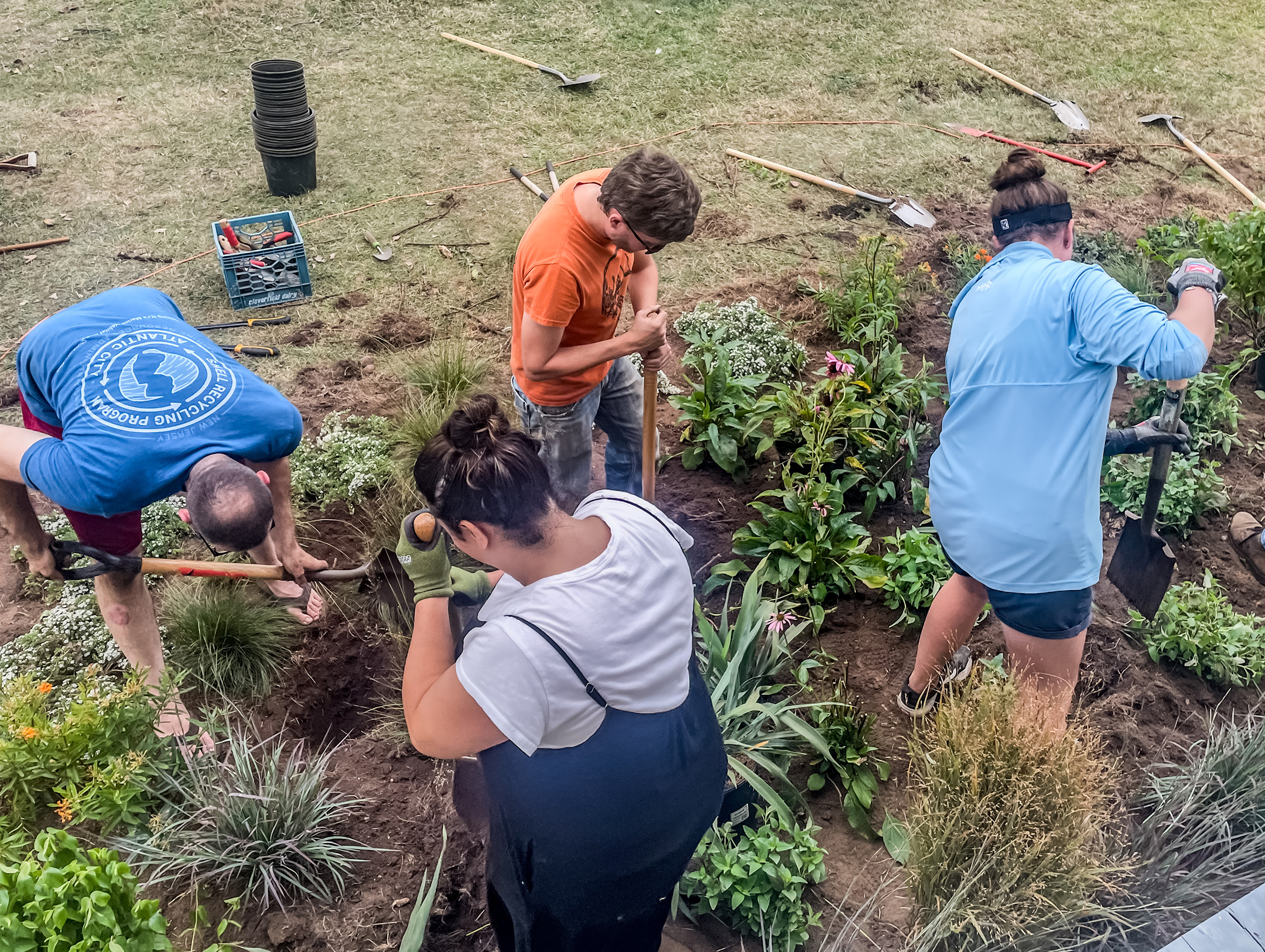
Dillingham noted that, in addition to helping local bird populations, the new pollinator garden will be used as a living classroom to educate about the need to restore more habitat for local wildlife.
“Our mission is to empower people to accomplish the same things we do here for coastal conservation,” he said. By showcasing how native plants can be used to sustain birds and butterflies in the society’s garden, they hope to inspire individuals to plant pollinator gardens in their own yards, thereby expanding native resources available for local wildlife.
Native plants are beautiful, low-maintenance, and easy to grow, but many homeowners aren’t familiar with them because, ironically, they aren’t always offered for sale at local garden centers. And while there has been a trend toward including more natives in landscaping design, the practice is still new. Planting natives – whether it’s pretty coneflowers and flowering butterfly weed in patio pots or mountain laurel shrubs in the backyard – is one small thing that homeowners can do to help to support conservation and wildlife protection, right in their own neighborhoods.
To learn more about how you can plant your own native pollinator garden and help wildlife, visit littoralsociety.org.
The article originally appeared in the November 14 – November 20, 2024 print edition of The Two River Times.