By Laura D.C. Kolnoski

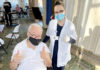
MIDDLETOWN – Successful cancer treatments depend on clinical trials. Right now, 65 of the nation’s most promising physicians in the field are working to create the next generation of clinical trials, expanding their reach. One of those is Vonetta Williams, M.D., Ph.D., a radiation oncologist at Memorial Sloan Cancer Center (MSK) Monmouth in Middletown.
Williams is a recipient of a $250,000 grant from the Robert A. Winn Diversity in Clinical Trials Program of Virginia Commonwealth University’s Massey Comprehensive Cancer Center. The center promotes diversity, equity and inclusion in the medical workforce, mentors upcoming health leaders, spearheads interdisciplinary approaches to research, and works to eliminate health disparities.
The career development award, established in 2020 by the Bristol Myers Squibb Foundation, supports young academics focused on health equity and transforming clinical research.
Williams, who cares for patients with gastrointestinal, gynecologic and breast cancers in New Jersey and Manhattan, has previously developed clinical trials in breast cancer and participates in cancer research at MSK and in national trials. Her primary focus is Human papillomavirus (HPV) cancers, the most common sexually transmitted infection in the United States.
“Historically, there is limited research funding for this type of cancer,” said Williams. “I’m doing research that will hopefully improve or maintain our good outcomes while decreasing long-term toxicities for patients.”
Inspired to enter the medical field after reading a book about legendary English nurse Florence Nightingale when she was just a child, Williams said she “wanted to help people like Florence Nightingale did. As I grew older, my life experiences really solidified this.”
Those experiences began in Trinidad and Tobago, where she grew up before migrating to the U.S. for college. Her cousin and a friend were diagnosed with cervical cancer about the same time, altering her focus in ways that changed her life and the lives of her patients.
“In third-world countries like those in the Caribbean and Africa, the incidence (of cancer) is high and so is the mortality rate,” she said. “Today, we see a very poor representation of Native American, African American and Hispanic populations in clinical trials. Diversifying trials is important because we need to determine if a drug or intervention would be equally effective in all populations. We can’t do this if we don’t test them in those populations.”
While an undergraduate, Williams “fell in love with research, so I pursued a Ph.D. in biochemistry. When I went into residency for radiation oncology, I knew I wanted a career where I could care for patients, but I also wanted to conduct research.” She will now have the time – and the funds – to do just that.
“A portion of the money is to buy research time,” Williams explained. “Doctors are hired to see patients and the money buys the time they are giving.”
The 40 women and 25 men awarded the grant, all working independently, use that time to attend educational workshops along with three hours of lectures weekly during the first year, learning how to conduct clinical trials, reach different patient populations, and utilize procedures to increase diversity.
“This helps develop and hone those skills to create better and larger trials,” she said. “Patient care helps inform what research is meaningful. As a physician, I get to treat patients one-on-one, which is satisfying. With research, I get to impact people whom I’ve never met, which is amazing.”
Along with following the grant program’s guidelines, Williams must develop clinical trials with guidance from a formal mentor, in her case MSK’s Nancy Y. Lee, M.D., FASTRO, a radiation oncologist and early drug development specialist.
“I am very grateful for this opportunity,” Williams said. “At the end of this experience, I hope I will have acquired the skills I need to make inclusive trials that will enroll a more diverse population and improve outcomes and survival rates for women with cervical cancer.”
Understanding Clinical Trials
The medical professionals at MSK want to educate the public about clinical trials and encourage participation. Clinical trials are research studies that test new ways to find, prevent and treat cancer, as well as test how well new medical approaches work in people. Ongoing trials include:
Treatment Trials that test new treatments or new ways of using existing treatments, including drugs, vaccines, approaches to surgery or radiation therapy and combinations of treatments.
Prevention Trials are studies that look at cancer prevention. In most, participants do not have cancer but are at high risk for developing it, or they have had cancer and are at high risk of developing a new cancer. There are two kinds of prevention trials: action studies and agent studies. In action studies, participants are asked to do something, such as exercise or follow a special diet. In agent studies, participants are asked to take something, such as a drug or vitamin.
Screening Trials trials test ways to find cancer before it causes symptoms, when it may be easier to treat. An effective screening test will reduce the number of people who die from the cancer that is being screened for.
Supportive Care/Palliative Care Trials look at ways to improve the quality of life of people with cancer, especially those who have side effects from cancer and its treatment. They might test drugs, such as those that help with depression or nausea, or they might test activities, such as attending support groups, exercising or talking with a counselor.
There are eligibility requirements for clinical trials. Common eligibility criteria address health, medical history, family medical history, risk factors, age, treatment history, and more. Information and videos about clinical trials for cancer and other conditions is available at mskcc.org.
The article originally appeared in the June 6 – 12, 2024 print edition of The Two River Times.