Lacrosse Loses Out; Girls Flag Football Becomes Varsity Sport
By Rich Chrampanis
EDISON – The NJSIAA gathered athletic directors from across New Jersey for three landmark votes affecting high school sports.
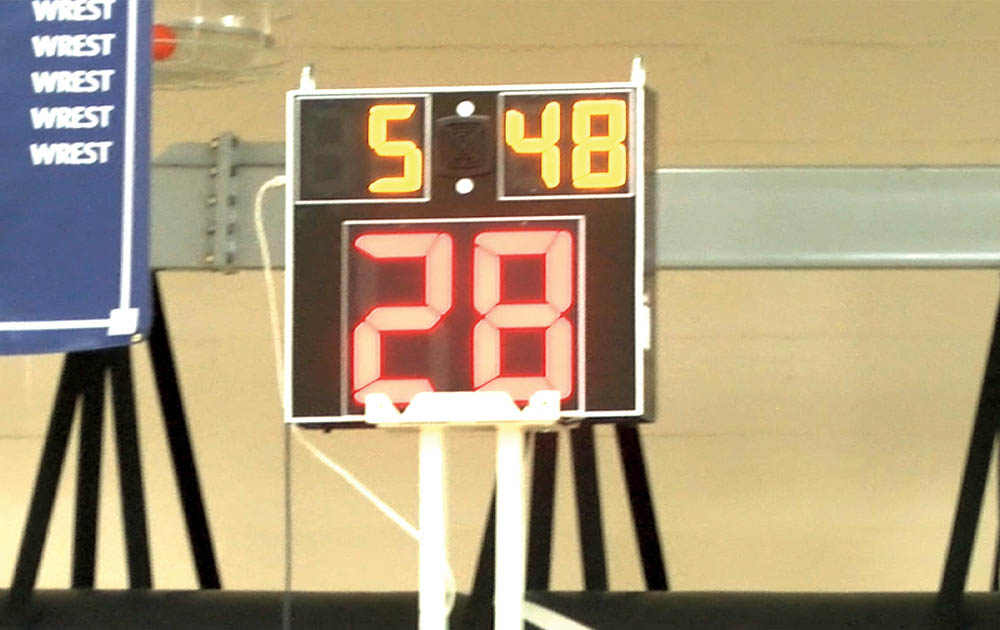
Basketball Shot Clock Coming
Yes 170
No 166
New Jersey high school basketball officially entered a new era as the state approved the implementation of a shot clock for boys and girls competition following a tightly contested vote. New Jersey now joins more than 39 other states that already use a shot clock in high school basketball, a move proponents say better prepares athletes for the next level.
The measure passed by the narrowest margin, clearing the required 169-vote threshold by just a single vote (170 yes votes to 166 against). The decision came after months of discussion led by members of the New Jersey Basketball Coaches Association (NJBCA) and a group of athletic directors advocating for modernization of the game.
Montgomery boys basketball coach and athletic director Kris Grundy, one of the key voices behind the proposal, described the long road leading up to the vote and the collaborative effort to build support across the state. It was Grundy who delivered the presentation to the state’s athletic directors, advocating for the move to a shot clock before the vote.
“This has been quite a process,” Grundy said. He thanked Christian Brothers Academy athletic director Nick Maraniello for working “hand-in-hand” with him throughout the process.
“Nick and I were able to develop a really great close friendship through our involvement in the New Jersey Basketball Coaches Association (NJBCA) when he was at Hudson Catholic,” Grundy explained.
The NJBCA served as the main vehicle for communication with coaches and administrators statewide, emphasizing that the final decision would ultimately rest with athletic directors, Grundy said.
“Our message was, if you guys really want this, you’re going to have to go to your athletic directors and talk to them about it,” he said.
The debate leading up to the vote was intense, with financial concerns dominating opposition arguments. According to Grundy, many athletic directors expressed hesitation due to budget limitations across school districts.
“I think finances would be 95% to 99% of the reason why,” Grundy said of those who voted against the measure. “And again, I am 100 million percent sympathetic to finances.”
Supporters argued the long-term benefits outweigh the costs and Grundy stressed that implementation costs could be manageable, depending on how schools choose to adopt the system. “You could go as low as getting a wheel, a shot clock on wheels for 500 bucks, get two of those and now you’re talking $1,000,” he said. “It’s like buying a car – you can buy a Honda Civic if you want… or you can go and buy a Lamborghini.”
Schools also have a full year to prepare; the shot clock will make its debut in the 2027-28 school year.
Supporters believe the 35-second shot clock will improve pace, flow and competitiveness across New Jersey high school basketball while aligning the state with the standards of college play.
“In my opinion, we need to advance our game in the state,” Grundy said. “Everybody has a shot clock… so why not give those student athletes the best chance to succeed at the next level.”
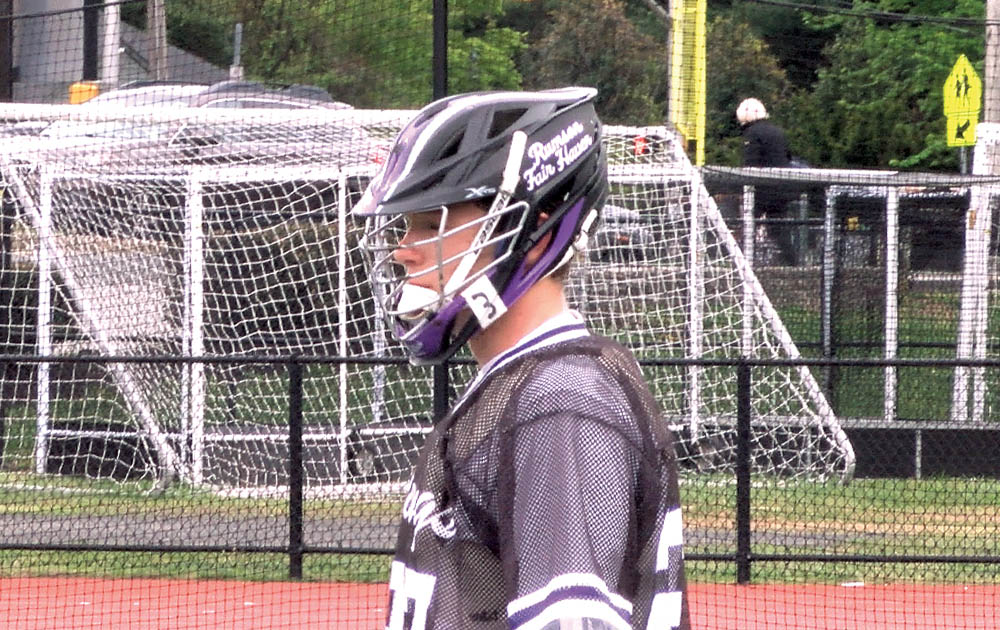
Lacrosse Shot Clock Misses Threshold
Yes 166
No 149
Abstain 21
While many basketball coaches across the state were celebrating, the lacrosse community was disappointed as the vote on an 80-second varsity shot clock came up short, just missing the 169-vote threshold (166 to 149 with 21 abstentions).
Despite continued support from coaches who believed the change would modernize the game, the measure failed to gain enough backing to move forward. The proposal needed broader consensus across the membership and ultimately fell short in a closely watched decision that has been years in the making.
Rumson-Fair Haven boys lacrosse coach Marc Moreau acknowledged the work being done behind the scenes to advance the proposal. “I wasn’t part of the lacrosse committee that was doing this,” Moreau said, adding that “Matt Kovachik at Delbarton was really the one carrying the ball forward for us.”
Moreau argued that schools without a lacrosse program should not have had a say in the shot clock proposal.
A major point of discussion throughout the debate centered on cost, though Moreau questioned whether financial concerns were as significant as some suggested. He pointed to examples from other states and game environments where implementation has been relatively simple and inexpensive, noting that in many cases “the person who does the clock is an injured player, a JV player. It’s not always a paid person doing it.”
He also noted many football stadiums already have timing systems in place that could potentially be adapted for lacrosse use. “A lot of them already have the football play clock wired in,” he said, adding that it could simply require “programming the remote for that to work for lacrosse.”
From Moreau’s perspective, the issue goes beyond game speed and instead focuses on improving the structure and fairness of play. “It’s not about stalling or speeding up the game. It’s just a better game. It’s an easier game to officiate,” he said.
He explained that the shot clock would help eliminate gray areas that often create challenges for officials and lead to frustration on the field and in the stands.
Moreau has experience coaching in games with shot-clock rules already in effect, including a matchup at Manhasset on Long Island. “It was great,” he said, noting that the system improved game flow and reduced unnecessary stoppages.
He further pointed to certain high school rules that can create late-game complications. He cited situations where teams are required to keep possession in a restricted area late in games. “That’s when the sport gets dangerous,” he said, due to heightened pressure and physicality.
According to Moreau, the shot clock would help eliminate many of those scenarios by discouraging prolonged possessions and reducing frustration that can build among players, coaches, and fans. “The shot clock eliminates that,” he said.
He also emphasized the developmental impact on athletes, arguing that high school players are not fully prepared for the college game, which uses the shot clock. “We’re not preparing them to play the game that they’re going to play,” he said, noting that players often arrive at the next level without experience in key late-clock situations.
While some believe a shot clock favors more skilled programs, Moreau disagreed. He said even teams with losing records could benefit from the structure it provides. “I’ve coached teams that are 0-18, and we would have benefited from a shot clock when we were 0-18.”
Despite the setback, Moreau remained hopeful that sometime down the line, a shot clock will be part of New Jersey lacrosse. “If there’s a sport that’s going to get it done, it’s going to be us,” he said.

Girls Flag Football Makes Varsity
Yes 311
No 18
While there was drama and two sides making valid points in the shot-clock debate, the newest girls varsity sport was approved by a landslide margin. Girls flag football officially becomes an NJSIAA varsity sport in 2027 with an overwhelming 311-18 vote supporting one of the fastest-growing high school sports in the country.
New Jersey becomes the 20th state to have varsity flag football; there are currently 173 teams across the state. The growth is evident in the Two River area, with 11 local teams currently competing in the 30-team Shore Conference.
The New York Giants helped spark flag football in the area five years ago, funding new uniforms. The NFL team continues to make an annual trip to the county to conduct a clinic with high school flag players.
The article originally appeared in the May 7 – 13, 2026 print edition of The Two River Times.